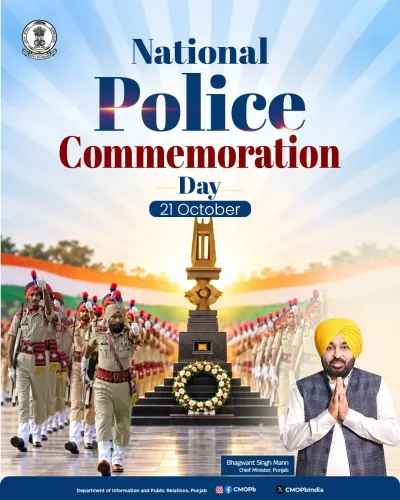
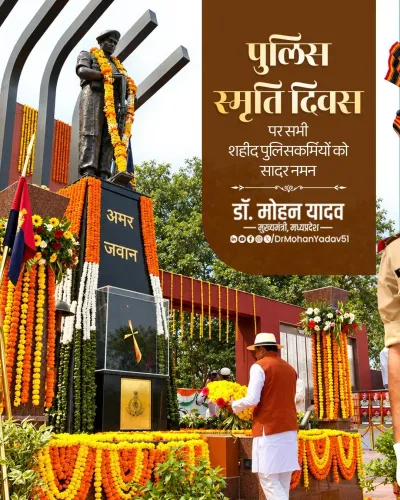
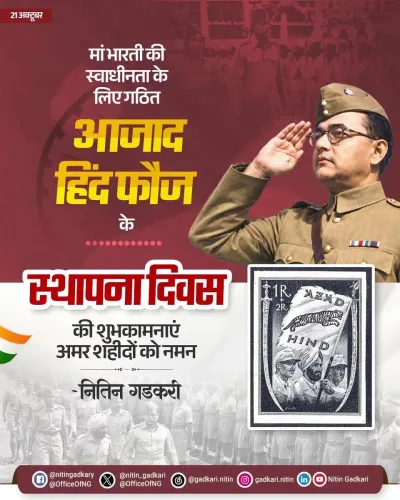
Gadkari pays tribute to police martyrs on Commemoration Day
Synopsis
Union Minister Nitin Gadkari marked Police Commemoration Day on 21 October by honouring police martyrs who sacrificed their lives for India's internal security, in keeping with the annual observance rooted in the 1959 Hot Springs incident in Ladakh.
Key Takeaways
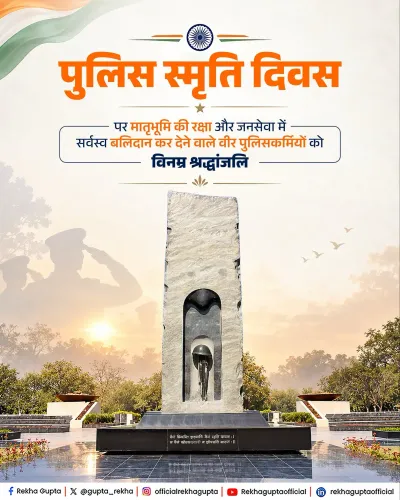
Police Commemoration Day is observed every year on 21 October to honour police personnel killed in the line of duty.
The day traces its origins to the 21 October 1959 ambush at Hot Springs, Ladakh , in which ten CRPF jawans were killed.
Union Minister Nitin Gadkari paid tribute on X, saluting the courage, duty, and sacrifice of police martyrs.
Senior ministers across the political spectrum routinely mark the day, reflecting a bipartisan consensus on honouring fallen police personnel.
Wreath-laying ceremonies and parades are held by police forces nationwide, with families of martyrs in attendance.
Every year on 21 October, India pauses to honour the men and women in uniform who gave their lives so the rest of the country could live safely — and this year, Union Road Transport and Highways Minister Nitin Gadkari joined that solemn chorus with a heartfelt tribute on Police Commemoration Day.
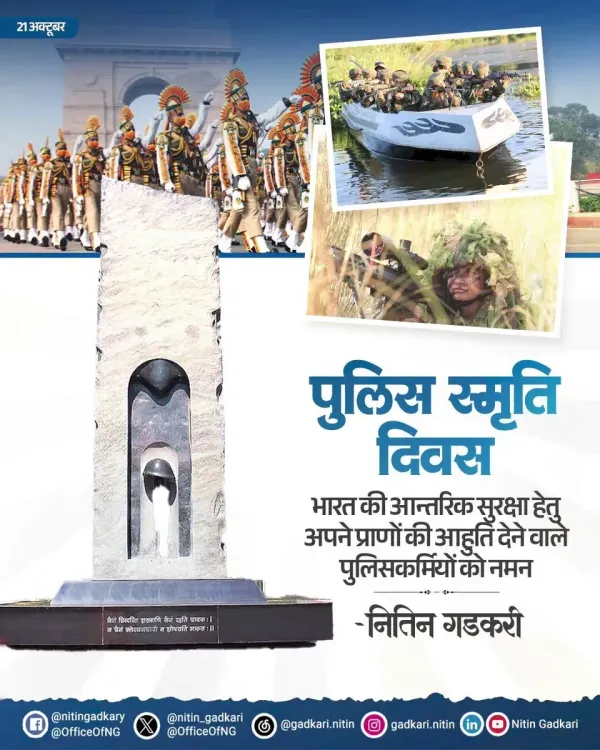
Gadkari posted on X, saluting the courage, devotion to duty, and sacrifice of the brave police personnel who laid down their lives in service of the nation's internal security and defence. 'पुलिस स्मृति दिवस पर नमन' — a bow of remembrance on Police Commemoration Day — he wrote, signing off with 'Jai Hind.'
The 1959 Hot Springs incident that started it all
Police Commemoration Day traces its origins to 21 October 1959, when a patrol of Central Reserve Police Force personnel was ambushed at Hot Springs in Ladakh, resulting in the deaths of ten jawans. That act of sacrifice, on a cold Himalayan frontier, became the founding memory around which the annual observance was built in the early 1960s.
Every year since, police forces across the country — from state constabularies to central armed police forces — hold parades, wreath-laying ceremonies, and moments of silence to remember colleagues who fell in the line of duty. The families of martyrs occupy the front rows, a reminder that the cost of public safety is borne privately, in homes across the country.
Senior ministers and the ritual of remembrance
Gadkari's tribute follows a well-established pattern: senior Union ministers, chief ministers, and the President and Prime Minister's offices routinely mark the day with formal statements. The consistency of these tributes, year after year, reflects a bipartisan consensus that the sacrifice of police personnel deserves institutional acknowledgement — not just ceremonial, but substantive.
For the families of the fallen, such public recognition — however brief — affirms that the nation has not forgotten. That assurance, on a day set aside precisely for remembrance, is itself a form of honour.
Sixty-seven years after Hot Springs, the names keep growing — but so does the resolve to remember every one of them.
Point of View
While ceremonial in form, sits within a broader pattern of the Union government reinforcing the symbolic compact between the state and its security forces. As debates over police welfare, modernisation, and accountability continue in policy circles, the annual ritual of remembrance serves as a floor — a baseline acknowledgement that those debates must never lose sight of the human cost. The 1959 Hot Springs incident, now nearly seven decades old, remains the emotional anchor that gives this observance its moral weight.
NationPress
21 Oct 2026
Frequently Asked Questions
What is Police Commemoration Day in India?
Police Commemoration Day is observed on 21 October every year to honour police personnel who died in the line of duty. It began in the early 1960s to mark the deaths of ten CRPF personnel in the Hot Springs ambush in Ladakh on 21 October 1959.
Why is Police Commemoration Day observed on 21 October?
The date marks the 21 October 1959 Hot Springs incident in Ladakh, where ten Central Reserve Police Force jawans were killed in an ambush, becoming the founding event of the annual observance.
What did Nitin Gadkari say on Police Commemoration Day 2026?
Nitin Gadkari posted a tribute on X saluting the courage, devotion to duty, and sacrifice of police personnel who laid down their lives for India's internal security and defence, signing off with 'Jai Hind.'
What is the Hot Springs incident of 1959?
The Hot Springs incident refers to an ambush on 21 October 1959 in Ladakh in which ten Central Reserve Police Force personnel were killed, leading to the establishment of Police Commemoration Day.
How is Police Commemoration Day marked in India?
Police forces across India hold wreath-laying ceremonies, parades, and moments of silence on 21 October . Families of martyred personnel attend, and senior government leaders issue formal tributes.