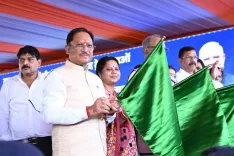
Shekhawat Hails Baratang's UNESCO Tentative List Entry
Synopsis
The Karst-Mud-Volcano Complex of Baratang in the Andaman and Nicobar Islands has been added to UNESCO's Tentative List, Culture Minister Gajendra Singh Shekhawat announced, marking India's latest step toward a formal World Heritage nomination for the rare geological site.
Key Takeaways
Baratang's Karst-Mud-Volcano Complex in the Andaman and Nicobar Islands has been included in UNESCO's Tentative List as of October 2026.
UNESCO Tentative List inclusion is a mandatory prerequisite before a formal World Heritage nomination can be filed.
Union Culture and Tourism Minister Gajendra Singh Shekhawat credited Home Minister Amit Shah for his role, reflecting necessary inter-ministerial coordination for the centrally administered union territory.
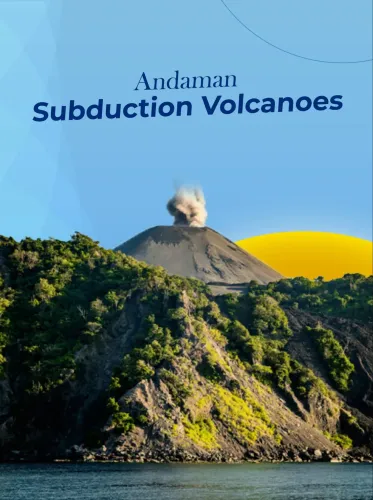
Baratang hosts both karst limestone formations and active mud volcanoes — a rare geological combination found at very few locations in India.
The inclusion aligns with India's broader strategy under the Incredible India initiative to gain international recognition for lesser-known natural heritage sites.
The next step is a formal nomination dossier and an IUCN evaluation before any full World Heritage inscription can be considered.
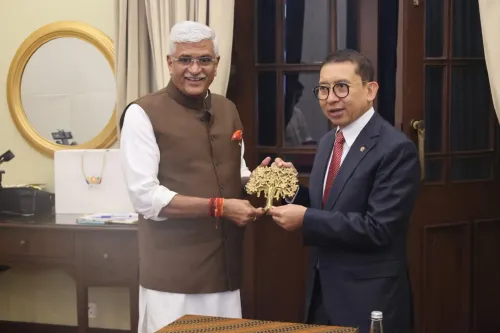
A geological marvel hiding in the Bay of Bengal just got its first step toward global recognition. Union Culture and Tourism Minister Gajendra Singh Shekhawat announced on Tuesday, October 20, 2026, that the Karst-Mud-Volcano Complex of Baratang in the Andaman and Nicobar Islands has been included in UNESCO's Tentative List — a crucial gateway toward full World Heritage inscription.
What Makes Baratang a Geological Standout
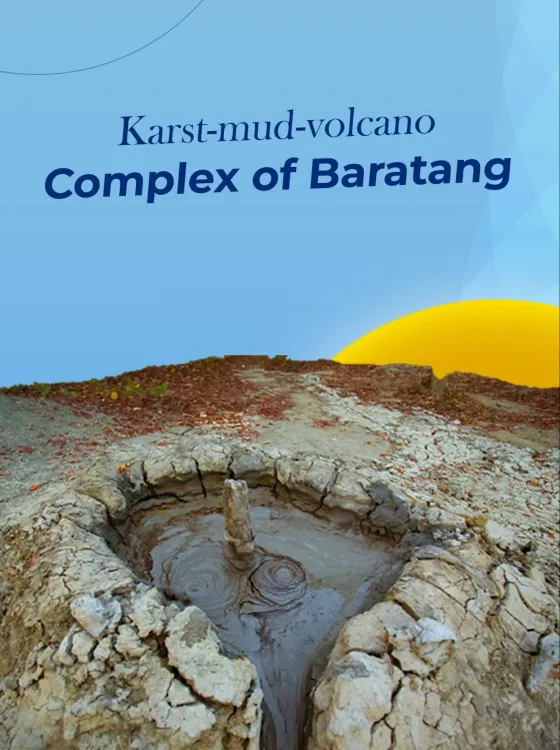
Baratang Island, tucked within the union territory of the Andaman and Nicobar Islands, hosts a rare combination of karst limestone formations and active mud volcanoes — natural phenomena seldom found together in a single landscape. The karst terrain produces dramatic cave systems and sea-carved arches, while the mud volcanoes — among only a handful on Indian soil — periodically vent gas and sediment from deep geological faults beneath the Andaman Sea. Together, they form a complex that scientists and conservationists have long flagged as globally significant.
UNESCO's Tentative List is not a decoration. It is the formal prerequisite for any country that wishes to nominate a site for full World Heritage status — sites cannot be considered without first appearing on it. Getting on that list is, therefore, the essential first move in a process that can eventually bring international conservation resources and tourism visibility to a region.
Shekhawat's Acknowledgement of Shah's Role
Minister Shekhawat was pointed in crediting Union Home Minister Amit Shah for his role in advancing the recognition. The Andaman and Nicobar Islands are a centrally administered union territory that falls under the Ministry of Home Affairs, making Shah's department a key institutional player in any heritage nomination originating from the archipelago. Coordination between the Culture and Home Ministries for union territories — particularly those with ecological or strategic sensitivity — is standard practice, and Shekhawat's public acknowledgement signals that inter-ministerial alignment was essential to clearing this milestone.
India's Quiet Ambition to Broaden Its Heritage Map
India's pursuit of UNESCO recognition has evolved well beyond the iconic sites of the Gangetic plain and Rajasthan's fortress cities. Over the years, the country has steadily added lesser-known natural and cultural sites to its tentative list, widening the geography of heritage tourism and anchoring conservation efforts in remote regions that might otherwise fall outside the policy spotlight. Baratang's inclusion fits squarely into this pattern — and directly into the government's Incredible India branding framework, which links international recognition to inbound tourism growth.
For the Andaman and Nicobar Islands, a UNESCO nod — even at the tentative stage — can shift the kind of traveller the archipelago attracts, drawing in geo-tourism and scientific interest alongside the existing beach-and-diving circuit. That diversification matters enormously for local communities whose livelihoods depend on visitor flows.
The Road From Tentative to World Heritage
The next step is a formal nomination dossier submitted to UNESCO, followed by evaluation by the International Union for Conservation of Nature (IUCN) for natural sites. That process can take years, and success is never guaranteed. But the Tentative List inclusion is the signal that New Delhi is serious — and that Baratang's mud volcanoes and limestone karsts are now, officially, on the world's radar.
Point of View
Long-running strategy by the Modi government to broaden India's UNESCO portfolio beyond Mughal-era monuments and Himalayan parks — extending heritage diplomacy into the union territory belt. Routing the announcement through both the Culture and Home Ministries signals that Andaman's geological assets are being treated as a cross-departmental national priority, not a regional footnote. For Shekhawat, the announcement reinforces his ministry's active pipeline of international nominations and its role in anchoring tourism growth in India's remote island geography. Whether New Delhi now fast-tracks the formal nomination dossier will determine whether this milestone translates into lasting conservation infrastructure or remains a well-publicised first step.
NationPress
20 Oct 2026
Frequently Asked Questions
What is UNESCO's Tentative List?
UNESCO's Tentative List is a formal inventory of sites a country intends to consider for World Heritage nomination. A site must be on this list before a full nomination can be submitted — it is the mandatory first step in the World Heritage inscription process.
Where is Baratang Island located?
Baratang Island is located in the Andaman and Nicobar Islands , a union territory of India situated in the Bay of Bengal . It is known for its limestone caves, mangrove creeks, and rare mud volcanoes.
What makes the Baratang Karst-Mud-Volcano Complex unique?
The complex combines karst limestone formations — which produce caves and sea-carved arches — with active mud volcanoes, a rare geological pairing. Mud volcanoes in India are uncommon, and their co-existence with karst terrain makes Baratang scientifically distinctive.
Why did Culture Minister Shekhawat thank Home Minister Amit Shah?
The Andaman and Nicobar Islands fall under the jurisdiction of the Ministry of Home Affairs as a centrally administered union territory. Any heritage nomination from the archipelago requires Home Ministry coordination, making Amit Shah's involvement essential to advancing the recognition.
What happens after a site is placed on UNESCO's Tentative List?
After Tentative List inclusion, India must prepare a detailed nomination dossier and submit it to UNESCO. For natural sites, the International Union for Conservation of Nature (IUCN) then conducts an independent evaluation before the World Heritage Committee makes a final inscription decision — a process that typically takes several years.