Chhattisgarh CMO: Rail reaches Rawghat, opening Bastar
Synopsis
The Chief Minister's Office of Chhattisgarh has announced the launch of passenger rail service between Raipur and Rawghat, marking the first-ever train connection to the Bastar region and promising expanded access to education, health, employment and trade for local communities.
Key Takeaways
First-ever passenger rail service between Raipur and Rawghat has been launched, as announced by the Chief Minister's Office of Chhattisgarh on 20 October 2026 .
Rawghat is located in the Bastar division of southern Chhattisgarh, an area with large tribal populations and historically limited connectivity.
The service is operated by Indian Railways , which was formally tagged in the CMO's announcement.
The CMO states the line will expand access to education, health, employment and trade for Bastar's communities.
The corridor connects one of India's significant iron ore belt regions to the state capital, with broader socio-economic development cited as the primary goal.
Future attention will focus on train frequency, intermediate station infrastructure , and potential extensions deeper into Bastar.
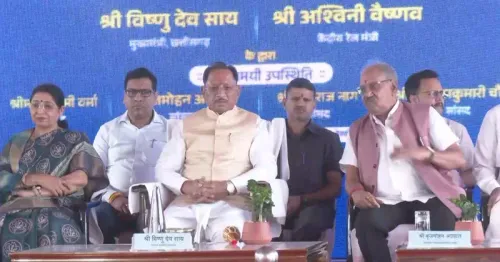
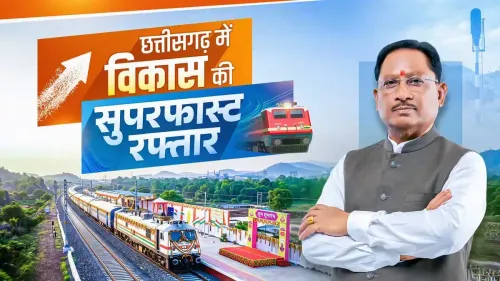
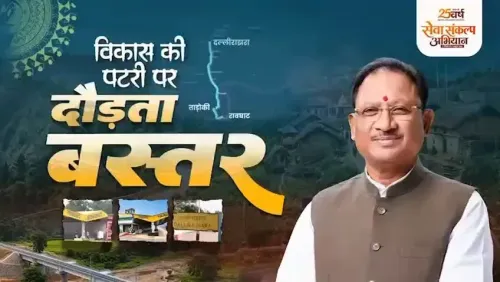
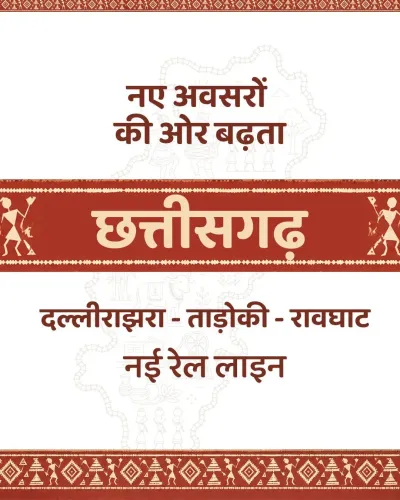
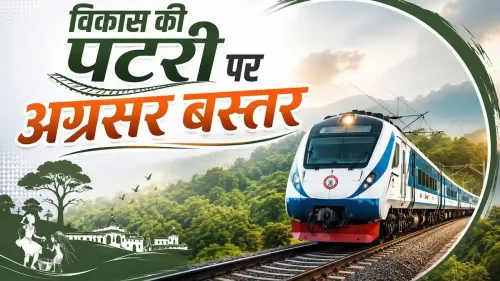
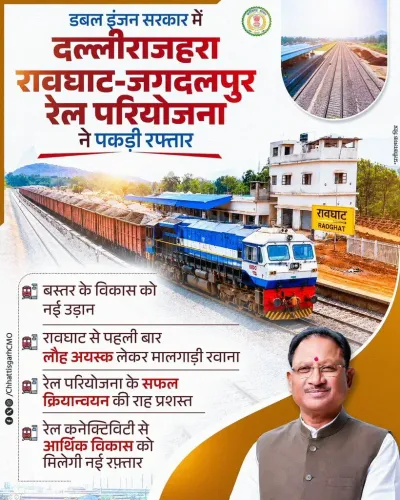
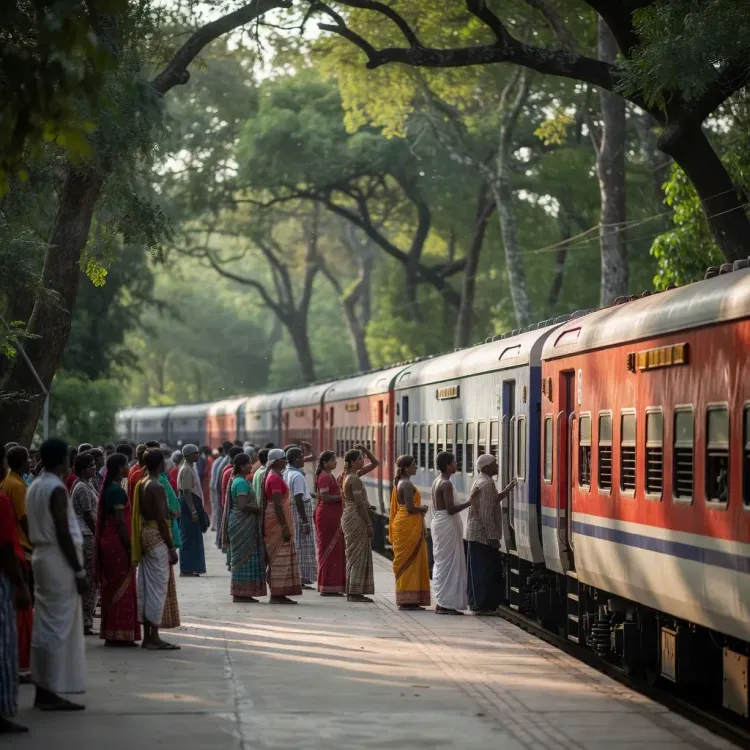
For the first time in its history, a passenger train has pulled into Rawghat — and in Bastar, that arrival means far more than a timetable entry. The Chief Minister's Office of Chhattisgarh announced on Tuesday, 20 October 2026 that passenger rail service between Raipur and Rawghat has been launched, calling it a landmark step toward the region's development and connectivity.
The CMO's post declared: 'Raipur se Rawghat tak yatri rail seva ki shuruaat Bastar ke vikas, behtar connectivity aur nayi sambhavnaon ki disha mein ek mahatvapurna kadam hai' — ('The launch of passenger rail service from Raipur to Rawghat is an important step toward Bastar's development, better connectivity and new possibilities.')
Rawghat's long wait for a rail link
Rawghat, located in the Bastar division of southern Chhattisgarh, sits atop one of India's significant iron ore belts — yet it has long remained physically cut off from the state capital. The area's terrain, dense forest cover, and a historically limited road network have kept communities there at arm's length from urban centres, markets, and public services. Successive central and state governments have pushed rail expansion into the southern Chhattisgarh districts precisely because road infrastructure alone has not been sufficient to bridge the gap.
The new Raipur–Rawghat service is operated by Indian Railways, which the CMO tagged directly in the announcement. The rail line runs through the heart of one of India's most strategically sensitive tribal belts, a geography where physical access has historically shaped everything from economic opportunity to public-health outcomes.
What the line means for Bastar's communities
The CMO framed the new service as a multiplier across four critical domains: education, health, employment, and trade. Students from remote Bastar villages will now have a reliable, affordable route to Raipur's colleges and hospitals. Traders carrying forest produce or agricultural goods gain a direct artery to the state capital's markets. For daily wage workers, the connection opens up a wider pool of employment without the cost and risk of long road journeys.
The announcement reflects a broader pattern in Chhattisgarh's infrastructure push — connectivity upgrades in tribal belts are consistently presented as the first link in a chain: connect the village to the city, and education, health, and commerce follow. Whether train frequency and service reliability will match that ambition is the question Bastar residents will be watching most closely in the months ahead.
Steel beneath the soil, tracks above it
There is a certain symmetry in Rawghat finally getting a passenger rail connection: the land holds vast iron ore reserves — the very raw material from which railway tracks are made. For years, the conversation around a Rawghat rail line was as much about mineral extraction logistics as about passenger movement. That the line now serves ordinary commuters is, for local communities, the more consequential story.
With the Raipur–Rawghat corridor now operational, attention will shift to service frequency, infrastructure at intermediate stations, and whether the network will be extended further into the Bastar interior. The tracks have arrived. The development they are meant to carry is what comes next.
Point of View
Which has made connectivity in the Bastar division a visible governance priority. Rail expansion into historically isolated tribal belts carries a dual political logic: it signals development intent to a constituency that has long felt marginalised, while also aligning with the Centre's broader push to open Bastar's mineral economy. The timing of the announcement — nearly three years into the current state government's tenure — suggests the project has been in the pipeline across administrations, but the ruling party will claim the credit for the ribbon-cutting moment. The real measure will be ridership numbers and service reliability: Bastar communities have heard connectivity promises before, and what turns infrastructure into trust is trains that actually run on time.
NationPress
20 Oct 2026
Frequently Asked Questions
What is the new Raipur to Rawghat train service?
It is a newly launched passenger rail service connecting Raipur , the capital of Chhattisgarh, to Rawghat in the Bastar division — the first-ever passenger train to reach Rawghat, announced by the Chief Minister's Office on 20 October 2026.
Where is Rawghat located in Chhattisgarh?
Rawghat is located in the Bastar district of southern Chhattisgarh, a region known for its large tribal population, dense forest cover, and significant iron ore deposits.
How will the Rawghat rail link help Bastar residents?
According to the Chhattisgarh CMO, the new rail link will improve access to education, health services, employment opportunities and trade by connecting Bastar communities directly to the state capital, Raipur.
Which railway authority operates the Raipur–Rawghat service?
Indian Railways operates the new Raipur–Rawghat passenger service, as confirmed by the Chhattisgarh CMO's official announcement, which tagged the Railway Ministry directly.
Why did it take so long to bring rail connectivity to Rawghat?
Rawghat's remote location in Bastar, combined with dense forest terrain and historically limited road infrastructure, made rail expansion technically challenging and costly. Successive governments prioritised the project, but construction timelines in difficult terrain stretched across years.