Shekhawat: Chambal Valley Temples Join UNESCO Tentative List
Synopsis
Union Minister Gajendra Singh Shekhawat announced on 29 September 2026 that the Bateshwar, Padavali, and Kakarmath temple clusters in Madhya Pradesh's Chambal Valley have been added to India's UNESCO Tentative List, marking a key step toward World Heritage nomination for these early medieval Nagara-style monuments.
Key Takeaways
The Bateshwar, Padavali, and Kakarmath temple clusters in Madhya Pradesh's Chambal Valley have been added to India's UNESCO Tentative List as of 29 September 2026 .
Inclusion on the Tentative List is a mandatory precondition before a site can be formally nominated for UNESCO World Heritage status.
The temples represent the architectural legacy of two medieval dynasties — the Gurjara-Pratihara (8th–11th century) and the Kachchhapaghata (10th–12th century) — both major patrons of Nagara temple architecture.
Madhya Pradesh already hosts the Khajuraho Group of Monuments , a UNESCO World Heritage Site inscribed in 1986 , establishing regional precedent for recognising Nagara architecture.
Union Minister Gajendra Singh Shekhawat made the announcement and tagged MP Chief Minister Dr Mohan Yadav , signalling Union-state coordination on the heritage push.
The listing reflects India's broader strategy to diversify its 40+ World Heritage Sites by spotlighting lesser-known medieval temple clusters.
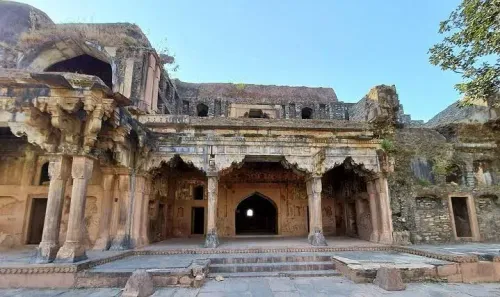
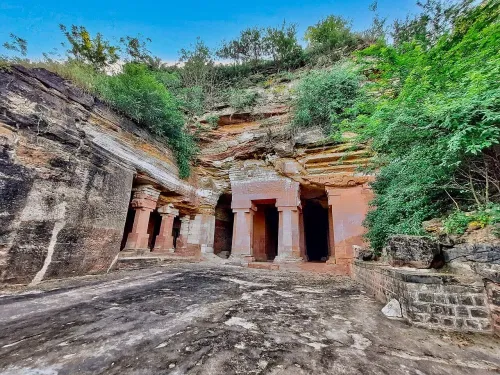
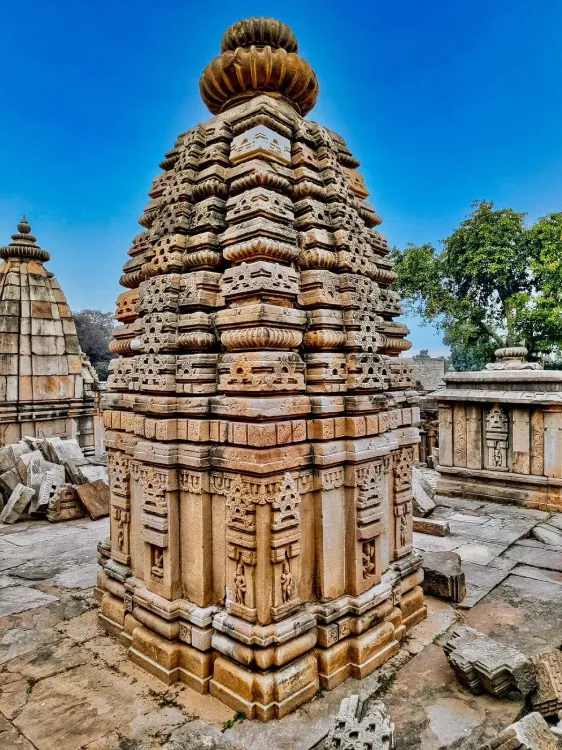
Three ancient temple clusters nestled in the ravines of Madhya Pradesh's Chambal Valley have just moved a critical step closer to global recognition. Union Culture and Tourism Minister Gajendra Singh Shekhawat announced on Tuesday, 29 September 2026 that the Group of Temples of the Chambal Valley — comprising Bateshwar, Padavali, and Kakarmath — has been added to India's UNESCO Tentative List, the essential gateway to a full World Heritage nomination.
What the Tentative List actually means
A UNESCO Tentative List is not a consolation prize — it is a mandatory first step. No site anywhere in the world can be formally nominated for World Heritage status unless it has already spent time on its country's Tentative List, allowing governments and conservation experts to build the documentation, management plans, and comparative analysis that UNESCO's evaluation body, ICOMOS, will eventually scrutinise. India maintains and periodically updates this list through the Archaeological Survey of India and the Ministry of Culture. Inclusion is a deliberate institutional choice, not an automatic listing.
The dynasties behind the stone: Gurjara-Pratihara and Kachchhapaghata legacies
The three sites together trace an architectural lineage spanning roughly four centuries. The Gurjara-Pratihara dynasty, which dominated northern and central India between the 8th and 11th centuries, was among the most prolific patrons of the Nagara temple style — the curvilinear shikhara tradition that defines much of north Indian sacred architecture. Their successors in the Gwalior-Chambal region, the Kachchhapaghata dynasty (10th–12th centuries), carried and adapted those traditions, leaving behind the layered sculptural programmes visible at Padavali and Kakarmath.
Minister Shekhawat described the temples as showcasing 'the evolution of early medieval Nagara temple architecture and the artistic traditions that flourished' under both dynasties — framing the listing not merely as a preservation milestone but as evidence of a continuous, regionally rooted creative genius.
Madhya Pradesh's expanding heritage map
For Madhya Pradesh, this addition carries real weight. The state is already home to the Khajuraho Group of Monuments, inscribed on the UNESCO World Heritage List in 1986 — the benchmark for recognising Nagara architecture from precisely this cultural zone. The Chambal Valley temples extend that story geographically and dynastically, and a successful World Heritage nomination would place a second major medieval temple complex from the state on the global map.
The Shekhawat post also tagged Madhya Pradesh Chief Minister Dr Mohan Yadav, signalling active coordination between the Union government and state authorities — a relationship that will matter for the conservation funding and tourism infrastructure investment the sites will need before any ICOMOS site visit.
Where India's heritage diplomacy goes from here
India currently holds more than 40 UNESCO World Heritage Sites, and successive governments have deliberately expanded the Tentative List to include lesser-known medieval clusters, aiming to diversify recognition beyond the most photographed monuments. The Chambal Valley temples fit squarely into that strategy — significant in architectural scholarship, underserved in international tourism, and now formally in line for the world's highest conservation imprimatur.
The road from Tentative List to inscription is long: dossier preparation, ICOMOS evaluation, and a final decision by the UNESCO World Heritage Committee can take years. But the clock has started. And for the stone shikhara towers rising from the Chambal's ancient ravines, the world is finally paying attention.
Point of View
A second UNESCO World Heritage Site built around the same Nagara architectural tradition as Khajuraho would be a transformative asset for regional tourism revenue. The tagging of Chief Minister Mohan Yadav is not incidental; it publicly locks the state government into a shared heritage project that the BJP controls narratively at both the Centre and state levels. The deeper strategic question is whether the conservation infrastructure around Bateshwar, Padavali, and Kakarmath can be brought up to ICOMOS standards before a nomination dossier is submitted — that is where intent meets execution.
NationPress
29 Sept 2026
Frequently Asked Questions
What is India's UNESCO Tentative List and why does it matter?
India's UNESCO Tentative List is an officially maintained inventory of heritage sites the government intends to nominate for World Heritage status in the future. A site must appear on this list before it can be formally submitted for UNESCO inscription — making it the mandatory first step in a process that can take several years.
Where are the Bateshwar, Padavali, and Kakarmath temples located?
All three temple clusters are located in the Chambal Valley region of Madhya Pradesh , central India. They are examples of early medieval Nagara-style temple architecture built under the Gurjara-Pratihara and Kachchhapaghata dynasties.
Which dynasties built the Chambal Valley temples?
The temples were built and patronised primarily by the Gurjara-Pratihara dynasty (8th–11th centuries) and the Kachchhapaghata dynasty (10th–12th centuries) , both of whom were major patrons of the Nagara style of temple architecture in northern and central India.
Does Madhya Pradesh already have any UNESCO World Heritage Sites?
Yes. The Khajuraho Group of Monuments in Madhya Pradesh was inscribed on the UNESCO World Heritage List in 1986 , recognised for its outstanding Nagara temple architecture — the same tradition the Chambal Valley temples represent.
What happens next after a site is added to India's UNESCO Tentative List?
After Tentative List inclusion, the government and the Archaeological Survey of India must prepare a detailed nomination dossier. The site then undergoes evaluation by ICOMOS (the UNESCO advisory body), which may include expert site visits, before the UNESCO World Heritage Committee makes a final decision on inscription.