Shekhawat: Bagh Cave Paintings join UNESCO Tentative List
Synopsis
Union Culture Minister Gajendra Singh Shekhawat announced on September 29, 2026 that the Bagh Cave Paintings — Gupta-era Buddhist murals in Madhya Pradesh depicting royal courts, processions, and social life — have been added to India's UNESCO Tentative List, the mandatory first step toward World Heritage inscription.
Key Takeaways
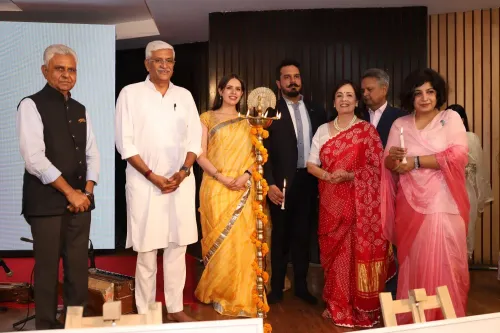
The Bagh Cave Paintings in Madhya Pradesh have been added to India's UNESCO Tentative List as announced by Union Culture and Tourism Minister Gajendra Singh Shekhawat on September 29, 2026 .
The caves date to the Gupta period (approx.
320–550 CE) and feature Buddhist rock-cut architecture and murals of royal courts, processions, musicians, dancers, and social scenes.
Placement on the Tentative List is the mandatory first step under UNESCO's process before a full World Heritage nomination can be submitted.
The Bagh Caves are often compared to the Ajanta Caves (Maharashtra), inscribed as a World Heritage Site in 1983 , which share a similar Gupta-era Buddhist mural tradition.
The listing aligns with India's broader push to develop Buddhist heritage circuits and boost cultural tourism across central India.
The next milestone is the preparation of a full nomination dossier for submission to the UNESCO World Heritage Committee .
Nearly 1,500 years after Gupta-period artists painted royal courts and dancing figures onto cave walls in Madhya Pradesh, the Bagh Cave Paintings have earned their first formal step toward global recognition — Union Culture and Tourism Minister Gajendra Singh Shekhawat announced on Tuesday, September 29, 2026, that the site has been added to India's UNESCO Tentative List.
What makes the Bagh Caves singular
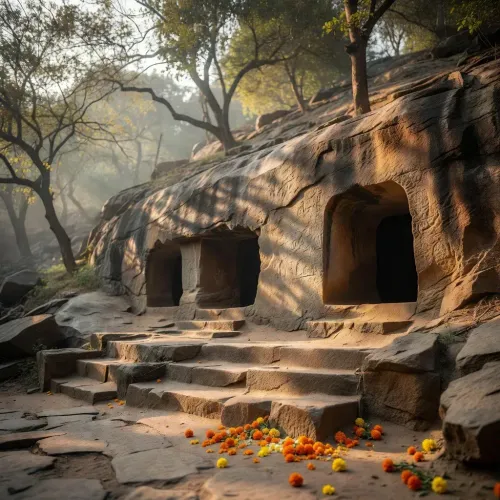
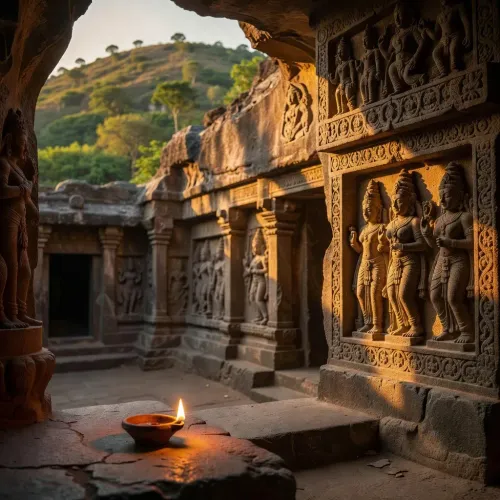
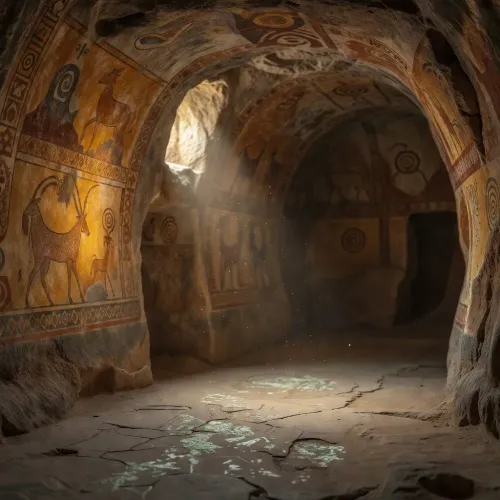
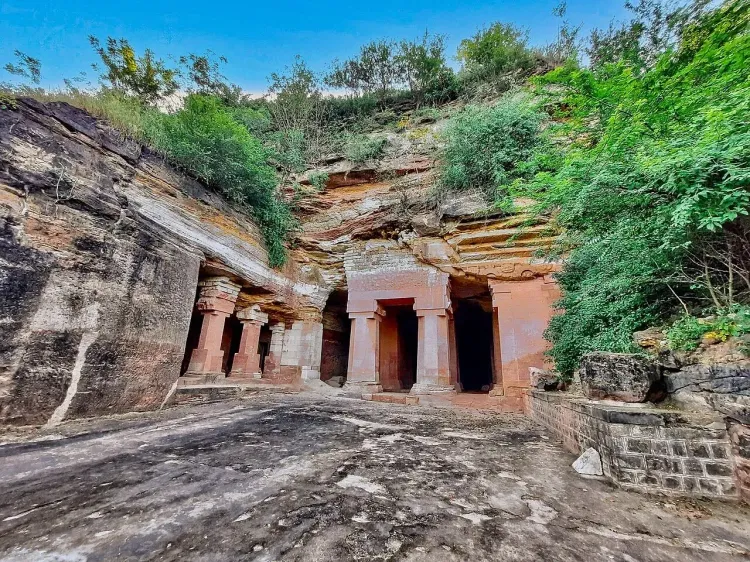
Carved into a sandstone hillside in Madhya Pradesh's Dhar district, the Bagh Caves are a rare surviving gallery of Gupta-era Buddhist art. The murals — painted across rock-cut chambers — depict royal processions, court musicians, dancers, and scenes of everyday social life, offering an almost cinematic record of central Indian civilisation between roughly 320 and 550 CE.
What sets them apart is narrative density. Where many rock-cut sites speak in devotional iconography alone, Bagh's walls record the secular and the sacred side by side: a prince's entourage alongside a Buddhist teaching scene. That duality makes them invaluable to historians of the Gupta golden age.
The Ajanta parallel — and why it matters
Heritage scholars have long drawn comparisons between Bagh and the far more celebrated Ajanta Caves in Maharashtra, which were inscribed as a UNESCO World Heritage Site in 1983. Both sites share Gupta-period Buddhist murals and rock-cut architecture; Ajanta's international fame, however, has historically overshadowed Bagh's equally remarkable corpus.
The tentative list addition is designed to change that trajectory. Under UNESCO's nomination process, placement on a country's Tentative List is the mandatory first step before a full nomination dossier can be submitted to the World Heritage Committee. The listing also signals India's intent to pursue formal inscription — and typically accelerates conservation investment and tourism infrastructure around the site.
India's Buddhist-heritage push, site by site
Bagh's inclusion fits a deliberate pattern. Nalanda Mahavihara, the ancient Buddhist university in Bihar, was inscribed on the World Heritage List in 2016. The government has simultaneously been developing Buddhist circuits — curated pilgrimage and tourism routes linking sites across Uttar Pradesh, Madhya Pradesh, Bihar, and Sikkim — as both a cultural-diplomacy tool and a driver of inbound tourism from East and Southeast Asia.
Adding Bagh to the tentative list strengthens the central India node of that circuit, putting a lesser-known gem alongside already-recognised landmarks and giving heritage conservationists a formal international platform to argue for its protection.
The next milestone to watch: whether India advances Bagh into a full nomination dossier, and when the World Heritage Committee might consider it. The caves, patient for fifteen centuries, have finally started the clock.
Point of View
Which has been methodically elevating Buddhist sites to build India's soft-power credentials across East and Southeast Asia. By flagging a site long overshadowed by Ajanta, the ministry simultaneously expands its conservation mandate and strengthens the central India node of the Buddhist tourism circuit. The announcement also signals to state governments and private investors that infrastructure development around Bagh is now internationally sanctioned — which is often where the real funding flows. Watch whether a formal nomination dossier follows within the next two World Heritage Committee cycles.
NationPress
29 Sept 2026
Frequently Asked Questions
What are the Bagh Cave Paintings?
The Bagh Cave Paintings are a series of Buddhist rock-cut caves in the Dhar district of Madhya Pradesh , famous for Gupta-period murals depicting royal courts, processions, musicians, dancers, and scenes of social life dating back approximately 1,500 years.
What does it mean for Bagh Caves to be on the UNESCO Tentative List?
Being added to India's UNESCO Tentative List is the mandatory first step in the World Heritage nomination process. It means India intends to formally nominate the site for World Heritage inscription and can now submit a full dossier to the UNESCO World Heritage Committee.
How are Bagh Caves different from Ajanta Caves?
Both are Gupta-era Buddhist rock-cut sites with celebrated murals, but the Ajanta Caves in Maharashtra were inscribed as a UNESCO World Heritage Site in 1983 and are internationally far better known. Bagh's murals are noted for their secular social-life scenes alongside Buddhist themes, making them a distinct historical record.
Who announced Bagh Caves' UNESCO Tentative List inclusion?
Union Culture and Tourism Minister Gajendra Singh Shekhawat , the senior BJP leader and Lok Sabha MP from Jodhpur, made the announcement via a post on X on September 29, 2026 .
What is the Gupta period and why is it significant for Indian art?
The Gupta period (approx. 320–550 CE) is considered a golden age of Indian civilisation, marked by major advances in art, architecture, literature, and science. The Bagh and Ajanta murals are among the finest surviving examples of Gupta-era painting.