CM Mohan Yadav: 4 MP Sites on UNESCO Tentative List
Synopsis
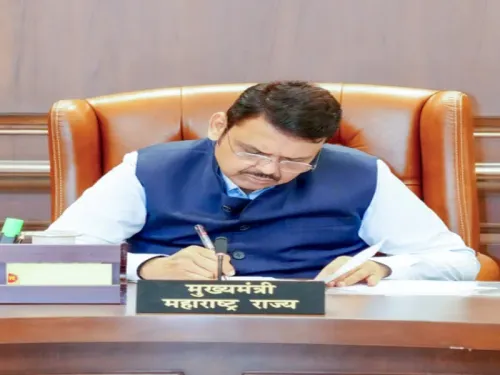
Madhya Pradesh Chief Minister Dr. Mohan Yadav announced that four state heritage sites — Bagh Caves, Ginnorgarh Fort, Chambal Valley temples, and Udayagiri Caves — have been included on UNESCO's Tentative List, a prerequisite for World Heritage nomination.
Key Takeaways
Four Madhya Pradesh sites — Bagh Caves, Ginnorgarh Fort, Chambal Valley temple complexes, and Udayagiri Caves — have been added to UNESCO's Tentative List .
UNESCO's Tentative List is a mandatory first step before a formal World Heritage nomination can be submitted.
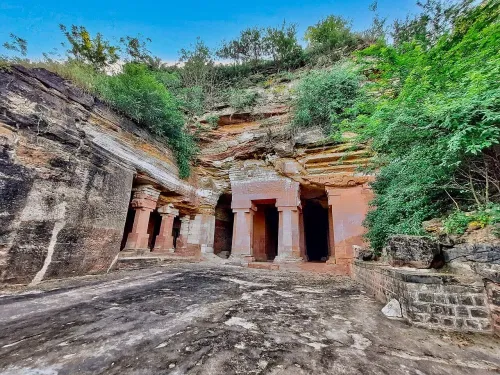
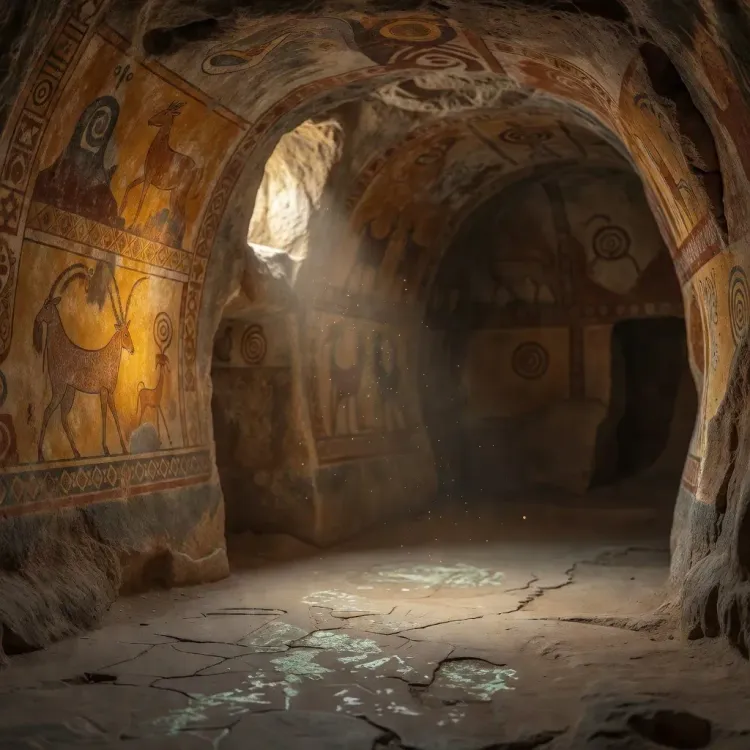
The Bagh Caves (Dhar district) feature 5th-to-7th century Buddhist murals comparable to Ajanta; Udayagiri Caves (near Vidisha) date to the Gupta period (4th-5th centuries CE) .
Madhya Pradesh already holds two UNESCO World Heritage Sites: Khajuraho (1986) and Sanchi Stupa (1989).
Tentative List inclusion typically triggers increased conservation attention and potential tourism infrastructure investment for surrounding communities.
Full inscription requires detailed nomination dossiers, conservation assessments, and management plans evaluated by UNESCO.
Four of Madhya Pradesh's most storied heritage sites have earned a place on UNESCO's Tentative List — the essential first step on the long road to a World Heritage inscription — marking what Chief Minister Dr. Mohan Yadav is calling a proud, globally significant moment for the state's cultural identity.
The four sites now in UNESCO's sights
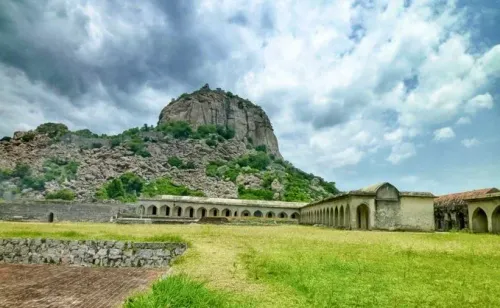
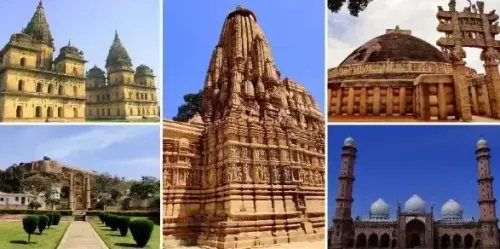
The sites named by CM Dr. Mohan Yadav are the Bagh Caves paintings, Ginnorgarh Fort, the Chambal Valley temple complexes, and the Udayagiri Caves. Each represents a distinct chapter of the subcontinent's civilisational story — and together they make a compelling case for why Madhya Pradesh is sometimes called the dil of Bharat (heart of India) in more than a geographic sense.
The Bagh Caves in Dhar district are Buddhist rock-cut sanctuaries whose 5th-to-7th century murals are frequently compared to the more famous Ajanta paintings — vivid, narrative, and remarkably preserved. The Udayagiri Caves near Vidisha, carved during the Gupta period (4th-5th centuries CE), are among the earliest surviving examples of Hindu rock-cut temple architecture on the subcontinent. Ginnorgarh Fort in Sehore district speaks to the medieval military and political landscape of central India. The Chambal Valley temple complexes add a layer of regional devotional architecture that rarely gets its due on the national stage.
What the Tentative List actually means
UNESCO's process is deliberate and demanding. A site cannot even be formally nominated for World Heritage status unless it first appears on a country's Tentative List — an inventory that signals a government's intent to make a case for outstanding universal value. Inclusion here is not a guarantee of inscription, but it is the gate through which every inscribed site must pass.
Madhya Pradesh already holds two UNESCO World Heritage Sites: the Khajuraho Group of Monuments, inscribed in 1986, and the Sanchi Stupa, inscribed in 1989. If even one of these four new sites clears the full nomination and evaluation process, it would extend the state's World Heritage footprint for the first time in over three decades.
Soft power, tourism, and the bigger picture
India has been systematically building its UNESCO portfolio as part of a broader cultural soft-power and tourism strategy. State archaeology departments, working in coordination with the central Ministry of Culture, identify sites with the strongest case for 'outstanding universal value' — UNESCO's benchmark. Madhya Pradesh, with its dense concentration of Buddhist, Gupta-era, and medieval monuments, is well-positioned to contribute multiple nominations in the years ahead.
For local communities around Bagh, Vidisha, Sehore, and the Chambal region, Tentative List status typically translates into increased conservation attention and, eventually, tourism infrastructure investment. The real test will come when formal nomination dossiers are prepared — a process that demands detailed documentation, conservation assessments, and management plans.
Four sites. One list. The clock — and the opportunity — have started.
Point of View
Where state governments increasingly act as front-line advocates for heritage recognition on the global stage. For CM Dr. Mohan Yadav, the announcement carries political utility as well as genuine cultural significance — it positions the BJP-governed state as a steward of India's civilisational depth ahead of potential tourism and investment conversations. The real policy question is whether Madhya Pradesh's archaeology and culture departments can marshal the resources and documentation rigour needed to convert Tentative List status into full nomination dossiers. Three decades have passed since the state's last World Heritage inscription; these four sites offer a concrete path to changing that.
NationPress
29 Sept 2026
Frequently Asked Questions
What is UNESCO's Tentative List and why does it matter?
UNESCO's Tentative List is an inventory of sites that a country's government intends to consider for formal World Heritage nomination. No site can be nominated — let alone inscribed — without first appearing on this list, making it a critical gateway in the entire World Heritage process.
Which four Madhya Pradesh sites have been added to UNESCO's Tentative List?
The four sites are the Bagh Caves (Dhar district), Ginnorgarh Fort (Sehore district), the Chambal Valley temple complexes, and the Udayagiri Caves (near Vidisha).
How many UNESCO World Heritage Sites does Madhya Pradesh already have?
Madhya Pradesh has two existing UNESCO World Heritage Sites: the Khajuraho Group of Monuments, inscribed in 1986, and the Sanchi Stupa, inscribed in 1989.
What are the Bagh Caves and why are they significant?
The Bagh Caves are Buddhist rock-cut caves in Dhar district, Madhya Pradesh, known for their 5th-to-7th century mural paintings, which are frequently compared in quality and style to the more famous Ajanta cave paintings.
Does Tentative List status guarantee UNESCO World Heritage inscription?
No. Tentative List inclusion is only the first step. A formal nomination dossier must then be prepared, submitted, and evaluated by UNESCO against strict criteria for 'outstanding universal value' before any inscription is granted.