CM Bhupendra Patel Chairs High-Level Power Review in Gandhinagar
Synopsis
Chief Minister Bhupendra Patel chaired a key electricity review at Gandhinagar on 20 October 2026 with Energy Minister Rishikesh Patel and senior officials, directing accelerated action to ensure uninterrupted power for Gujarat's farmers, industries, and households.
Key Takeaways
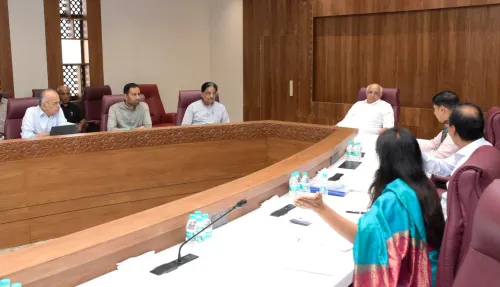
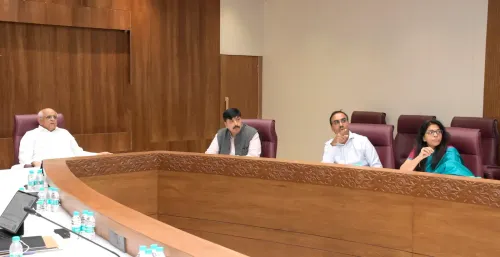
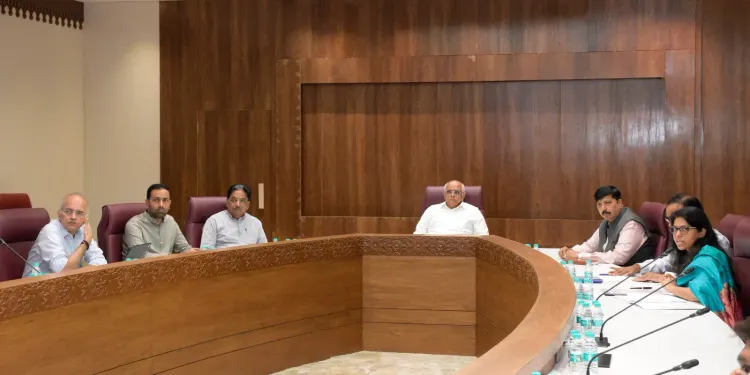
Chief Minister Bhupendra Patel chaired a high-level electricity review meeting at Gandhinagar on 20 October 2026 .
Energy Minister Rishikesh Patel and Minister of State Kaushik Vekaria participated alongside senior Gujarat Energy Department officials.
The meeting reviewed measures taken to meet recent demand surges and charted future supply planning.
The stated aim is uninterrupted power supply for farmers, industries, and ordinary citizens across Gujarat.
CM Patel issued clear directions to the Energy Department to accelerate implementation pace.
Gujarat's proactive power governance dates back to the Jyotigram Yojana (2003) and the electricity board unbundling of 2005 .
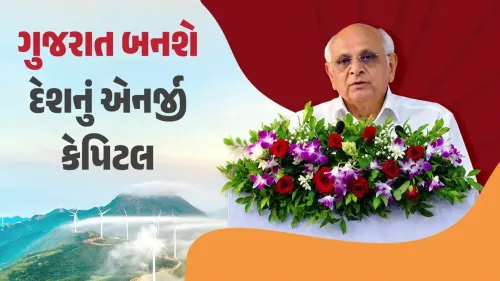
Gujarat's electricity grid is under mounting stress — and Chief Minister Bhupendra Patel is not waiting for a crisis to act. On Tuesday, 20 October 2026, the Chief Minister's Office of Gujarat convened a significant high-level review meeting at Gandhinagar, zeroing in on the state's rising electricity demand and the steps needed to keep the lights on for farmers, factories, and households alike.
The meeting, chaired by CM Bhupendra Patel, brought together Energy Minister Rishikesh Patel, Minister of State for Energy Kaushik Vekaria, and senior officials from the Gujarat Energy Department. The agenda was wide-ranging: from measures already deployed to manage recent demand surges, to long-term plans designed to make the state's supply architecture more resilient. The Chief Minister is reported to have issued clear directives to the Energy Department to accelerate the pace of implementation arising from the discussions.
Three constituencies, one mandate: uninterrupted supply
The meeting's stated goal was to guarantee aviral vij purvatho — uninterrupted electricity supply — to three distinct groups: farmers, industries, and ordinary citizens. That trinity is not accidental. Gujarat's agricultural sector depends on reliable power for irrigation; its industrial clusters drive peak-hour demand; and a growing urban population expects 24x7 supply as a baseline, not a privilege. Serving all three simultaneously, without trade-offs, is the central challenge the review was designed to address.
A state with a long habit of getting ahead of the power curve
Gujarat has a documented track record of proactive power management. The landmark Jyotigram Yojana of 2003 separated agricultural and domestic electricity feeders, slashing unannounced outages in rural areas and becoming a nationally cited model. Two years later, in 2005, the state unbundled the old Gujarat Electricity Board into distinct generation, transmission, and distribution entities — a structural reform designed to sharpen accountability and operational efficiency.
The high-level review held today fits squarely within that tradition. Rather than convening in response to a blackout or a public outcry, the state government's approach — periodic, structured, ministerially led reviews — reflects a philosophy of supply management that anticipates demand rather than chasing it. Gujarat's sustained industrial expansion and agricultural growth have consistently pushed peak demand higher over successive years, making these reviews a regular feature of the state's energy governance calendar.
What comes next from the Energy Department
With CM Patel having issued explicit directions for the Energy Department to move 'with greater speed', the focus now shifts to execution. The key variables to watch: rollout timelines for any new generation or transmission projects approved during the review, and whether revised renewable energy capacity targets emerge in the weeks ahead. Gujarat already carries an ambitious renewable portfolio, and any upward revision would signal how seriously the state is betting on clean energy to manage its demand trajectory.
One high-level meeting is a signal. The generation capacity that follows it is the story.
Point of View
The state signals that power availability is a top-of-government concern — not merely a departmental one. This posture is politically astute in an industrial state where even brief supply disruptions translate directly into economic and agricultural losses. The directives to 'move faster' suggest the administration is preparing to front-load capacity decisions ahead of the next demand cycle.
NationPress
20 Oct 2026
Frequently Asked Questions
Why did CM Bhupendra Patel hold an electricity review meeting in October 2026?
CM Bhupendra Patel convened the meeting at Gandhinagar on 20 October 2026 to comprehensively review Gujarat's rising electricity demand and supply situation, and to direct the Energy Department to accelerate steps ensuring uninterrupted power for farmers, industries, and households.
Who attended the Gujarat electricity review meeting on 20 October 2026?
The meeting was chaired by CM Bhupendra Patel and attended by Energy Minister Rishikesh Patel, Minister of State for Energy Kaushik Vekaria, and senior officials of the Gujarat Energy Department.
What is Jyotigram Yojana and how is it related to Gujarat's power policy?
Jyotigram Yojana, launched in 2003, separated agricultural and domestic electricity feeders in Gujarat's rural areas, significantly improving supply reliability and becoming a nationally cited model for proactive power governance — the tradition the current review continues.
What will the Gujarat Energy Department do after the October 2026 review?
CM Patel issued clear directives for the department to move with greater speed on implementation. Analysts will watch for rollout timelines of new generation and transmission projects, as well as any revised renewable energy capacity targets in the coming months.
How does Gujarat manage its electricity supply for farmers?
Gujarat has historically separated agricultural feeders from domestic ones under Jyotigram Yojana, ensuring scheduled and reliable power for irrigation. The October 2026 review reaffirms that uninterrupted supply to farmers remains a central government priority.