CM Bhupendra Patel Leads Gujarat's Energy Self-Reliance Push
Synopsis
The Chief Minister's Office of Gujarat on 13 June 2026 spotlighted the state's energy sector progress under CM Bhupendra Patel, citing Gujarat's role in fulfilling India's Atmanirbhar Bharat self-reliance goals through expanded renewable capacity and infrastructure investment.
Key Takeaways
The Chief Minister's Office of Gujarat posted on 13 June 2026 highlighting the state's energy sector achievements under CM Bhupendra Patel .
The post invoked the Atmanirbhar Bharat vision, framing Gujarat's energy push as a contribution to national self-reliance.
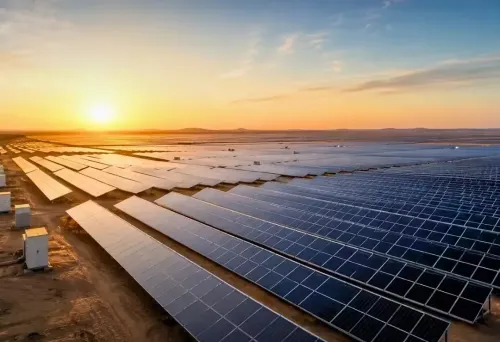
Gujarat introduced its first solar policy in 2009 and notified a comprehensive Renewable Energy Policy in 2023 targeting new gigawatt-scale capacity by 2030.
India's national target stands at 500 GW of non-fossil fuel capacity by 2030 and net-zero emissions by 2070 .
Key stakeholders include renewable energy developers, state discoms, and industrial consumers who stand to benefit from a stronger green power base.
Upcoming state budget announcements and revisions to renewable purchase obligations are the next milestones to watch.
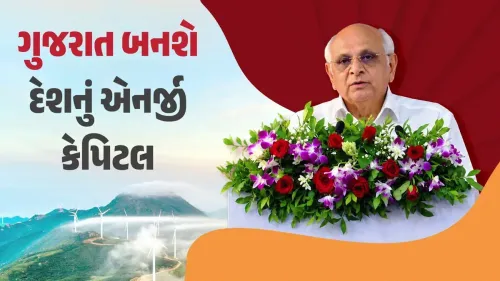
The Chief Minister's Office of Gujarat, on Saturday, 13 June 2026, highlighted the state's strides in the energy sector under the leadership of Chief Minister Bhupendra Patel, reaffirming Gujarat's commitment to making India self-reliant in energy.
The post, shared under the campaign hashtag #અગ્રેસર_ગુજરાત ('Gujarat Always Ahead'), invited citizens to learn about developments that are fulfilling the resolve to make the country self-sufficient in energy — a direct reference to the national Atmanirbhar Bharat vision. The message read: 'Always ahead, Gujarat! Come, let us know the news from Gujarat that is realising the resolve to make the country self-reliant in the energy sector under the leadership of Chief Minister Shri Bhupendrabhai Patel.'
Context
Gujarat has long positioned itself as a frontrunner in India's energy transition. The state introduced its first dedicated solar policy as early as 2009, making it one of the earliest movers in renewable energy policy in the country. Successive revisions have steadily expanded the state's renewable procurement targets, building an ecosystem that attracts private investment in solar parks and wind projects. Under Chief Minister Bhupendra Patel, who has led the state since September 2021, this trajectory has been reinforced with a focus on large-scale infrastructure and energy self-sufficiency. The CMO's communication underscores that the state's energy agenda is not merely a local priority but a contribution to India's broader national goals.Policy Backdrop
Gujarat notified a comprehensive Renewable Energy Policy in 2023, targeting the addition of several gigawatts of new solar and wind capacity by 2030. This aligns with India's national commitment to achieve 500 GW of non-fossil fuel-based power capacity by 2030 and reach net-zero emissions by 2070. The Atmanirbhar Bharat programme, launched in 2020, set ambitious targets for domestic manufacturing and reduced import dependence in the energy sector. Gujarat's policy framework — encompassing dedicated land banks, streamlined approvals, and renewable purchase obligations — has been designed to operationalise these national goals at the state level.Stakeholders and Impact
The primary beneficiaries of Gujarat's energy push include renewable energy developers, state electricity distribution companies (discoms), and industrial consumers seeking reliable and affordable green power. A stronger renewable base reduces dependence on imported fossil fuels, directly contributing to energy security for both the state and the country. For citizens, the broader self-reliance agenda translates into potential improvements in power availability and long-term tariff stability. The CMO's public communication also signals continued political will to sustain investment in the sector, which is closely watched by both domestic and international clean energy investors.What's Next
Attention will now turn to upcoming state budget announcements for new renewable energy tenders and any revisions to Gujarat's renewable purchase obligation trajectory in the coming fiscal year. The CMO's post, framed as an invitation to 'come and know' the news, suggests a series of announcements or updates may follow, keeping the state's energy narrative in public focus through 2026. Gujarat's sustained emphasis on energy self-reliance positions it as a key contributor to India's clean energy transition — and a benchmark other states are likely to watch closely.Point of View
Ongoing effort to brand the state as India's clean energy vanguard — a narrative that serves both developmental and political purposes ahead of future electoral cycles. By anchoring local achievements to the national Atmanirbhar Bharat framework, the Bhupendra Patel administration is aligning state identity with the ruling dispensation's flagship ideology at the Centre. This dual messaging — state pride and national contribution — is a well-worn but effective template in Indian political communication. The broader implication is that Gujarat intends to remain a reference point in India's energy transition debate, influencing policy benchmarks for other states.
NationPress
27 Oct 2026
Frequently Asked Questions
What is Gujarat's renewable energy target for 2030?
Gujarat's 2023 Renewable Energy Policy targets the addition of several gigawatts of new solar and wind capacity by 2030, in line with India's national goal of 500 GW non-fossil fuel capacity by the same year.
Who is the Chief Minister of Gujarat in 2026?
Bhupendra Patel is the Chief Minister of Gujarat, a position he has held since September 2021.
What is Atmanirbhar Bharat and how does it relate to energy?
Atmanirbhar Bharat is a national self-reliance programme launched in 2020 that includes targets for domestic manufacturing and reduced import dependence in the energy sector; Gujarat's renewable energy push is framed as a direct contribution to this initiative.
When did Gujarat first introduce a solar energy policy?
Gujarat introduced its first dedicated solar policy in 2009 , making it one of the earliest states in India to establish a formal framework for solar energy development.
What does 'Agreshar Gujarat' mean?
'Agreshar Gujarat' — written in Gujarati as અગ્રેસર ગુજરાત — translates to 'Gujarat Always Ahead,' a campaign slogan used by the Chief Minister's Office to highlight the state's progress across various sectors.