CM Bhupendra Patel Pushes Gujarat as India's Energy Capital
Synopsis
Gujarat Chief Minister Bhupendra Patel on June 12, 2026, declared the state's march toward becoming India's energy capital. Backed by decades of solar, wind, and petroleum policy, Gujarat combines early-mover advantage with major industrial players to lead national energy ambitions.
Key Takeaways
CM Bhupendra Patel publicly framed Gujarat as India's emerging energy capital in a post on June 12, 2026 .
Gujarat hosts the world's largest grassroots refinery complex at Jamnagar , operated by Reliance Industries .
The state was the first in India to announce a Solar Power Policy in 2009 under then-CM Narendra Modi .
The Vibrant Gujarat Summit , running since 2003 , has been a key vehicle for energy-sector investment pledges.
Gujarat's coastal geography supports both wind energy corridors and major port-linked industrial infrastructure.
Fresh capacity targets and investment figures are expected at the next Vibrant Gujarat Summit or state energy policy revision.
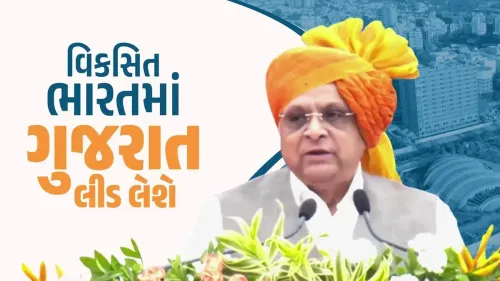
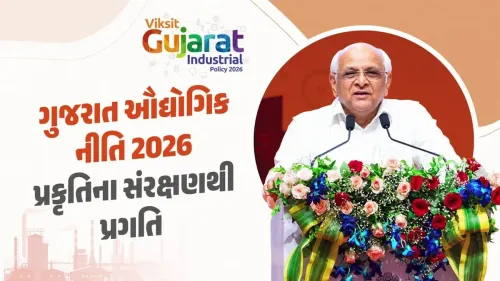
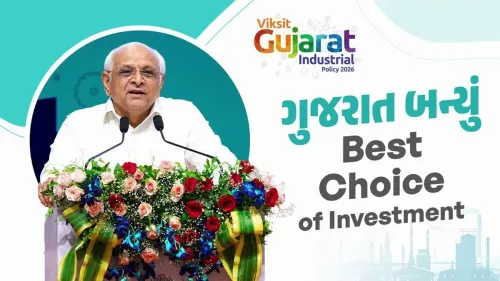
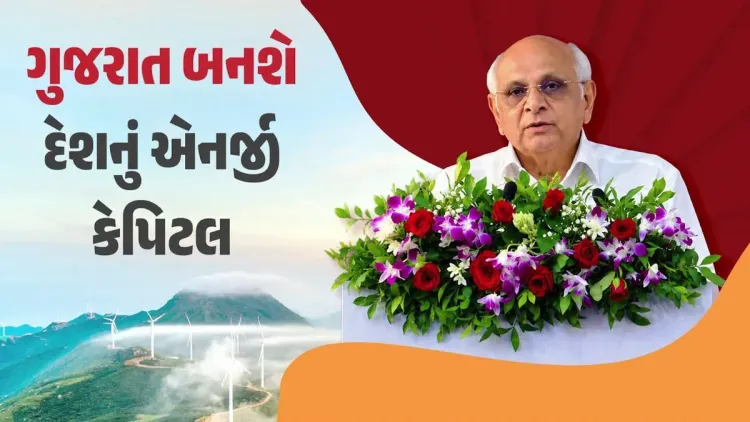
Gujarat Chief Minister Bhupendra Patel on Friday, June 12, 2026, declared the state's forward march toward becoming the nation's energy capital, sharing a video on X that underscores Gujarat's accelerating ambitions in both renewable and conventional energy sectors.
Posting in Gujarati, CM Patel wrote: 'દેશનું એનર્જી કેપિટલ બનવા તરફ ગુજરાતના આગેકદમ..' — translated as 'Gujarat's steps forward toward becoming the energy capital of the country.' The post, accompanied by a video, signals the state government's intent to consolidate and project its energy leadership at a national level.
Context
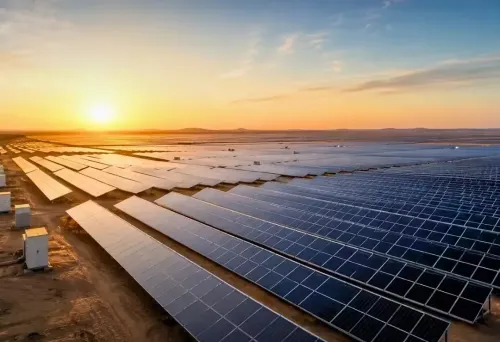
Gujarat has long positioned itself at the intersection of petroleum refining and renewable energy. The state is home to the world's largest grassroots refinery complex at Jamnagar, operated by Reliance Industries, and hosts large-scale solar and wind installations developed by groups including Adani Group. This industrial depth gives the state a credible claim to the 'energy capital' label it is now actively promoting.
The western coastal state's geographic advantages — extensive coastline, high solar irradiance in the Rann of Kutch region, and strong wind corridors — have attracted sustained investment across the energy value chain. CM Patel's post reflects a continuation of that strategic identity.
Policy Backdrop
Gujarat's energy policy lineage stretches back over two decades. In 2009, under then-Chief Minister Narendra Modi, Gujarat became the first Indian state to announce a dedicated Solar Power Policy, setting a template that influenced India's National Solar Mission launched in 2010. The Vibrant Gujarat Summit series, which began in 2003, has since become a major platform for energy-sector memoranda of understanding and investment pledges.
Successive BJP governments in the state have maintained policy continuity, combining incentives for renewable developers with support for the established petroleum and petrochemical corridor. This long-run consistency has reinforced Gujarat's early-mover advantage over other states competing for energy investment.
Stakeholders and Impact
The push to brand Gujarat as India's energy capital has direct implications for energy investors, renewable developers, oil refineries, and coastal communities dependent on port and industrial activity. For the national grid, Gujarat's capacity additions in solar and wind contribute directly to India's net-zero commitments and energy-security targets.
Smaller renewable developers and ancillary industries — equipment manufacturers, logistics firms, skilled labour — stand to benefit from the state's continued policy focus. Coastal communities near major project sites, however, also watch land-use and environmental decisions closely as capacity scales up.
What's Next
Concrete investment figures, capacity addition targets, and fresh policy announcements are widely expected to emerge at the next edition of the Vibrant Gujarat Summit or through a revised state energy policy. CM Patel's public framing of Gujarat as the country's energy capital suggests the state is preparing a larger narrative push, likely backed by specific project milestones or inter-governmental agreements.
As India races toward its renewable energy targets and works to balance energy security with decarbonisation, Gujarat's ability to translate its early-mover advantage into verifiable capacity and investment numbers will determine whether the 'energy capital' claim moves from aspiration to accepted fact.
Point of View
Staking Gujarat's claim to a title — 'energy capital of India' — that carries real policy and investment weight. It fits a pattern in which BJP-governed Gujarat has consistently used high-visibility communication to reinforce its identity as India's industrial and energy vanguard, a narrative first built under Narendra Modi's tenure as CM. The timing, ahead of what is likely a major summit or policy announcement, suggests the post is the opening of a broader campaign rather than a standalone message. For rival states competing for the same energy investment flows, the assertion raises the stakes on who can deliver verifiable capacity numbers fastest.
NationPress
14 Sept 2026
Frequently Asked Questions
Why is Gujarat called the energy capital of India?
Gujarat is called India's energy capital because it combines the country's largest petroleum refining complex at Jamnagar with major solar parks, wind farms, and a long track record of energy-friendly policies dating back to the 2009 Solar Power Policy — giving it unmatched scale across both conventional and renewable energy.
What has CM Bhupendra Patel said about Gujarat's energy goals?
On June 12, 2026, CM Bhupendra Patel posted on X declaring Gujarat's forward march toward becoming the nation's energy capital, accompanied by a video highlighting the state's energy sector progress.
Which companies drive Gujarat's energy sector?
Reliance Industries operates the world's largest grassroots refinery at Jamnagar, while Adani Group develops large-scale solar, thermal, and port infrastructure across the state, making them the two dominant private players in Gujarat's energy landscape.
What is the Vibrant Gujarat Summit's role in energy investment?
The Vibrant Gujarat Summit, held since 2003, is a biennial investment conclave where energy companies sign memoranda of understanding with the state government; it has been a primary channel for attracting both domestic and foreign energy-sector capital to Gujarat.
How does Gujarat contribute to India's renewable energy targets?
Gujarat's solar installations in the Rann of Kutch and its extensive wind capacity along the coastline feed directly into India's national renewable energy grid, supporting the country's net-zero commitments and reducing dependence on fossil fuel imports.