CM Bhupendra Patel Credits Modi for Making Gujarat Top Investment Hub
Synopsis
Gujarat CM Bhupendra Patel on 15 June 2026 credited PM Modi with making Gujarat India's most trusted industrial state, pointing to transparency, ease of doing business, and fast decision-making as the foundation of the state's status as a top global investment destination.
Key Takeaways
CM Bhupendra Patel credited PM Narendra Modi on 15 June 2026 with making Gujarat the most trusted state for industry in India.
The post highlighted ease of doing business, transparency, and fast decision-making as the three pillars of Gujarat's investor-friendly reputation.
Gujarat has been described as the 'best choice of investment' for reputed domestic and international companies due to its policy-driven governance.
The Vibrant Gujarat Global Summit , launched in 2003 , has been a key vehicle for positioning the state as a premier investment destination.
Single-window clearance mechanisms introduced in the early 2000s helped streamline industrial approvals and reduce bureaucratic delays.
Gujarat's governance model has influenced ease-of-doing-business reforms at the national level.
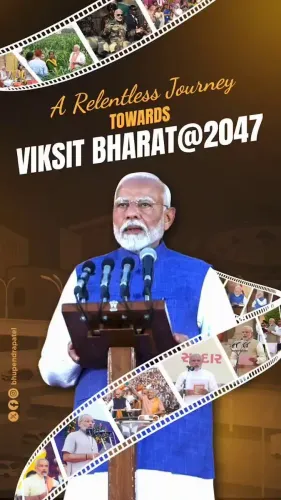
Gujarat Chief Minister Bhupendra Patel on Monday, 15 June 2026 credited former Gujarat Chief Minister and Prime Minister Narendra Modi with transforming the western state into what he called the most trusted industrial destination in the country, citing ease of doing business, transparency, and fast decision-making as the pillars of this transformation.
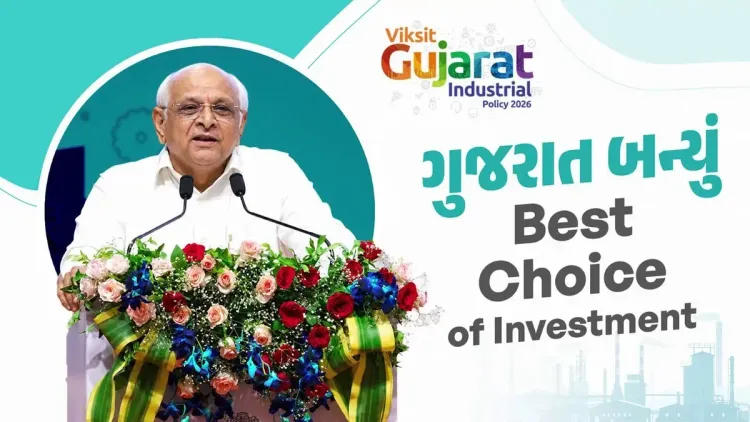
Posting in Gujarati on X, CM Patel said: 'Mananiya Modiji-e rokankaro ne saralata, paradarsita ane zadpi nirnay prakriya apine Gujaratne udyog mate sauthi vishvasaniy rajya banvyu' — translated: 'Honourable Modi has made Gujarat the most trusted state for industry by providing investors with ease, transparency, and a fast decision-making process.' He further described the state as having become the 'best choice of investment' for reputed domestic and international companies, owing to its identity as a policy-driven state.
Context
Narendra Modi served as Chief Minister of Gujarat from 2001 to 2014, a period during which the state built a reputation for pro-investor governance. His administration introduced single-window clearance mechanisms in the early 2000s to streamline approvals for industrial projects, reducing bureaucratic delays that had historically deterred large-scale investment. CM Bhupendra Patel, who took charge after Modi moved to the national stage, has maintained and extended these frameworks.
Policy Backdrop
A cornerstone of Gujarat's investment strategy has been the Vibrant Gujarat Global Summit, launched in 2003, which positioned the state as a premier destination for domestic and foreign capital. The summit brought together global corporations, multilateral institutions, and policymakers on a single platform, generating significant investment intent across sectors including manufacturing, energy, and infrastructure. Gujarat's consistent emphasis on transparency and speed of approvals has since influenced ease-of-doing-business reforms rolled out at the national level.
The state's policy-driven identity — built on predictable regulatory frameworks, investor facilitation cells, and active government outreach — has been cited by industry bodies as a model for other Indian states. This approach helped sustain inflows of both domestic and foreign capital across successive administrations.
Stakeholders and Impact
Investors and industrial companies — both domestic conglomerates and multinational corporations — are the primary beneficiaries of the governance model CM Patel highlighted. The single-window clearance system in particular reduced the time and cost of obtaining regulatory approvals, making large industrial projects more viable. Workers in the manufacturing and infrastructure sectors have also benefited from the employment generated by sustained investment inflows into Gujarat.
The broader Indian economy has a stake in Gujarat's investment climate as well, since the state contributes a significant share of national industrial output and exports. Policy innovations piloted in Gujarat — including investor facilitation desks and streamlined land-acquisition processes — were later adapted into national frameworks.
What's Next
Future editions of the Vibrant Gujarat Global Summit will be closely watched as a barometer of investor confidence in the state's ongoing policy commitments. Any new state industrial policies or major investment announcements in the coming year will test whether the momentum CM Patel described continues to hold. The framing of Gujarat as a 'policy-driven state' also signals that the current administration intends to keep institutional frameworks — rather than ad-hoc incentives — at the centre of its investment pitch to global companies.
Point of View
The administration signals continuity and predictability to global capital. The broader arc here is the BJP's long-running effort to position economic governance competence as its defining electoral and ideological asset.
NationPress
15 Sept 2026
Frequently Asked Questions
Why did Gujarat CM Bhupendra Patel praise Modi for Gujarat's industrial growth?
CM Patel credited PM Modi with introducing ease of doing business, transparency, and fast decision-making during his tenure as Gujarat Chief Minister from 2001 to 2014, which he says made the state the most trusted industrial destination in India.
What is the Vibrant Gujarat Global Summit?
The Vibrant Gujarat Global Summit is a global investment promotion event first organised in 2003 to showcase Gujarat to domestic and international companies, and has since become one of India's largest investor outreach platforms.
What is single-window clearance in Gujarat?
Single-window clearance is a mechanism introduced in Gujarat in the early 2000s that allows investors to obtain all necessary regulatory approvals through a single point of contact, reducing delays and bureaucratic complexity for industrial projects.
Is Gujarat the top investment destination in India?
Gujarat is consistently ranked among India's leading states for industrial investment, owing to its policy-driven governance, investor facilitation infrastructure, and sustained inflows of domestic and foreign capital since the early 2000s.
What did Bhupendra Patel say about Gujarat on X on 15 June 2026?
CM Bhupendra Patel posted in Gujarati that PM Modi made Gujarat the most trusted state for industry by providing investors with ease, transparency, and fast decision-making, and described Gujarat as the 'best choice of investment' for reputed domestic and international companies.