CM Bhupendra Patel Launches Vibrant Gujarat Industrial Policy 2026
Synopsis
Chief Minister Bhupendra Patel launched the Vibrant Gujarat Industrial Policy 2026 at Mahatma Mandir, Gandhinagar, on 15 June 2026, calling it a comprehensive development document aligned with PM Modi's Make in India vision and the national Viksit Bharat @2047 goal.
Key Takeaways
CM Bhupendra Patel launched the Vibrant Gujarat Industrial Policy 2026 at Mahatma Mandir, Gandhinagar on 15 June 2026 .
Deputy Chief Minister Harsh Sanghvi and state cabinet ministers were present at the launch.
The policy is described as a comprehensive development document, not merely an incentive scheme, aimed at realising Viksit Bharat @2047 .
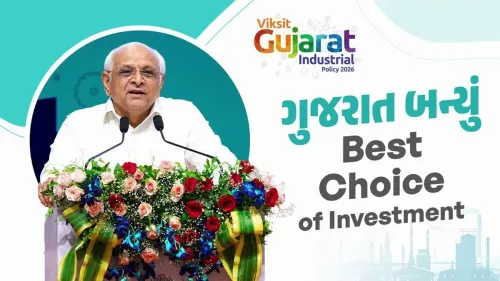
CM Patel called Gujarat the 'best choice of investment' for domestic and international companies, citing ease of doing business and transparency.
The policy is aligned with PM Modi 's Make in India, Make for the World initiative and includes a commitment to environmental conservation alongside industrial growth.
Implementation guidelines, incentive structures and single-window portal updates are expected to follow the launch.
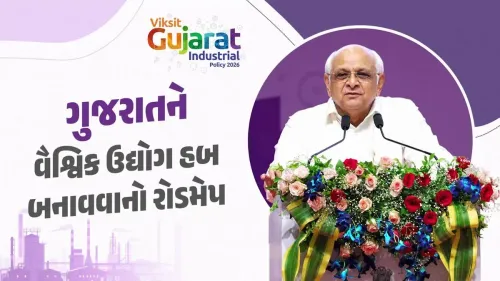
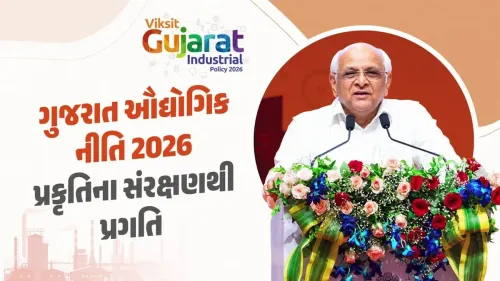
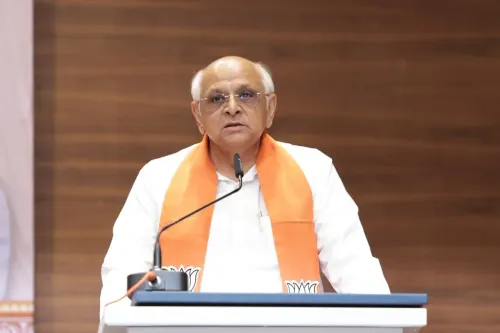
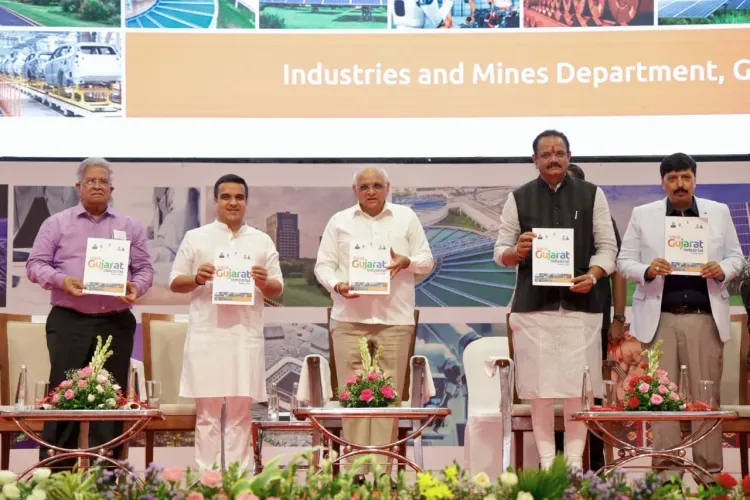
Chief Minister Bhupendra Patel launched the 'Vibrant Gujarat Industrial Policy 2026' at Mahatma Mandir, Gandhinagar, on Monday, 15 June 2026, in the presence of Deputy Chief Minister Harsh Sanghvi, state cabinet ministers and senior officials, aiming to broaden Gujarat's established identity as a policy-driven state.
Context
The Chief Minister's Office announced the launch in a post on X, stating that the policy was unveiled with the aim of expanding Gujarat's image as a policy-driven state — an identity shaped under the leadership of Prime Minister Narendra Modi during his tenure as the state's Chief Minister. Speaking at the event, CM Patel described Gujarat as the 'best choice of investment' for prestigious domestic and international companies, citing ease of doing business, transparency and swift decision-making as the state's core strengths.
CM Patel characterised the new policy not merely as an incentive scheme for industries, but as, in his words, 'sarvagrahi vikasno dastavej' (a comprehensive development document) — one that translates the resolve of 'Viksit Gujarat thi Viksit Bharat @ 2047' (Developed Gujarat towards Developed India by 2047) into action.
Policy Backdrop
Gujarat's policy-driven industrial model traces its origins to the Vibrant Gujarat Global Summit, first held in 2003, which established the state as a preferred investment destination through biennial investor conclaves and successive policy frameworks. The Gujarat Industrial Policy 2015 introduced single-window clearance mechanisms and sector-specific incentives that formed the structural backbone for subsequent iterations.
The new policy is explicitly aligned with the central government's Make in India initiative, launched in 2014, and the broader Viksit Bharat @2047 national vision. CM Patel expressed confidence that the policy would fulfil PM Modi's resolve of 'Make in India, Make for the World'. The policy also incorporates an environmental dimension, with the Chief Minister stating the intent to pursue industrial development alongside environmental conservation.
Stakeholders and Impact
The policy is expected to directly affect investors, established industrial units, and MSMEs operating in or considering Gujarat as a base. By signalling regulatory predictability and a structured incentive environment, the state government seeks to attract both domestic conglomerates and multinational firms looking for a stable manufacturing hub in India.
The emphasis on sustainable industrialisation reflects a growing national consensus that environmental safeguards must accompany economic growth targets — a balance that Gujarat's new policy document claims to address. Stakeholders in sectors tied to the Make in India supply chain are likely to watch the implementation guidelines closely.
What's Next
Detailed implementation guidelines, sector-specific incentive structures and updates to the state's single-window clearance portal are expected to follow the policy launch in the coming weeks. The next Vibrant Gujarat Global Summit will serve as a key barometer of investor response, with investment commitment levels likely to reflect confidence in the new framework.
As Gujarat continues to position itself as a gateway for both domestic manufacturing and export-oriented production, the Vibrant Gujarat Industrial Policy 2026 sets the legislative and regulatory tone for the state's industrial trajectory through the decade — directly feeding into India's broader ambition of becoming a developed economy by 2047.
Point of View
The state government is aligning its political narrative tightly with the Centre, reducing friction for large investors who need federal and state-level certainty simultaneously. The inclusion of environmental safeguards, however briefly mentioned, suggests the policy is also calibrated for ESG-conscious foreign capital. Whether the implementation architecture matches the ambition of the document will determine if Gujarat retains its edge over competing states.
NationPress
19 Sept 2026
Frequently Asked Questions
What is the Vibrant Gujarat Industrial Policy 2026?
The Vibrant Gujarat Industrial Policy 2026 is a state industrial policy document launched by Gujarat Chief Minister Bhupendra Patel on 15 June 2026 at Mahatma Mandir, Gandhinagar. It is designed to guide the pace and direction of industrial growth in Gujarat, aligned with the national Make in India initiative and the Viksit Bharat @2047 vision.
Who launched the Vibrant Gujarat Industrial Policy 2026?
Chief Minister Bhupendra Patel launched the policy, with Deputy Chief Minister Harsh Sanghvi, state cabinet ministers and senior officials present at the event held at Mahatma Mandir, Gandhinagar.
What is the connection between the Vibrant Gujarat Industrial Policy 2026 and Viksit Bharat @2047?
CM Patel described the policy as a comprehensive development document that translates the resolve of 'Viksit Gujarat thi Viksit Bharat @2047' — meaning a developed Gujarat contributing to a developed India by 2047 — into actionable industrial targets.
How does the Vibrant Gujarat Industrial Policy 2026 relate to Make in India?
CM Patel stated that the policy will fulfil PM Narendra Modi's resolve of 'Make in India, Make for the World,' positioning Gujarat as a preferred manufacturing and export hub aligned with the central government's industrial agenda.
What is Mahatma Mandir in Gandhinagar?
Mahatma Mandir is a major convention and exhibition centre in Gandhinagar, Gujarat's capital. It is the regular venue for the Vibrant Gujarat Global Summit and other significant state and national policy events.