CM Bhupendra Patel Reviews Gujarat's Power Grid for 29,822 MW Demand
Synopsis
Gujarat CM Bhupendra Patel chaired a high-level energy review on 20 October 2026, addressing a record 29,822 MW peak demand by securing 13–14 daily coal rakes from November, scaling up battery storage, and requesting 5,000 MW more from the Centre for future needs.
Key Takeaways
Gujarat recorded a peak electricity demand of 29,822 MW , driven by weak monsoon conditions and rising temperatures.
The Central Coal Ministry has assured 13–14 coal rakes daily from November to fuel state thermal plants.
Battery Energy Storage System (BESS) capacity is being expanded to store daytime solar power for evening peak-hour discharge.
From 2028–29 , over 2,500 MW will be phased in from Central Generating Stations in a time-bound plan.
Gujarat has formally requested an additional 5,000 MW allocation from the Union Government for long-term demand coverage.
CM Bhupendra Patel framed the review as ensuring uninterrupted supply to farmers, industries and ordinary citizens.
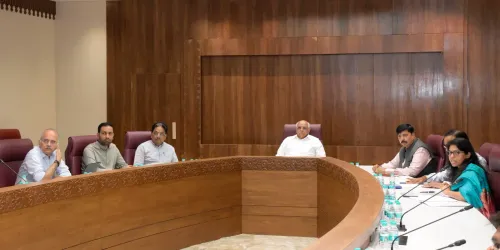
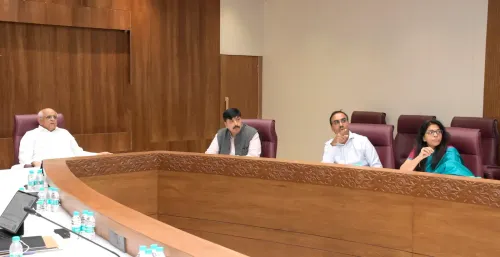
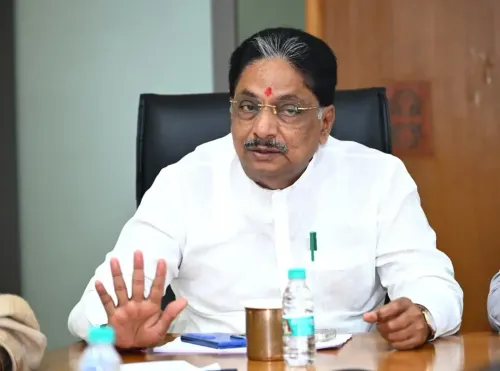
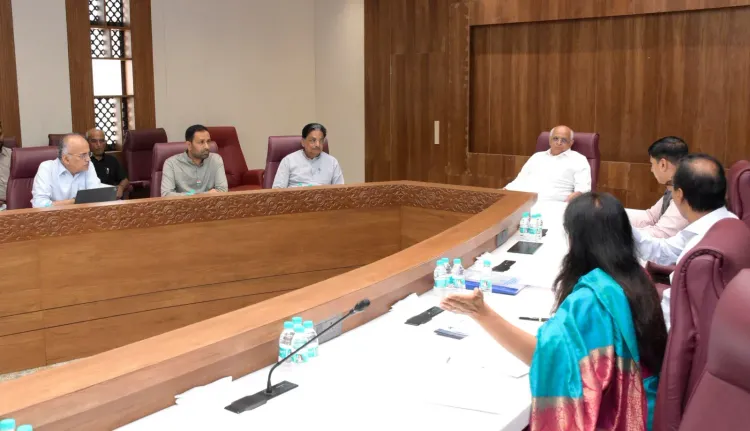
Gujarat is staring down a record electricity demand of 29,822 megawatts — and Gujarat Chief Minister Bhupendra Patel is not waiting for the lights to flicker. On Tuesday, 20 October 2026, he chaired a high-level review meeting with the state's Energy Department to stress-test Gujarat's power supply readiness against a perfect storm of weak monsoon rains and rising temperatures.
Posting on X in Gujarati, CM Patel wrote that the meeting undertook a 'comprehensive review to ensure uninterrupted power supply to farmers, industries and ordinary citizens in the face of the state's growing electricity demand.' The trigger: a record peak demand of 29,822 MW recorded recently, compounded by erratic rainfall and heat that have squeezed both supply margins and agricultural pump-set usage simultaneously.
Coal rakes locked in for November, evening storage to be scaled up
The most immediate firewall came in the form of a firm commitment from the Central Coal Ministry: from November, Gujarat will receive 13 to 14 coal rakes daily, shoring up fuel stocks at thermal power plants. That assurance matters because coal-supply disruptions in 2022 exposed just how vulnerable state grids become when rake schedules slip — a lesson the centre took seriously in subsequent coordination frameworks with states.
Alongside coal, the state is expanding its Battery Energy Storage System (BESS) capacity — the technology that soaks up surplus solar generation during the day and releases it exactly when demand spikes, typically between 6 and 10 pm. Gujarat has steadily grown its solar portfolio since successive state solar policies from 2015 onward, but variable solar creates an evening gap. BESS is now the bridge the grid needs.
2028–29 horizon: 2,500 MW from central stations, 5,000 MW more sought
Patel's administration is also playing the long game. From 2028–29, more than 2,500 MW of additional power will be phased in from Central Generating Stations — the NTPC-type national utilities that supply states under central allocation quotas. The state has simultaneously written to the Union Government requesting an additional 5,000 MW allocation to cover future demand growth.
That number is not arbitrary. Gujarat runs one of India's most power-hungry economies: a dense industrial corridor, millions of agricultural pump-sets on subsidised supply, and fast-growing urban consumption collectively push the state's peak load to levels few others match. Managing that curve — short-term with coal rakes and BESS, long-term with central allocations — is the arithmetic behind today's review.
What the grid watchers are tracking next
Three things will reveal whether the plan holds: whether the 13–14 daily coal rakes actually roll from November, how quickly the new BESS capacity comes online before next summer's demand peak, and whether New Delhi approves Gujarat's 5,000 MW request in the next central allocation cycle. Gujarat's industrial heartland cannot afford a repeat of grid stress — and CM Patel's high-profile review signals that the state government knows it.
A grid built for tomorrow's demand, funded by today's decisions. That is the bet Gujarat is placing — and the November coal rake deadline will be the first test of whether it pays off.
Point of View
822 MW peak demand test is not merely a seasonal grid management story — it reflects the structural tension that India's fastest-industrialising states face as variable renewables displace firm thermal capacity faster than storage can compensate. CM Patel's dual move — locking in short-term coal rakes while requesting 5,000 MW of central allocation — mirrors a pattern seen across large states: renewable ambition in policy, thermal dependence in practice. The BESS scale-up is the most consequential signal here; if Gujarat executes it ahead of the 2027 summer peak, it becomes a replicable template. The real political test arrives in November, when coal rake deliveries either materialise on schedule or expose the gap between assurance and execution.
NationPress
20 Oct 2026
Frequently Asked Questions
What is the record peak electricity demand Gujarat recorded recently?
Gujarat recently recorded a peak electricity demand of 29,822 megawatts, one of the highest in the state's history, driven by weak monsoon conditions and elevated temperatures.
How many coal rakes will Gujarat receive daily from November 2026?
The Central Coal Ministry has assured Gujarat of 13 to 14 coal rakes per day starting November 2026 to maintain adequate fuel supply at thermal power plants.
What is BESS and why is Gujarat expanding it?
Battery Energy Storage System (BESS) stores surplus solar power generated during the day and releases it during evening peak-demand hours, helping bridge the gap that arises when solar generation drops after sunset. Gujarat is expanding BESS capacity to better manage its evening grid load.
When will Gujarat get more power from Central Generating Stations?
Gujarat expects more than 2,500 MW of additional power to be made available in phases from Central Generating Stations starting in the 2028–29 period under a time-bound long-term plan.
How much additional power has Gujarat requested from the central government?
Gujarat has formally requested an additional 5,000 MW allocation from the Union Government to meet projected future electricity demand as the state's industrial and agricultural consumption continues to grow.