India at SCO Dushanbe summit: More institutions don't mean more results
Synopsis
At the SCO’s 25th Council of Heads of Government meeting in Dushanbe, Defence Minister Rajnath Singh delivered a two-pronged message: stop expanding institutions for their own sake, and eliminate the entire ecosystem of terrorism with zero double standards. With the PMTEC Action Plan for 2026–2030 endorsed, India is pushing the SCO to move from communiqués to concrete economic outcomes.
Key Takeaways
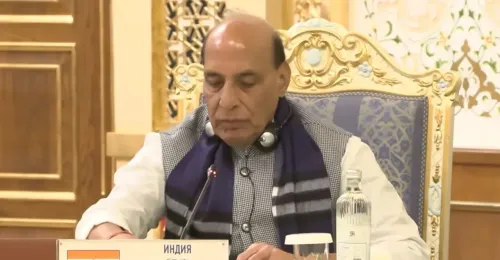
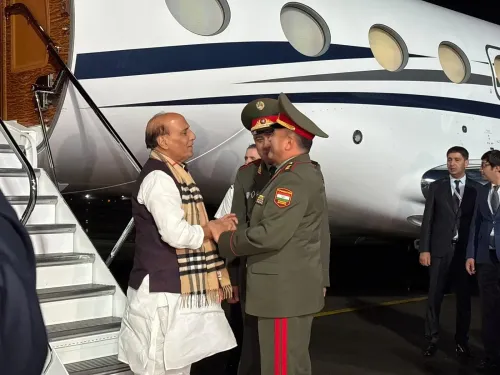
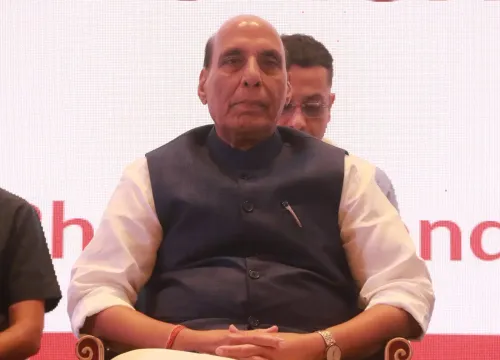
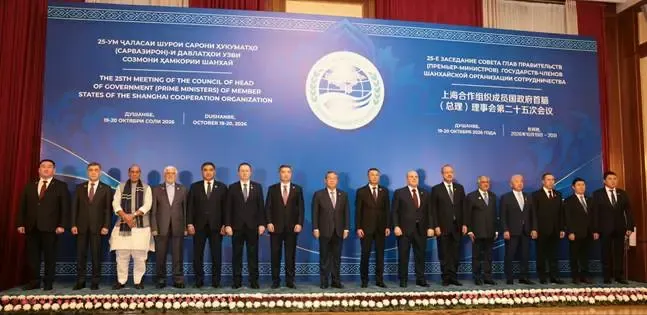
Defence Minister Rajnath Singh represented India at the 25th SCO Council of Heads of Government (CHG) meeting in Dushanbe on 20 October 2026 .
Singh warned that a greater number of institutions does not necessarily translate into greater achievements , urging the SCO to avoid duplication and prioritise practical value.
The heads of delegation adopted the Joint Communiqué , including the SCO budget for 2027 and the PMTEC Action Plan for 2026–2030 , which India backed.
Singh called for zero tolerance on terrorism , saying there can be no justification or double standards, and no safe haven for those who finance terrorists.
India’s people-centric success metrics — youth opportunities, entrepreneur markets, farmer technology access — signal a push for tangible SCO outcomes over symbolic expansion.
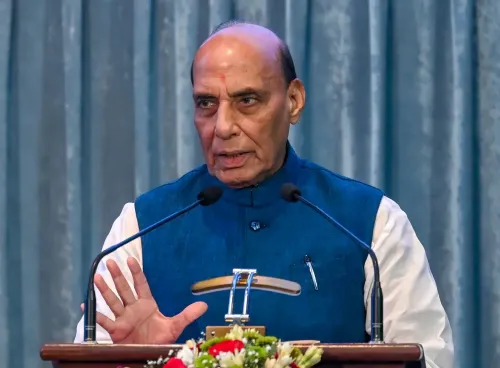
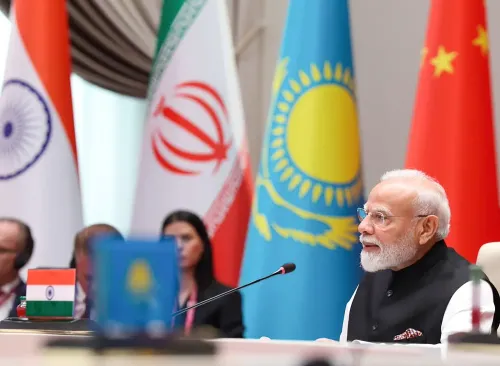
Defence Minister Rajnath Singh on Tuesday, 20 October 2026, represented India at the 25th meeting of the SCO Council of Heads of Government (CHG) in Dushanbe, delivering a pointed message to the Shanghai Cooperation Organisation (SCO): institutional growth without purpose risks diluting the grouping's effectiveness.
India's Core Message to the SCO
Singh stressed that the SCO must remain lean and outcome-driven. “A greater number of institutions does not necessarily translate into greater achievements. New mechanisms should focus on clearly identified needs, avoid duplication, and prioritise delivering practical value to Member States,” Singh said, as quoted by the Ministry of Defence.
He called on the grouping to uphold its foundational principles — sovereign equality, consensus, and mutual respect — and to build on the foundation laid over the past 25 years with a “forward-looking roadmap focused on consensus-driven cooperation and tangible outcomes.”
Measuring Success by People, Not Paperwork
Singh laid out a people-centric yardstick for gauging the SCO’s progress. “Our success should be measured by the opportunities we create for youth, new markets we open for our entrepreneurs, technologies we make available to our farmers and small-scale business owners, and the connections we foster among societies,” he said.
This framing notably shifts the emphasis from geopolitical symbolism — at which the SCO has historically excelled — toward measurable economic and social dividends, an area where critics argue the bloc has consistently underdelivered.
Key Decisions from the Dushanbe Meeting
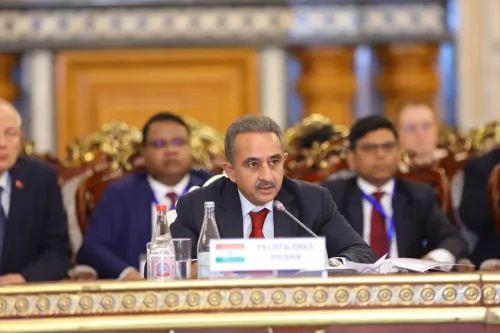
According to the Ministry of Defence, the heads of delegation adopted the Joint Communiqué of the meeting, which included the SCO budget for 2027, relevant financial and administrative decisions, and the Action Plan for the Multilateral Trade and Economic Cooperation Programme (PMTEC) for 2026–2030, which India backed. The session reviewed progress in economic and trade cooperation among member states and discussed ways to deepen cooperation in transport, finance, digital economy, and social development.
India's Zero-Tolerance Stand on Terrorism
Singh used the multilateral platform to issue an unambiguous warning on terrorism — widely read as an indirect message to Pakistan, a fellow SCO member. “Terrorism remains one of the most serious threats to peace and development. Terrorism not only harms innocent lives but also disrupts investment and commerce. It radicalises societies and deprives our youth of the opportunities they deserve,” he said.
He explicitly rejected any double standards: “There can be no justification for terrorism. There can be no double standards in dealing with it, and there can be no place for those who finance, support, or provide safe haven to terrorists. The entire ecosystem of terrorism must be firmly and collectively eliminated.”
This is consistent with India’s longstanding position at SCO forums, where it has repeatedly called for a unified, unambiguous approach to counter-terrorism — language that has at times strained consensus within the bloc.
What This Signals for India's SCO Posture
India’s dual emphasis — institutional restraint on one hand, hard security on the other — reflects its broader strategy within the SCO: engage constructively on trade and connectivity while refusing to allow the platform to be used as cover for state-sponsored terrorism. With the PMTEC Action Plan for 2026–2030 now endorsed, the coming months will test whether the bloc can translate its diplomatic communiqués into ground-level economic cooperation.
Point of View
Meanwhile, carry a subtext that every SCO member understands: India will not allow multilateral solidarity to paper over state-level complicity in cross-border terrorism. What is often missed in coverage of these summits is the gap between the SCO’s headline ambitions and its operational delivery — the PMTEC has existed in various forms for years with limited traction. Singh’s insistence on measuring success by youth opportunity and farmer access is a pointed reminder that the bloc’s legitimacy ultimately rests on whether ordinary citizens in member states see any difference.
NationPress
20 Oct 2026
Frequently Asked Questions
What did India say at the SCO Dushanbe summit 2026?
India, represented by Defence Minister Rajnath Singh, told the SCO that more institutions do not guarantee better outcomes, urging the grouping to stay efficient, avoid duplicating mechanisms, and deliver practical value to member states. Singh also called for a collective, zero-tolerance approach to terrorism with no double standards.
Who represented India at the SCO Council of Heads of Government meeting?
Defence Minister Rajnath Singh represented India at the 25th SCO Council of Heads of Government (CHG) meeting held in Dushanbe on 20 October 2026.
What decisions were taken at the SCO Dushanbe meeting?
The heads of delegation adopted the Joint Communiqué of the meeting, which included the SCO budget for 2027, relevant financial and administrative decisions, and the PMTEC Action Plan for 2026–2030. India backed the Action Plan. The session also reviewed economic, trade, transport, finance, digital economy, and social development cooperation.
What did Rajnath Singh say about terrorism at the SCO summit?
Singh said terrorism is one of the most serious threats to peace and development and called for its entire ecosystem to be collectively eliminated. He explicitly stated there can be no justification for terrorism and no double standards in addressing it — including for those who finance, support, or shelter terrorists.
What is the SCO PMTEC Action Plan 2026–2030?
The PMTEC (Multilateral Trade and Economic Cooperation Programme) Action Plan for 2026–2030 is a framework endorsed at the Dushanbe SCO summit to deepen trade and economic cooperation among member states. India backed the plan, which covers areas including transport, finance, the digital economy, and social development.