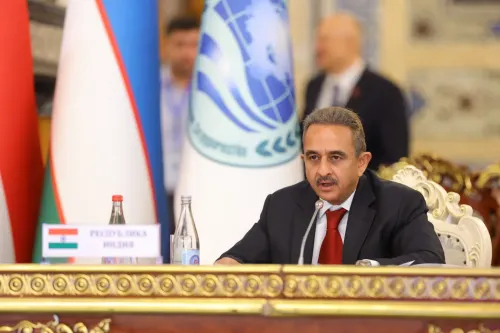
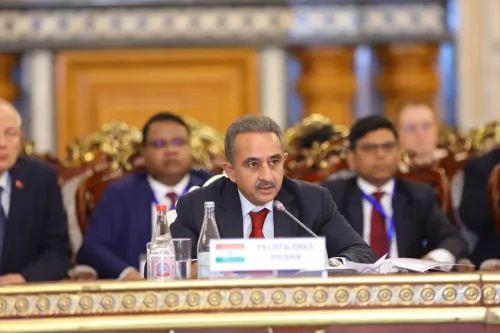
Rajnath Singh at SCO Dushanbe: No justification for terrorism, zero double standards
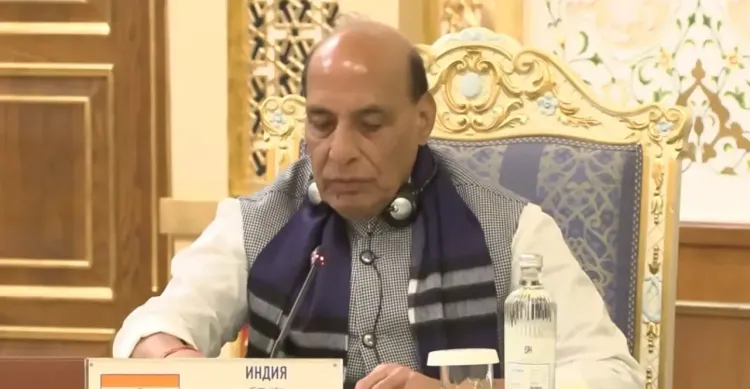
Synopsis
At the SCO's Dushanbe summit, Defence Minister Rajnath Singh drew a hard line: no justification for terrorism, no double standards, no safe havens — a message aimed squarely at the forum's most contested fault line. Combined with India's push for inclusive supply chains and the 2026–2030 trade action plan, New Delhi used a single address to set both its security red lines and its economic ambitions before the entire SCO bloc.
Key Takeaways
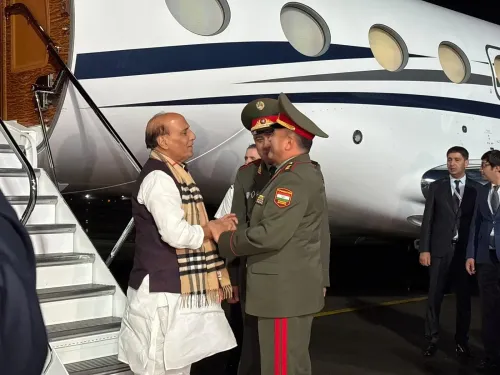
Defence Minister Rajnath Singh addressed the SCO Council of Heads of Government meeting in Dushanbe, Tajikistan on 20 October 2026 .
Singh declared there is 'no justification for terrorism' and 'no double standards' in dealing with it, calling for elimination of the entire terror ecosystem.
He invoked PM Modi 's Bishkek SCO Summit vision of security, connectivity, and opportunity as the three pillars guiding India's engagement.
India expressed support for the SCO Action Plan for Multilateral Trade and Economic Cooperation 2026–2030 .
Singh cited ongoing conflicts, energy and food security concerns, and the risk of new technology divides as key challenges for the SCO to address collectively.
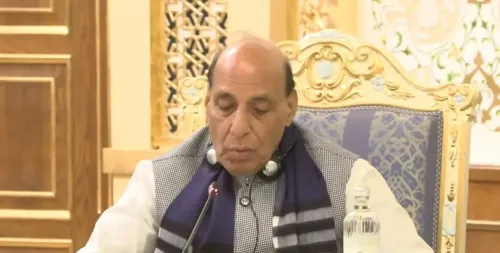
Defence Minister Rajnath Singh on Tuesday, 20 October 2026, delivered a sharp message at the Shanghai Cooperation Organisation (SCO) Council of Heads of Government (CHG) meeting in Dushanbe, Tajikistan, asserting that terrorism can never be justified and that there must be no double standards in confronting it. Singh called for the complete dismantling of the global terrorism ecosystem — a pointed signal in a forum that includes Pakistan.
Singh's Core Message on Terrorism
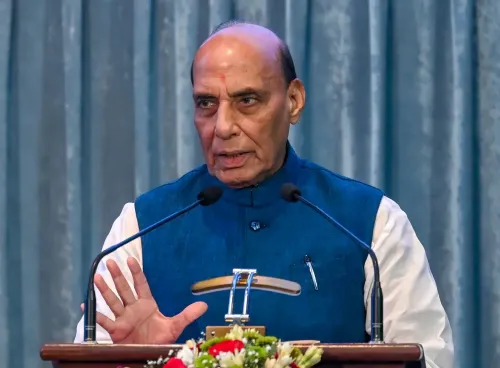
Speaking before SCO member nations, Singh said terrorism poses one of the gravest threats to peace and development worldwide. 'Terrorism remains one of the most serious threats to peace and development. Terrorism not only harms innocent lives but also disrupts investment and commerce. Terrorism radicalises societies and deprives our youth of the opportunities they deserve. Therefore, there can be no justification for terrorism. There can be no double standards in dealing with it, and there can be no place for those who finance, support, or provide safe haven to terrorists. The entire ecosystem of terrorism must be firmly and collectively eliminated,' he stated.
The remarks carry particular weight at an SCO platform where India has long flagged cross-border terror financing as a destabilising force in the region. This is consistent with a pattern of Indian delegations using multilateral forums to press the case for uniform counter-terror standards without naming specific states.
Modi's Bishkek Vision Recalled
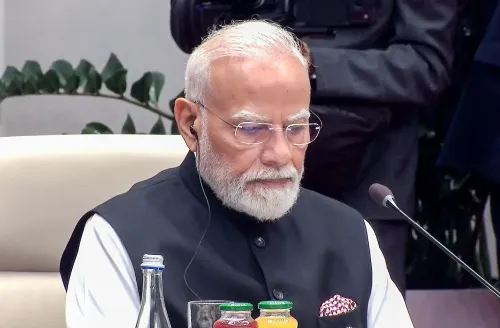
Singh invoked Prime Minister Narendra Modi's address at the recent SCO Summit in Bishkek, where Modi outlined India's vision for the organisation anchored on three pillars: security, connectivity, and opportunity. Singh described these pillars as mutually reinforcing, arguing that security unlocks investment and connectivity enables trade.
'Our leaders at the SCO Committee in Bishkek celebrated the 25th anniversary of the Shanghai Cooperation Organisation. It was an occasion to review our shared journey and to discuss the future direction. Honourable Prime Minister Shri Narendra Modi had called upon the SCO organisation to take concrete steps on the issues of security, collectivity and opportunity. That message is particularly relevant for the Council of Heads of Government,' Singh said.
Economic Cooperation and Supply Chain Resilience
Beyond security, Singh articulated India's economic priorities within the SCO framework. He expressed India's support for the adoption of the Action Plan for the Multilateral Trade and Economic Cooperation Programme for 2026–2030, signalling New Delhi's intent to deepen trade ties across the Central Asian bloc.
Singh flagged the disruption of global supply chains by ongoing conflicts and geopolitical tensions, describing energy and food security as matters of active concern for India. He also acknowledged that emerging technologies, while transforming economies, risk widening inequalities among member states.
'India believes that our economic engagement should be inclusive and beneficial to every member country. We should work towards building more resilient supply chains, facilitating trade and investment, and using technology for development. We must also ensure that the benefits of economic cooperation reach all sections of our society,' he added.
India's Broader SCO Positioning
Singh reaffirmed India's deep ties with Central Asian nations, describing them as 'long-standing friendship and enduring bonds.' This framing is part of India's Connect Central Asia strategy, which seeks to offset China's Belt and Road influence in the region through trade corridors, digital connectivity, and people-to-people links.
Notably, this CHG meeting — focused on economic and trade matters rather than the heads-of-state summit — provided India a platform to reinforce both its security red lines and its economic multilateralism simultaneously. All eyes will now be on whether the joint communiqué reflects India's anti-terror language or sidesteps it under consensus pressures.
Point of View
And India's insistence on uniform standards tests whether the bloc can hold a coherent line. What is equally notable is the economic layering: by coupling hard security demands with support for the 2026–2030 trade plan, India is signalling it will not let terror sponsorship slide in exchange for trade access. That linkage is new in tone and worth watching as the joint communiqué is drafted.
NationPress
20 Oct 2026
Frequently Asked Questions
What did Rajnath Singh say at the SCO Dushanbe meeting?
Defence Minister Rajnath Singh said at the SCO Council of Heads of Government meeting in Dushanbe on 20 October that terrorism can never be justified and there must be no double standards in addressing it. He called for the complete and collective elimination of the entire ecosystem of terrorism, including those who finance or shelter terrorists.
Where was the SCO Council of Heads of Government meeting held?
The meeting was held in Dushanbe, the capital of Tajikistan, on 20 October 2026. The CHG meeting focuses on economic and trade cooperation within the SCO framework, as distinct from the heads-of-state summit.
What is India's position on the SCO's trade cooperation plan?
India expressed support for the adoption of the Action Plan for the Multilateral Trade and Economic Cooperation Programme for 2026–2030. Singh also called for building more resilient supply chains and ensuring economic benefits reach all sections of society across member nations.
Why did Rajnath Singh reference PM Modi's Bishkek speech?
Singh recalled Modi's address at the SCO Summit in Bishkek, where Modi outlined India's SCO vision based on three pillars — security, connectivity, and opportunity — and called for concrete action. Singh described these pillars as mutually reinforcing and said the message was directly relevant to the Dushanbe CHG meeting's agenda.
What global concerns did Singh highlight at the SCO meeting?
Singh flagged ongoing conflicts and geopolitical tensions disrupting trade and supply chains, energy and food security as matters of concern, and the risk that new technologies could widen economic divides among SCO member states.