Cross-border terror proxies violate humanity's principles: MoS Singh at SCO
Synopsis
At the SCO's 25th-anniversary conference in Dushanbe, India's MoS for External Affairs Kirti Vardhan Singh delivered a pointed rebuke of state-sponsored terrorism — without naming names. India also became the first SCO member to ratify both the Universal Centre in Tashkent and the Anti-Drug Centre in Dushanbe, staking out a leadership role in the bloc's security agenda at a moment of acute regional tension.
Key Takeaways
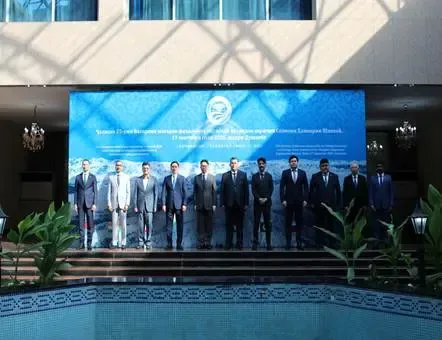
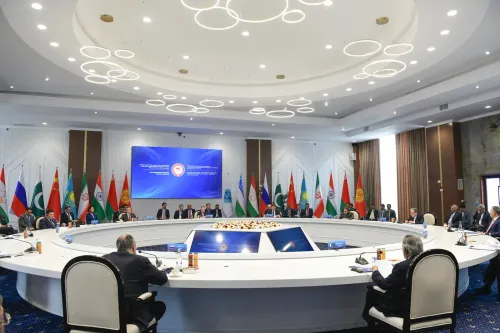
MoS Kirti Vardhan Singh addressed the SCO International Conference in Dushanbe, Tajikistan on 13 June 2025 .
Singh stated that providing safe havens and using terrorist proxies for cross-border terrorism violates the basic principles of humanity and international relations.
India is the first SCO member country to complete ratification of both the Universal Centre in Tashkent and the Anti-Drug Centre in Dushanbe .
Singh invoked PM Narendra Modi 's framework of Security, Connectivity, and Opportunity as India's guiding vision within the SCO.
The SCO marked its 25th anniversary at the conference, with Singh calling it a moment for reflection and recalibration.
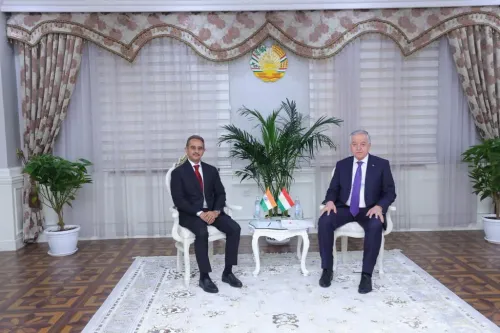
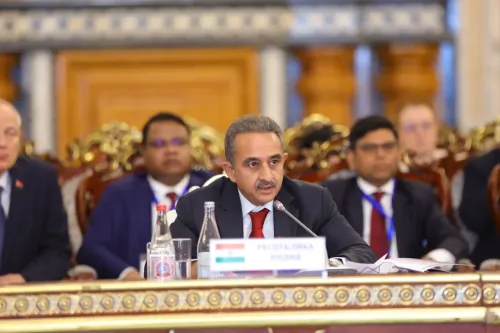
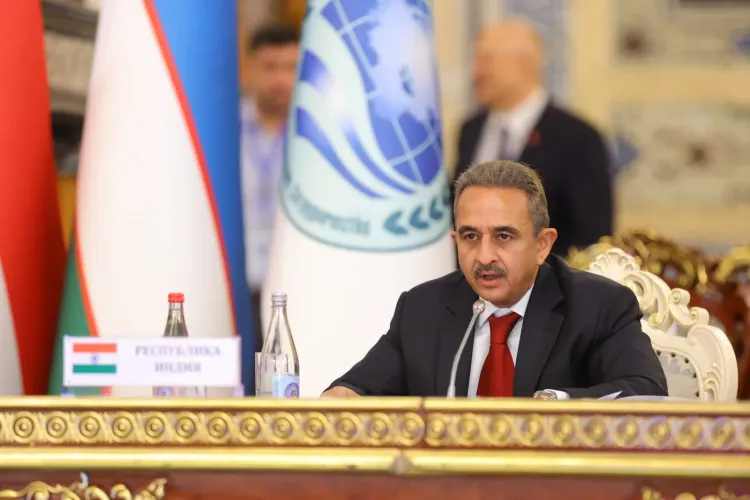
Minister of State for External Affairs Kirti Vardhan Singh on Friday, 13 June told the Shanghai Cooperation Organisation (SCO) International Conference in Dushanbe, Tajikistan, that providing safe havens and deploying terrorist proxies for cross-border terrorism fundamentally violate the principles of humanity and international relations. His remarks came as the SCO marked its 25th anniversary.
India's Core Message on Terrorism
'We reiterate that providing safe haven, using terrorist proxies for cross-border terrorism, terror financing, arms and drugs trafficking, dissemination of a radical ideology and abuse of cyberspace to spread disinformation and incite violence go against the basic principles of humanity and international relations,' Singh said at the conference.
The minister stressed that India, alongside its Central Asian partners, remains firmly committed to combating terrorism in all its forms and manifestations. The statement, though not naming any country directly, carries unmistakable resonance given the ongoing tensions in the region following the Pahalgam attack and India's subsequent military response.
SCO at 25: A Moment for Recalibration
Marking the organisation's silver jubilee, Singh described the occasion as an opportune moment for reflection on achievements and recalibration in the face of ongoing disruptions to the global order. He emphasised that for India, the SCO is not merely a regional grouping but a vital link connecting the country with its historical and civilisational partners across Eurasia.
'Our vision for cooperation within the SCO is guided by Prime Minister Narendra Modi's framework of Security, Connectivity, and Opportunity,' Singh said, underscoring the strategic architecture Delhi brings to the grouping.
Central Asia as a Strategic Node
Singh highlighted Central Asia's pivotal role, describing it as a region at the strategic crossroads of Eurasia — rich in natural resources, largely free from active conflicts, and characterised by traditions of secularism and social harmony. He noted that Central Asia serves as a key node for enhancing regional connectivity and fostering greater economic integration.
Notably, the minister referenced the SCO Leaders' Summit in Tianjin, which had mandated the establishment of two institutions in Central Asia: the Universal Centre in Tashkent and the Anti-Drug Centre in Dushanbe.
India First to Ratify Both SCO Centres
India has become the first country to complete the ratification process for both the Universal Centre and the Anti-Drug Centre. Singh said their establishment will significantly strengthen collective efforts to combat narcotics trafficking, transnational organised crime, terrorism and terror financing, extremist ideologies, safe havens, and the networks that support them.
'At the same time, these institutions will further enhance the role and leadership of Central Asia in advancing the SCO's security agenda,' he added. The early ratification signals India's intent to position itself as a proactive stakeholder in the SCO's evolving security architecture, even as its relationship with fellow member Pakistan remains deeply strained.
What Comes Next
With the SCO's security and counter-terrorism agenda gaining fresh urgency amid regional instability, India's dual emphasis — on institutional commitments and principled opposition to state-sponsored terror — is expected to shape the organisation's deliberations in the months ahead. The operationalisation of both centres in Tashkent and Dushanbe will be closely watched as a test of multilateral resolve.
Point of View
And deploying it at the SCO — a forum that includes both Islamabad and Beijing — is a deliberate choice. What is new is India's early ratification of both SCO security centres: it hands Delhi a credibility lever, allowing it to argue that its counter-terror commitments are institutional, not merely rhetorical. The harder question is whether the SCO's consensus-based structure can ever produce the accountability mechanisms India is implicitly demanding, given that the grouping's two most consequential members have historically shielded state-linked militant networks from multilateral scrutiny.
NationPress
23 Sept 2026
Frequently Asked Questions
What did MoS Kirti Vardhan Singh say at the SCO conference in Dushanbe?
Singh said that providing safe havens and using terrorist proxies for cross-border terrorism go against the basic principles of humanity and international relations. He made these remarks at the SCO International Conference in Dushanbe, Tajikistan, on 13 June 2025, during the organisation's 25th-anniversary gathering.
Why is India's ratification of the SCO centres significant?
India is the first SCO member to complete the ratification process for both the Universal Centre in Tashkent and the Anti-Drug Centre in Dushanbe. This positions India as a proactive stakeholder in the bloc's security architecture, strengthening collective efforts against narcotics trafficking, terrorism, and extremist networks.
What is the SCO's Universal Centre in Tashkent?
The Universal Centre in Tashkent is one of two institutions mandated by the SCO Leaders' Summit in Tianjin. It is designed to enhance regional cooperation on security issues, alongside the Anti-Drug Centre in Dushanbe, which focuses on combating narcotics trafficking and related transnational crime.
How does India view the Shanghai Cooperation Organisation?
According to Singh, India views the SCO not merely as a regional grouping but as a vital link connecting it with historical and civilisational partners across Eurasia. India's engagement is guided by PM Modi's framework of Security, Connectivity, and Opportunity, with Central Asia identified as a key strategic node.
What is the significance of the SCO's 25th anniversary?
Singh described the 25th anniversary as an opportune moment for reflection on the organisation's achievements and recalibration in light of ongoing disruptions to the global order. It marks a juncture at which member states are reassessing the SCO's role in regional security and economic integration.