SCO Bishkek Declaration signed at 26th Summit; Modi calls out terror double standards
Synopsis
At the SCO's 26th Summit in Bishkek, leaders signed a sweeping Bishkek Declaration covering counter-terror, cybersecurity, drug control, green tech, and logistics — but it was PM Modi's blunt warning that 'terrorism cannot be a strategic asset for anyone' that cut through, renewing pressure on state sponsors of terror within the bloc itself.
Key Takeaways
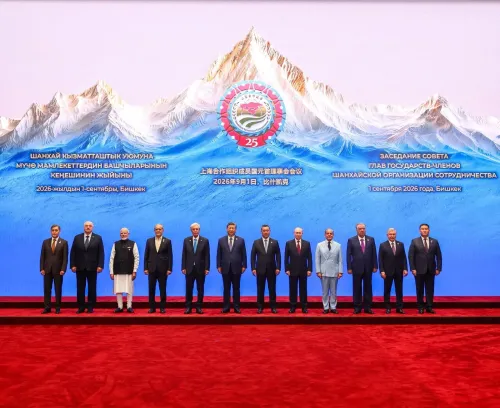
SCO leaders signed the Bishkek Declaration at the 26th Summit in Bishkek, Kyrgyzstan on 1 September , marking the bloc's 25th anniversary .
PM Narendra Modi and other heads of state signed a protocol amending the SCO Charter of 7 June 2002 .
Member states agreed on anti-narcotics cooperation programmes running through 2030 , targeting both drug addiction and synthetic drug proliferation.
A cybersecurity cooperation plan on International Information Security was signed for 2026–2028 .
Leaders adopted a 'Green Technology Corridor' roadmap and a ports and logistics Action Plan , both covering 2026–2030 .
Modi warned that 'terrorism cannot be a strategic asset for anyone,' calling for zero tolerance of double standards within the bloc.
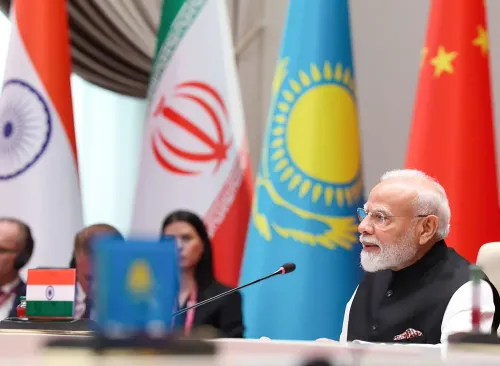
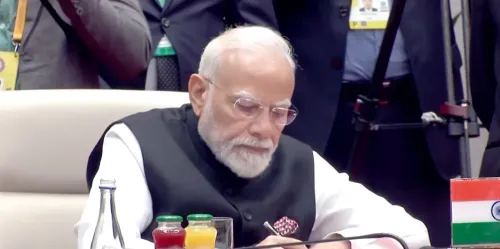
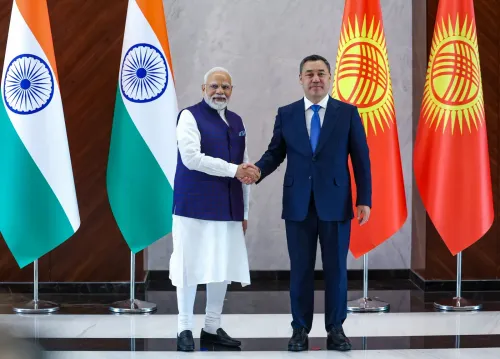
Leaders of the Shanghai Cooperation Organisation (SCO) signed the Bishkek Declaration on Tuesday, 1 September at the conclusion of the bloc's 26th Summit in Bishkek, Kyrgyzstan, marking the organisation's 25th anniversary. Prime Minister Narendra Modi was among the heads of state who put their signatures to a sweeping set of agreements covering counter-terrorism, drug control, cybersecurity, green technology, and biodiversity.
Key Documents Signed
Beyond the declaration itself, SCO leaders signed a protocol on amendments and additions to the SCO Charter of 7 June 2002. They also formalised the regulation of the Universal Centre for Countering Security Challenges and Threats to SCO Member States and the Executive Committee of the SCO Anti-Narcotics Centre.
On narcotics, member states agreed to a cooperation programme on combating drug addiction through 2030, alongside a coordinated plan to counter the spread of synthetic drugs and their precursors for the same period.
Cybersecurity, Green Tech and Logistics Pacts
The summit produced a cooperation plan on International Information Security for 2026–2028 — a signal of the bloc's growing focus on digital threats. Leaders additionally endorsed an initiative on the Conservation and Sustainable Management of Biodiversity in SCO Member States for 2026–2031.
Two forward-looking economic frameworks were also adopted: a cooperation programme to establish a 'Green Technology Corridor' covering scientific and technological collaboration for 2026–2030, and an Action Plan (Roadmap) for the development of ports and logistics centres across member states for the same period. This comes amid growing SCO interest in deepening Eurasian connectivity as an alternative to Western-led trade architecture.
Modi's Counter-Terror Address
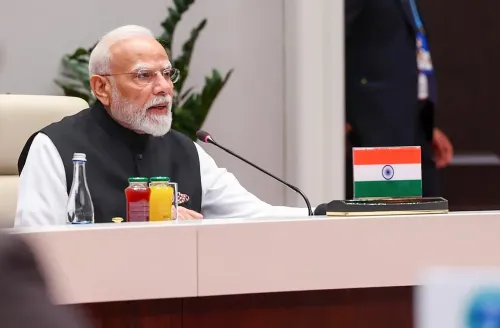
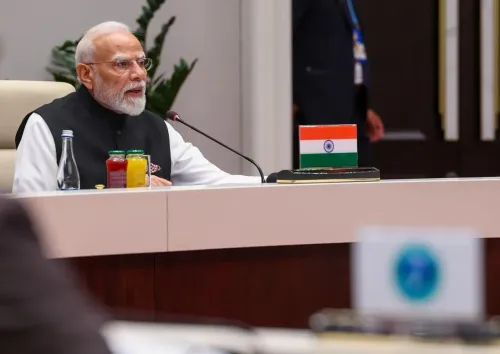
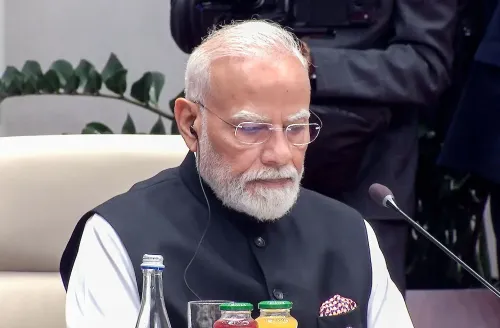
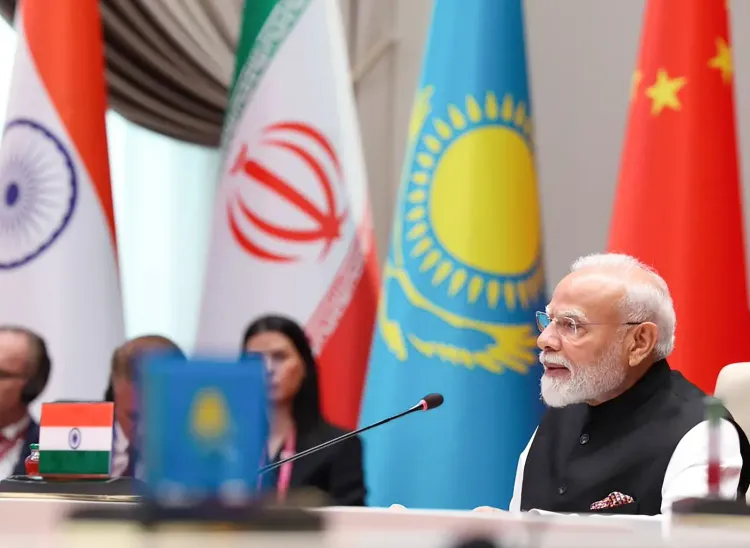
In his address to the summit, Prime Minister Narendra Modi delivered a pointed message on terrorism, calling for the dismantling of the 'entire ecosystem' of terror — encompassing financing, recruitment, radicalisation, and safe havens.
'Terrorism continues to pose a serious challenge to humanity. In our fight against it, we cannot limit ourselves to a mindset of action and reaction. We must dismantle the entire ecosystem of terrorist financing, recruitment, radicalisation, and safe havens,' Modi said.
He went further, making an unmistakable reference to state-sponsored terror: 'Those countries which make terrorism a tool of their policy, provide shelter and support to terrorists, will have to be given a strong message that terrorism cannot be a strategic asset for anyone.' Modi stressed that member states must 'speak with one voice' and that there can be 'no room for double standards' on the issue.
Why the Bishkek Summit Matters
The 26th SCO Summit arrives at a moment of heightened geopolitical flux, with member states navigating tensions between major powers within the bloc. India's consistent push on counter-terrorism at SCO forums — often read as a direct message to Pakistan, a fellow SCO member — has been a defining thread across successive summits. Notably, this is at least the third consecutive SCO summit at which Modi has raised the double-standards argument on terror, reflecting New Delhi's sustained diplomatic pressure within the multilateral framework.
The breadth of documents signed — spanning narcotics, cybersecurity, green technology, and logistics — underscores the SCO's ambition to evolve beyond a security-focused grouping into a comprehensive Eurasian cooperation platform. Whether implementation matches the scope of these agreements remains the bloc's perennial challenge.
Point of View
Which sits at the same SCO table. The fact that he has repeated the 'double standards' formulation across multiple summits without a formal SCO consensus response reveals the bloc's structural contradiction: it preaches multilateral unity while harbouring a state that most members privately acknowledge as a terror-financing actor. The breadth of documents signed is impressive on paper, but SCO agreements have a patchy implementation record. The Green Technology Corridor and logistics roadmap will only matter if they attract investment and political will beyond the signing ceremony. India's strategic interest is in using the SCO platform to isolate Pakistan diplomatically while deepening Eurasian connectivity on its own terms — and Bishkek advanced both goals, at least rhetorically.
NationPress
17 Oct 2026
Frequently Asked Questions
What is the Bishkek Declaration signed at the 26th SCO Summit?
The Bishkek Declaration is a comprehensive agreement signed by Shanghai Cooperation Organisation member states on 1 September at the 26th SCO Summit in Bishkek, Kyrgyzstan. It encompasses commitments on counter-terrorism, cybersecurity, anti-narcotics cooperation, green technology, biodiversity, and regional logistics, and was signed to mark the SCO's 25th anniversary.
What did PM Modi say at the SCO Summit in Bishkek?
PM Modi called for dismantling the 'entire ecosystem' of terrorist financing, recruitment, radicalisation, and safe havens. He warned that countries using terrorism as a policy tool must receive a strong message that it 'cannot be a strategic asset for anyone,' and urged all SCO members to reject double standards on terrorism.
Which agreements were signed on counter-narcotics at the SCO Summit?
SCO leaders signed two narcotics-related documents: a cooperation programme on combating drug addiction through 2030, and a coordinated plan to counter the spread of synthetic drugs and their precursors for the same period.
What is the SCO Green Technology Corridor?
The Green Technology Corridor is a scientific and technological cooperation framework agreed upon by SCO member states at the Bishkek Summit, covering the period 2026–2030. It is aimed at advancing green technology collaboration across the bloc's member countries.
Why does India consistently raise terrorism at SCO summits?
India uses SCO forums to apply diplomatic pressure regarding state-sponsored terrorism, widely understood as a reference to Pakistan, a fellow SCO member. New Delhi has raised the 'double standards' argument at successive summits as part of a sustained multilateral strategy to isolate actors it accuses of harbouring terror groups.