SCO Bishkek Declaration adopts India-led initiatives on youth, civilisation dialogue
Synopsis
At the SCO's 26th summit in Bishkek, India secured a rare multilateral win — getting its own proposed forums on civilisation dialogue, young scientists, and young authors formally embedded in the bloc's declaration. PM Modi's push to move SCO from vision to 'measurable outcomes' on security, connectivity, and opportunity now has institutional backing, with the Civilisation Dialogue Forum's first session set for India in autumn 2026.
Key Takeaways
The Bishkek Declaration adopted at the 26th SCO Summit on 1 September formally includes India-led initiatives: Civilisation Dialogue Forum , Young Scientists Forum , and Young Authors' Conclave .
English was recognised as an Official Language of the SCO Charter — a key Indian priority.
The summit also adopted 4 MoUs and over 20 decisions and statements on climate, nuclear safety, energy, and counter-narcotics.
PM Modi called for dismantling the 'entire ecosystem' of terrorist financing and rejected 'double standards' in counter-terrorism — language reflected in the declaration.
The SCO Civilisation Dialogue Forum will hold its first session in India in the autumn of 2026 .
Member states reaffirmed commitment to combating terrorism, separatism, and extremism and called for resolving conflicts through dialogue and diplomacy .
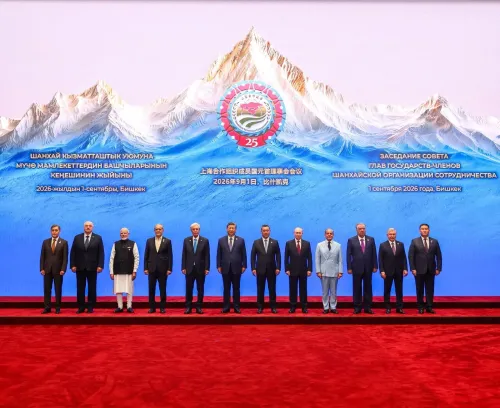
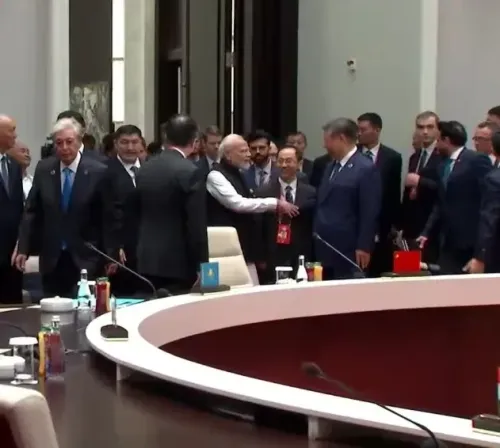
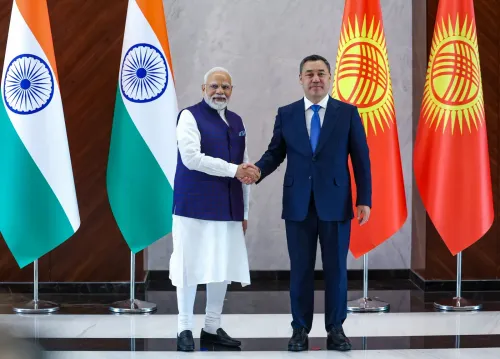
Several India-led and India-backed initiatives were formally adopted in the Bishkek Declaration signed by leaders of the Shanghai Cooperation Organisation (SCO) following the 26th Meeting of the Council of Heads of State in Bishkek, Kyrgyzstan on Tuesday, 1 September. The declaration marks a significant diplomatic win for New Delhi, embedding its cultural and scientific priorities into the bloc's multilateral framework.
India's Priorities in the Declaration
The Bishkek Declaration formally includes several initiatives championed by India: the recognition of English as an Official Language in the SCO Charter, the Civilisation Dialogue Forum, the Young Scientist Forum, and the Young Authors' Conclave. Member states also welcomed the holding of the SCO Civilisation Dialogue Forum in India in the autumn of 2026, the first session of a platform India had proposed at the previous summit.
Beyond the declaration itself, the summit produced four Memoranda of Understanding (MoUs) and over 20 decisions and statements spanning climate, nuclear safety, energy conservation, and combating drug addiction.
PM Modi's Address: Security, Connectivity, Opportunity
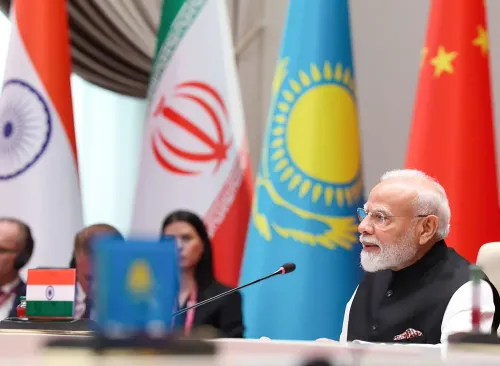
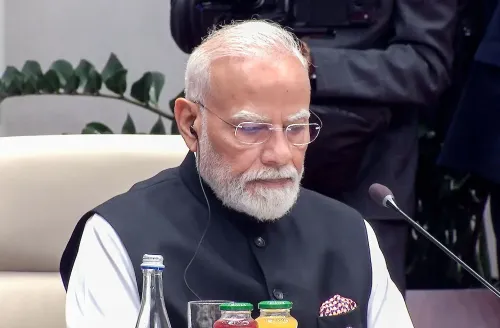
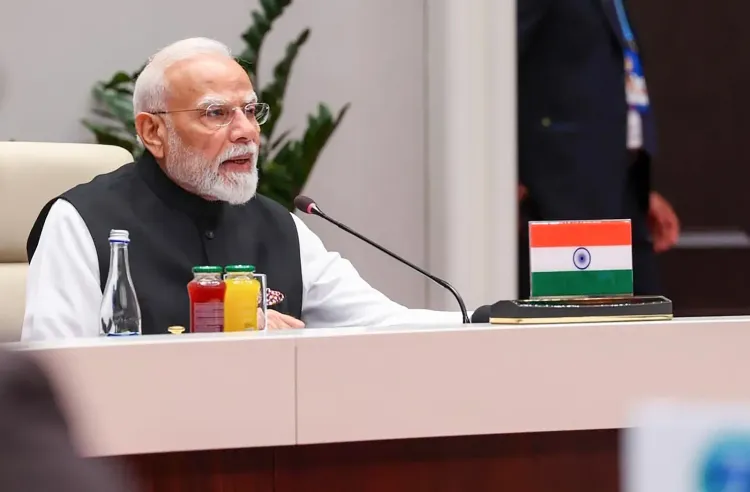
Addressing the gathering of SCO leaders, Prime Minister Narendra Modi urged member states to move beyond vision and translate the bloc's three core pillars — Security, Connectivity, and Opportunity — into concrete, measurable outcomes. He noted that the 25th anniversary of the SCO Summit was an opportune moment to chart the roadmap for the next quarter-century.
'At the previous meeting, I had outlined the three main pillars of India's vision for the SCO: S — Security, C — Connectivity, and O — Opportunity. The time has come to move these three pillars beyond vision and translate them into concrete outcomes. The first and foremost requirement for this is peace and security,' Modi said.
Terrorism and Double Standards
A significant portion of Modi's address focused on the threat of terrorism. The Bishkek Declaration reaffirmed member states' commitment to combating terrorism, separatism, and extremism, with leaders strongly condemning the exploitation of terrorist groups for mercenary purposes and rejecting what they called 'double standards' in the global fight against terrorism.
'Terrorism continues to pose a serious challenge to humanity as a whole. We must dismantle the entire ecosystem of terrorist financing, recruitment, radicalisation, and safe havens. We must speak with one voice and make it clear that there can be no place for double standards on this serious issue,' Modi said.
The declaration also called on the international community to actively combat cross-border movement of terrorists — a longstanding Indian diplomatic priority.
People-to-People Ties and Youth Engagement
Modi emphasised that SCO cooperation should be 'people-driven' and not merely government-driven, highlighting the role of technology, entrepreneurship, innovation, and start-ups. He noted that under Kyrgyzstan's chairmanship, special emphasis had been placed on youth engagement — a thrust reflected in the declaration's acknowledgement of the SCO Young Authors Conference as an India Initiative.
The Bishkek Declaration also reaffirmed the guiding principle of 'One Earth. One Family. One Future' for developing dialogue among member states. On the global security dimension, Modi warned that the crisis in West Asia had demonstrated that regional conflicts carry worldwide consequences — for energy security, maritime trade, and supply chains — with countries of the Global South bearing a disproportionate burden.
What Comes Next
With the SCO Civilisation Dialogue Forum set to convene in India later in 2026 and the Young Scientists Forum now embedded in the SCO framework, New Delhi will be expected to lead the operationalisation of these platforms. The adoption of India's initiatives at Bishkek positions the country as a proactive agenda-setter within the bloc ahead of future presidencies.
Point of View
Now mirrored in the declaration's language, is a pointed signal directed at Islamabad's patrons within the same room. The real test will be whether India can operationalise these forums with the same energy it used to propose them, or whether they follow the fate of many SCO initiatives that exist on paper but rarely on the ground.
NationPress
17 Oct 2026
Frequently Asked Questions
What is the Bishkek Declaration and why does it matter for India?
The Bishkek Declaration is the joint communiqué adopted by SCO heads of state at their 26th summit in Bishkek, Kyrgyzstan, on 1 September. It matters for India because it formally incorporates several Indian-proposed initiatives — including the Civilisation Dialogue Forum, Young Scientists Forum, and Young Authors' Conclave — into the SCO's multilateral framework.
Which India-led initiatives were adopted in the Bishkek Declaration?
The declaration adopted four India-backed priorities: English as an Official Language in the SCO Charter, the SCO Civilisation Dialogue Forum, the SCO Young Scientists Forum, and the SCO Young Authors' Conclave. The first session of the Civilisation Dialogue Forum is set to be held in India in autumn 2026.
What did PM Modi say about terrorism at the SCO Summit?
PM Modi called for dismantling the 'entire ecosystem' of terrorist financing, recruitment, radicalisation, and safe havens, and rejected 'double standards' in the global fight against terrorism. The Bishkek Declaration echoed this position, with member states condemning terrorism in all forms and calling for cross-border movement of terrorists to be actively countered.
What other outcomes came from the 26th SCO Summit in Bishkek?
Beyond the Bishkek Declaration, the summit produced four MoUs and over 20 decisions and statements covering climate, nuclear safety, energy conservation, and combating drug addiction. Member states also reaffirmed the guiding principle of 'One Earth. One Family. One Future.'
When will the SCO Civilisation Dialogue Forum be held in India?
The SCO Civilisation Dialogue Forum is scheduled to hold its first session in India in the autumn of 2026, as formally welcomed by member states in the Bishkek Declaration.