PM Modi at SCO Summit: 'No place for double standards' on terrorism
Synopsis
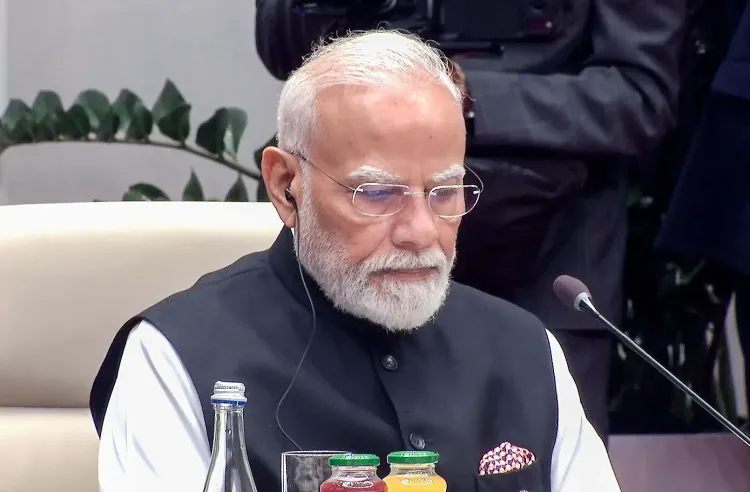
At the SCO's 26th summit in Bishkek, PM Modi did not name Pakistan — but he didn't need to. His call to dismantle the 'entire ecosystem of terrorism' and reject 'double standards' was a pointed message to a bloc that includes both Islamabad and Beijing, delivered on a multilateral stage where India is increasingly shaping the agenda.
Key Takeaways
PM Modi addressed the 26th SCO Summit in Bishkek, Kyrgyzstan on 1 September .
He called for dismantling terrorism's financing, recruitment, radicalisation and safe havens , warning against 'double standards.' India's SCO vision rests on three pillars: Security, Connectivity and Opportunity .
Modi conditioned connectivity support on respect for the sovereignty and territorial integrity of all nations.
India's proposed SCO Civilisational Dialogue Forum will hold its first session in India this year.
The SCO now has 10 member states , 2 observer states and 15 dialogue partners .
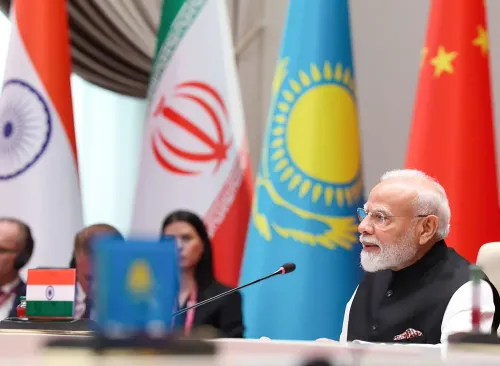
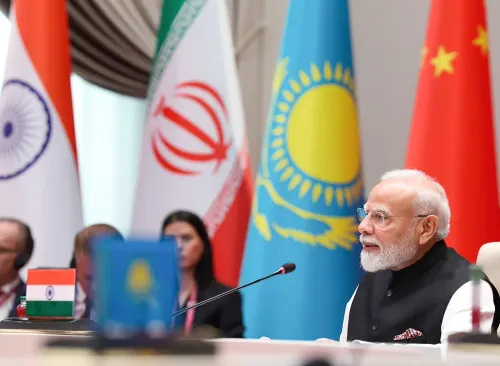
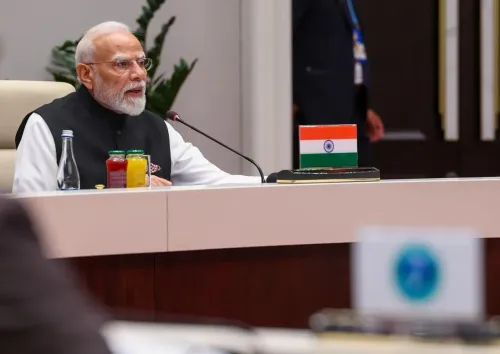
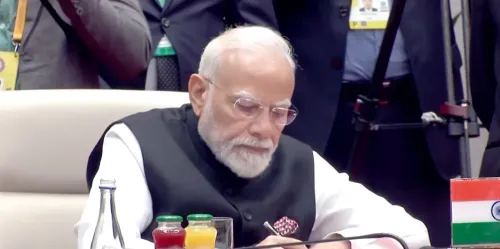
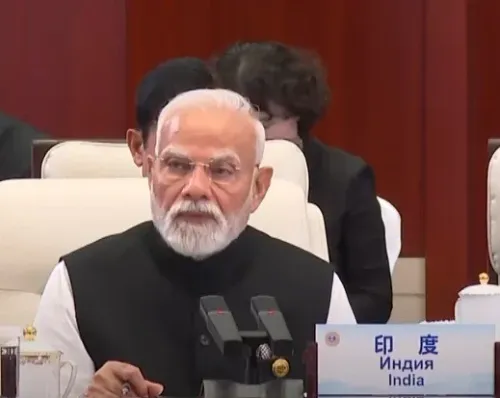
Prime Minister Narendra Modi on Tuesday, 1 September called for the complete dismantling of the terrorism ecosystem — including its financing networks, recruitment pipelines, radicalisation machinery and safe havens — while addressing the 26th Meeting of the Council of Heads of State of the Shanghai Cooperation Organisation (SCO) in Bishkek, Kyrgyzstan. Modi's remarks carried an unmistakable edge, with India's strained ties with fellow SCO member Pakistan forming the unspoken backdrop.
India's Core Message on Terrorism
'We must speak with one voice that there can be no place for double standards on terrorism,' PM Modi told the assembled heads of state. The formulation — 'double standards' — is a phrase India has deployed consistently in multilateral forums as a pointed reference to states that distinguish between 'good' and 'bad' terror groups based on geopolitical convenience. This is at least the third consecutive SCO summit at which India has foregrounded counter-terrorism as a non-negotiable agenda item.
Modi also reiterated India's long-standing position that armed conflict cannot produce lasting solutions. 'There is no solution on the battlefield; all wars and conflicts must be resolved through dialogue and diplomacy,' he said — remarks that land with particular weight given the ongoing Russia-Ukraine war, with both nations present in the SCO framework.
Three Pillars: Security, Connectivity and Opportunity
The Prime Minister outlined three pillars anchoring India's SCO vision: Security, Connectivity, and Opportunity. On connectivity, Modi expressed support for initiatives that link markets, facilitate trade and open development corridors — but attached a clear condition: such efforts must respect the sovereignty and territorial integrity of all member nations. The caveat is widely read as India's continued objection to the China-Pakistan Economic Corridor (CPEC), which passes through Pakistan-administered Kashmir.
'For India, the SCO is a confluence of great civilisations, cultures and ideas,' Modi said, framing India's engagement in civilisational rather than purely transactional terms.
People-to-People Ties and India-Led Initiatives
Looking ahead to the SCO's next 25 years, Modi urged member states to place people-to-people ties at the centre of their cooperation architecture. He spotlighted India-initiated platforms within the bloc — the Start-up Forum, the Young Authors' Conclave, and the Young Scientists' Forum — as practical expressions of that vision.
He also announced progress on a cultural initiative India had proposed the previous year. 'Last year, India proposed the SCO Civilisational Dialogue Forum. I am pleased that its first session will be held in India this year,' Modi said. The forum is designed to deepen cultural and intellectual exchange among the bloc's member civilisations.
SCO Composition and Regional Stakes
The SCO now comprises 10 full member states: Belarus, India, Iran, Kazakhstan, China, Kyrgyzstan, Pakistan, Russia, Tajikistan and Uzbekistan. It also has two observer states — Azerbaijan and Armenia — and 15 dialogue partners including Egypt, Qatar, Saudi Arabia, Turkey, UAE and Sri Lanka, among others. The bloc's expanding membership underscores its growing weight as a Eurasian security and economic forum, even as internal fault lines — particularly between India and China, and India and Pakistan — remain unresolved.
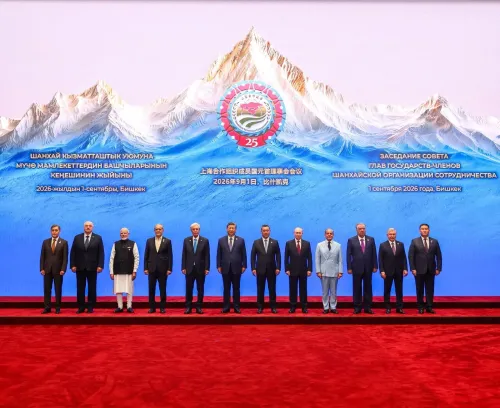
Earlier in the day, Modi joined other heads of state for the official group photograph at the summit venue. With the SCO Civilisational Dialogue Forum's inaugural session set for India, New Delhi's role as an agenda-setter within the bloc is expected to deepen through the year ahead.
Point of View
New Delhi has chosen engagement over boycott and is actively using the platform to set norms. The connectivity caveat — sovereignty and territorial integrity — is a direct counter to CPEC's legitimacy, embedded in multilateral language. Whether the SCO's consensus-driven architecture can actually act on India's counter-terrorism framing remains doubtful, but India is building a record that serves its bilateral and diplomatic arguments regardless.
NationPress
16 Oct 2026
Frequently Asked Questions
What did PM Modi say at the SCO Summit in Bishkek?
PM Modi called for the complete dismantling of the terrorism ecosystem — covering financing, recruitment, radicalisation and safe havens — and warned that there can be 'no place for double standards on terrorism.' He also outlined India's three-pillar SCO vision of Security, Connectivity and Opportunity.
Where was the 26th SCO Summit held?
The 26th Meeting of the Council of Heads of State of the Shanghai Cooperation Organisation was held in Bishkek, Kyrgyzstan, on 1 September.
What is India's position on connectivity within the SCO?
India supports connectivity initiatives that link markets and facilitate trade, but insists they must respect the sovereignty and territorial integrity of all nations — a position widely understood as opposition to the China-Pakistan Economic Corridor (CPEC), which passes through Pakistan-administered Kashmir.
What is the SCO Civilisational Dialogue Forum?
It is a cultural and intellectual exchange platform proposed by India at the previous SCO summit. PM Modi announced at Bishkek that its inaugural session will be held in India this year.
Which countries are members of the SCO?
The SCO has 10 full member states: Belarus, India, Iran, Kazakhstan, China, Kyrgyzstan, Pakistan, Russia, Tajikistan and Uzbekistan. It also has two observer states — Azerbaijan and Armenia — and 15 dialogue partners including Egypt, Qatar, Saudi Arabia, Turkey, UAE and Sri Lanka.