Delimitation row: Congress, DMK back Kharge's call for all-party meet before BJP-led bill
Synopsis
The delimitation battle is no longer just about redrawing constituencies — it has become a flashpoint over federal fairness, women's reservation, and the BJP's handling of constitutional legislation. With Congress, DMK and CPI(M) all firing on the same day, Kharge's letter to Modi has crystallised a rare multi-party front, and the failure of the Amendment Bill in the Lok Sabha adds rare electoral weight to their argument.
Key Takeaways
Congress and the DMK backed Mallikarjun Kharge's call on 17 October 2026 for an all-party meeting before any delimitation bill is introduced.
Congress MP Sukhdeo Bhagat argued the Opposition represents 60 per cent of the population and cannot be sidelined on a far-reaching constitutional change.
DMK spokesperson T.K.S.
Elangovan said delimitation is inevitable but must not proceed on the BJP's terms, which would be 'unfair.' CPI(M) MP V.
Sivadasan accused the BJP of linking women's reservation to delimitation to delay the reservation itself.
Kharge flagged that 64 days had passed since the Monsoon Session adjourned sine die on 13 August without prorogation, calling it unprecedented.
The Constitutional Amendment Bill on delimitation failed to secure the required two-thirds majority in the Lok Sabha on 17 April .
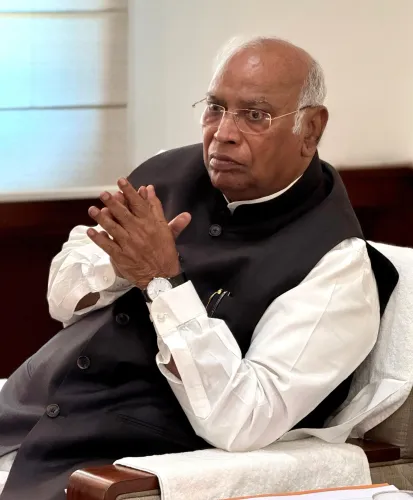
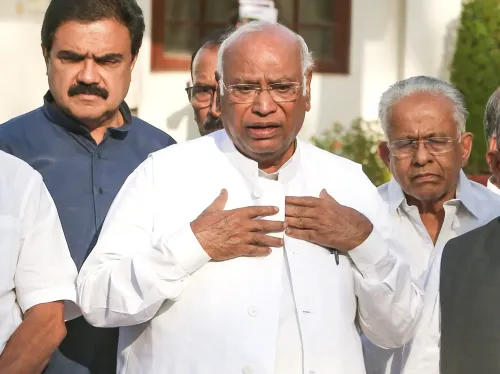
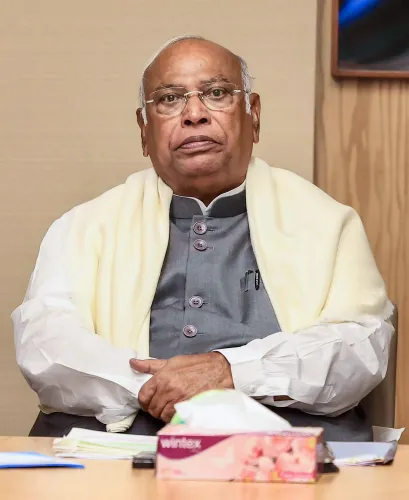
Congress and the Dravida Munnetra Kazhagam (DMK) on Saturday, 17 October 2026 rallied behind Congress President Mallikarjun Kharge's letter to Prime Minister Narendra Modi, demanding an all-party meeting before any fresh delimitation legislation is introduced. Both parties argued that while delimitation as an exercise cannot be halted, the manner in which the Bharatiya Janata Party (BJP) is seeking to pursue it risks producing outcomes that are deeply unfair to states that have successfully implemented population control policies.
Opposition demands all-party consultation
Congress MP Sukhdeo Bhagat argued that any legislation capable of triggering radical political change must first be subjected to broad inter-party consultation. He pointed out that the Opposition collectively represents a significant democratic constituency that cannot be bypassed.
'Certainly, if you are bringing in a policy that has the potential to bring about radical political changes in the country, the government should make an effort to hold an all-party meeting. If we talk about the Opposition, they represent 60 per cent,' Bhagat said.
He added: 'How can you move forward by sidelining those who represent 60 per cent of the population? Therefore, before introducing a Bill or bringing a special Bill in Parliament, an all-party meeting should be held, and their views should also be respected.'
DMK: Delimitation inevitable, but not on BJP's terms
DMK spokesperson T.K.S. Elangovan acknowledged that delimitation is constitutionally unavoidable but drew a sharp line at allowing the ruling party to dictate its terms. 'Delimitation cannot be stopped, but it should not be carried out the way the BJP wants. That would be unfair, which is why we have been fighting against it. Now, let us see how they manage this,' Elangovan said. The DMK's position reflects a broader Southern anxiety: states like Tamil Nadu and Kerala, which have lower population growth rates, stand to lose Lok Sabha seats under a strict headcount-based redrawing of constituencies.
CPI(M) flags women's reservation link as a delaying tactic
Communist Party of India (Marxist) Rajya Sabha MP V. Sivadasan raised a distinct concern — that the BJP is deliberately tying women's reservation to delimitation as a means of postponing the reservation itself. 'Women's reservation is a necessary thing for the nation, it is a necessity of the nation. But BJP tried to link it with this delimitation to delay the reservation. So, it should not be accepted,' Sivadasan said. He also noted that India's states are at varying stages of population policy implementation, making a uniform delimitation exercise inherently inequitable.
Kharge's letter: What the Congress president flagged
In his letter to Prime Minister Modi on Friday, 16 October, Kharge urged the government to convene an all-party meeting before pushing through a Constitutional Amendment Bill on delimitation. He flagged what he described as an unprecedented delay in proroguing the Monsoon Session of Parliament, noting that 64 days had elapsed since both Houses were adjourned sine die on 13 August, yet the session had not been formally prorogued.
Kharge noted that he had written to the Prime Minister as early as 11 April, requesting an all-party meeting before the Bill was introduced. According to his letter, the government released the Bills publicly on the evening of 14 April and convened a special session on 16 April — bypassing the consultation he had sought. He further stated that the Constitutional Amendment Bill on delimitation subsequently failed to secure the required two-thirds majority in the Lok Sabha on 17 April.
What happens next
The Opposition's unified pushback puts the Centre under pressure to either schedule formal all-party talks or risk deepening the political fracture over one of the most consequential constitutional exercises in decades. With Southern states already mobilised and Left parties amplifying the women's reservation angle, the delimitation debate is set to dominate parliamentary proceedings in the sessions ahead.
Point of View
DMK, CPI(M) all speaking in unison — is unusual and signals the issue has found genuine traction beyond performative Opposition politics. Yet the more revealing data point is the failed two-thirds majority in the Lok Sabha: even with a dominant NDA, the government could not push through the Amendment, suggesting nervous fence-sitters within the ruling alliance. The BJP's decision to release the Bills on a late April evening and convene a special session within 48 hours — while ignoring Kharge's April consultation request — hands the Opposition a credible procedural grievance to go with their substantive federal one. The women's reservation angle, raised by CPI(M), is the sharpest wedge: few parties can publicly oppose women's reservation, which means linking it to delimitation is a move that risks backfiring politically on the very party that introduced the reservation legislation.
NationPress
17 Oct 2026
Frequently Asked Questions
What is the delimitation controversy in India about?
Delimitation is the redrawing of Lok Sabha and state assembly constituencies, typically based on the latest Census population data. The current controversy centres on Opposition fears that a strictly headcount-based exercise would reduce parliamentary seats for Southern states — which have lower population growth — while increasing them for more populous Northern states.
Why are Congress and DMK demanding an all-party meeting?
Congress and the DMK argue that a constitutional change of this magnitude requires broad political consensus, not a rushed government-driven process. Congress President Mallikarjun Kharge had written to Prime Minister Modi on 11 April seeking consultation before any bill was introduced, a request the government reportedly bypassed.
What happened when the delimitation bill came to a vote in Parliament?
The Constitutional Amendment Bill on delimitation failed to secure the required two-thirds majority in the Lok Sabha on 17 April, according to Kharge's letter to the Prime Minister. This outcome suggests the government lacked sufficient cross-party support even within its own coalition.
Why has CPI(M) raised the women's reservation issue alongside delimitation?
CPI(M) MP V. Sivadasan alleged that the BJP deliberately linked women's reservation to delimitation as a tactic to delay implementing reservation. Since reservation was made conditional on a fresh delimitation exercise, tying the two together effectively postpones the reservation's implementation.
What is the significance of the Monsoon Session prorogation delay?
Kharge flagged that 64 days had passed since both Houses of Parliament were adjourned sine die on 13 August without the session being formally prorogued. He called it an unprecedented delay, suggesting it could be connected to the government's legislative strategy around the delimitation bill.