Kharge urges PM Modi to call all-party meet on revised Delimitation Bill
Synopsis
Kharge's letter to Modi is a pointed reminder that the Constitution (131st Amendment) Bill already failed once — in April 2026 — for want of a two-thirds majority. With a revised version reportedly set for the Monsoon Session, and the proposal to expand the Lok Sabha from 550 to 850 seats on the table, the opposition is demanding a seat at the table before the vote, not after.
Key Takeaways
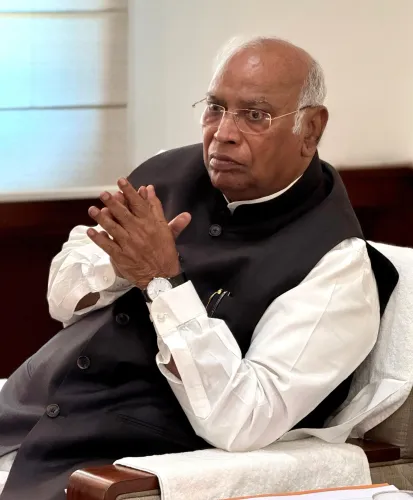
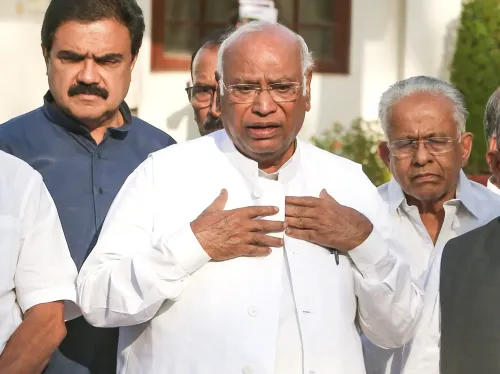
Congress President Mallikarjun Kharge wrote to PM Narendra Modi on 16 July seeking an all-party meeting on revised delimitation Bills.
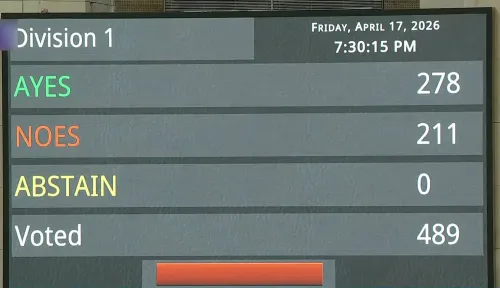
The Constitution (131st Amendment) Bill, 2026 failed to secure a two-thirds majority in the Lok Sabha on 17 April 2026 .
Kharge says he wrote to the Minister of Parliamentary Affairs repeatedly in March and April 2026 seeking consultations — requests that were not accepted.
The proposed Bills would expand the Lok Sabha from 550 to 850 seats and advance women's reservation in legislatures.
The delimitation exercise, if passed, would redistribute parliamentary seats for the first time since 1976 .
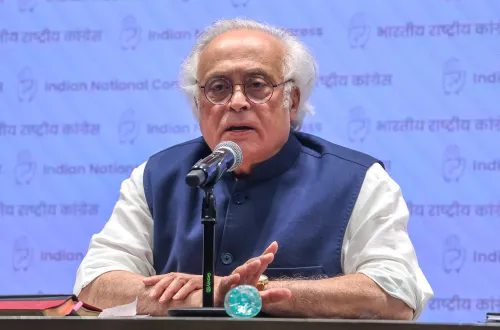
The letter was publicly posted on X by Jairam Ramesh , Kharge, and the Congress party.
Congress President Mallikarjun Kharge on Thursday, 16 July wrote to Prime Minister Narendra Modi, urging him to convene an all-party meeting to deliberate on the government's revised delimitation-related Bills before they are tabled in Parliament during the upcoming Monsoon Session. The letter marks the latest in a series of consultation requests that Kharge says have gone unanswered since early 2026.
Background: A Bill That Failed in April
The push for broader consultation stems directly from the fate of the Constitution (131st Amendment) Bill, 2026, which failed to secure the constitutionally mandated two-thirds majority in the Lok Sabha on 17 April 2026 — falling short by what Kharge described as 'a clear margin.' The Bill was introduced alongside the Delimitation Bill, 2026, and the Union Territories Laws (Amendment) Bill, 2026, none of which were passed.
Kharge noted that throughout March and April 2026, he had written to the Minister of Parliamentary Affairs seeking an all-party meeting on the government's delimitation proposals. Those requests, he said, were not accepted — a sequence of events he now cites as a cautionary precedent.
What Kharge's Letter Says
In his letter, Kharge quoted directly: 'All of March and April, 2026, I had been writing to the Hon'ble Minister of Parliamentary Affairs requesting that the Union Government convene an All Party Meeting to discuss its proposals regarding delimitation, etc. Unfortunately, these requests had not been accepted. The Constitution (131st Amendment) Bill, 2026, then failed to secure the required two-thirds majority in the Lok Sabha by a clear margin.'
He added that media reports suggest the Centre is planning to reintroduce a revised version of the constitutional amendment during the forthcoming Monsoon Session. He requested that political parties be given adequate time to examine the revised proposals in detail before they are formally introduced in Parliament.
What the Bills Propose
The proposed constitutional amendment carries significant electoral implications. It seeks to advance the implementation of women's reservation in the Lok Sabha and state legislative assemblies. It also provides for a substantial increase in the strength of the Lok Sabha — from the current 550 seats to 850 seats — and lays the groundwork for the next nationwide delimitation exercise, which would redistribute parliamentary seats among states for the first time since 1976. Analysts describe it as one of the most consequential electoral reform proposals in decades.
Congress Puts It on Record
The letter was shared publicly by Congress General Secretary (Communications) Jairam Ramesh and was also posted on X by both Kharge and the official Congress party account, signalling that the opposition intends to keep the consultation demand in the public domain ahead of the Monsoon Session.
What Happens Next
With the Monsoon Session expected to begin shortly, the government faces a delicate arithmetic challenge: constitutional amendments require a two-thirds majority, making cross-party support essential. Whether the Centre agrees to an all-party meeting before tabling the revised Bills will be an early indicator of how it plans to navigate that threshold.
Point of View
And the BJP cannot get there alone. What mainstream coverage underplays is the 1976 dimension — India has not redrawn parliamentary seat distribution in half a century, and the jump from 550 to 850 Lok Sabha seats is not merely administrative; it reshuffles political power between fast-growing northern states and slower-growing southern ones. That north-south fault line, more than any party-political standoff, is the real reason this Bill keeps failing to find consensus. An all-party meeting, if it happens, will expose that tension starkly.
NationPress
15 Oct 2026
Frequently Asked Questions
Why did Mallikarjun Kharge write to PM Modi on 16 July?
Kharge wrote to PM Modi urging him to convene an all-party meeting to discuss the government's revised delimitation-related Bills before they are introduced in Parliament during the Monsoon Session. He cited the failure of the Constitution (131st Amendment) Bill, 2026, in April as evidence that broader consultation is necessary.
What is the Constitution (131st Amendment) Bill, 2026?
It is a proposed constitutional amendment that seeks to advance women's reservation in the Lok Sabha and state assemblies, increase Lok Sabha strength from 550 to 850 seats, and lay the groundwork for India's first nationwide delimitation exercise since 1976. It failed to secure the required two-thirds majority in the Lok Sabha on 17 April 2026.
Why did the Bill fail in April 2026?
The Constitution (131st Amendment) Bill, 2026, along with the Delimitation Bill, 2026, and the Union Territories Laws (Amendment) Bill, 2026, did not pass because they could not secure the constitutionally mandated two-thirds majority in the Lok Sabha — falling short by what Kharge described as 'a clear margin.'
What does the delimitation proposal mean for India's electoral map?
If passed, the proposal would redistribute parliamentary seats among states for the first time since 1976 and expand the Lok Sabha from 550 to 850 seats. This would be one of the most far-reaching electoral reforms in India's post-Independence history, affecting the relative political weight of different states.
Who is affected by the revised Delimitation Bill?
The Bill affects all Indian voters and political parties, as it would redraw parliamentary constituencies and alter seat distribution across states. States with faster population growth — largely in northern India — are expected to gain seats, while southern states, which have managed population growth more effectively, could see their relative representation reduced.