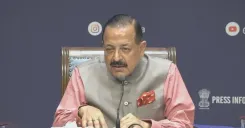
CM Sawant Launches Sudharit Kamdhenu Yojana for Goa Dairy Farmers

Synopsis
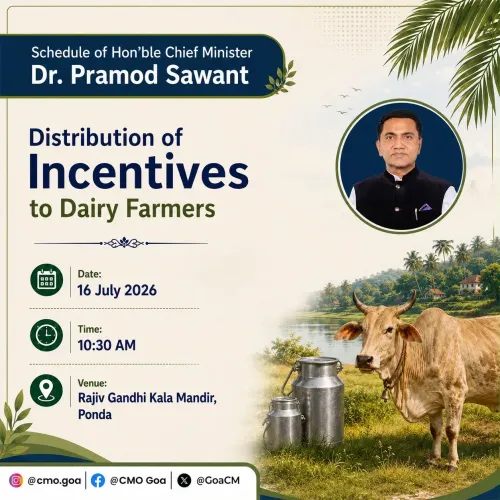
Goa CM Pramod Sawant launched the Sudharit Kamdhenu Yojana at Rajiv Gandhi Kala Mandir, Ponda on 16 July 2026, announcing revised milk procurement rates of ₹6 per litre for cow milk and ₹10 per litre for buffalo milk, effective 1st April, to boost dairy farmer incomes statewide.
Key Takeaways
Sudharit Kamdhenu Yojana was formally launched by CM Pramod Sawant at Rajiv Gandhi Kala Mandir, Ponda on 16 July 2026 .
Revised milk procurement incentive: ₹6 per litre for cow milk and ₹10 per litre for buffalo milk , effective from 1st April .
The event was attended by Animal Husbandry Minister Nilkant Halarnkar , Co-operation Minister Subhash Shirodkar , Goa Dairy officials, cooperative members, and farmers.
The scheme is part of Goa 's broader Swayampurna Goa and Viksit Goa policy frameworks targeting rural self-sufficiency.
The rate revision aims to sustain smallholder participation in the cooperative dairy network and reduce migration to private procurement channels.
Goa Chief Minister Pramod Sawant on Thursday, 16 July 2026 launched the Sudharit Kamdhenu Yojana at Rajiv Gandhi Kala Mandir, Ponda, and announced revised enhanced milk procurement rates for the state's dairy farmers, reinforcing the government's push to strengthen the cooperative dairy sector.
Context
At the event, CM Sawant distributed the revised incentive rates directly to farmer representatives, framing the revision as a concrete step toward ensuring better returns for smallholder dairy producers across Goa. The occasion was attended by Minister for Animal Husbandry and Veterinary Services Nilkant Halarnkar, Minister for Co-operation Subhash Shirodkar, senior state officials, Goa Dairy representatives, dairy co-operatives, and farmers.
The revised rates — ₹6 per litre for cow milk and ₹10 per litre for buffalo milk — are effective from 1st April and represent the government's latest effort to make dairy farming economically viable for rural households in the state.
Policy Backdrop
The Sudharit Kamdhenu Yojana is a Goa government dairy development scheme aimed at improving milk production, modernising animal husbandry practices, and raising farmer incomes through the cooperative network. Goa Dairy, the state-level cooperative responsible for milk procurement, processing, and distribution, sits at the centre of this framework.
The revision fits a broader national pattern in which Indian states periodically adjust milk procurement incentives to offset rising feed and input costs. Goa has pursued sector modernisation under its Swayampurna Goa framework, using targeted subsidies and cooperative strengthening to sustain smallholder participation in dairy amid competition from larger producers.
Stakeholders and Impact
Dairy farmers and cooperative members stand to benefit most immediately from the enhanced rates. The differential between cow milk and buffalo milk incentives — ₹6 versus ₹10 per litre — reflects the higher fat content and production cost typically associated with buffalo milk, and is designed to encourage sustainable farming of both cattle types.
For Goa Dairy and affiliated cooperatives, the revision is expected to encourage higher milk supply volumes by making procurement more attractive relative to informal or private channels. The government's stated goal is to promote 'sustainable dairy farming across the State,' as CM Sawant noted in his post.
What's Next
Quarterly milk procurement data from Goa Dairy will be a key indicator of whether the revised rates translate into measurable production increases. Analysts will watch whether the incentive revision succeeds in retaining smallholder farmers within the cooperative fold or whether further adjustments are needed in the next fiscal cycle.
The launch also signals continued political attention to the agricultural and rural welfare agenda under the Swayampurna Goa and Viksit Goa banners, with the dairy sector now positioned as a visible deliverable ahead of any future electoral cycle in the state.
Point of View
The Sawant government ties a sector-specific subsidy to a larger self-reliance narrative, lending it ideological coherence beyond a routine rate revision. The differential incentive structure — higher rates for buffalo milk — suggests the government is attempting to balance production economics with farmer behaviour, not simply offering a blanket increase. Whether the revision is sufficient to meaningfully shift procurement volumes toward Goa Dairy will be the real test of the policy's ambition.
NationPress
16 Jul 2026
Frequently Asked Questions
What is the Sudharit Kamdhenu Yojana in Goa?
The Sudharit Kamdhenu Yojana is a Goa government dairy development scheme launched to improve milk production, modernise animal husbandry practices, and increase incomes for dairy farmers through the state cooperative network led by Goa Dairy.
What are the new milk procurement rates under the Goa dairy scheme?
The revised rates are ₹6 per litre for cow milk and ₹10 per litre for buffalo milk, both effective from 1st April, as announced by CM Pramod Sawant at the Sudharit Kamdhenu Yojana launch in Ponda on 16 July 2026.
Where was the Sudharit Kamdhenu Yojana launched?
The scheme was launched at Rajiv Gandhi Kala Mandir in Ponda, Goa, on 16 July 2026 by Chief Minister Pramod Sawant.
Who attended the Kamdhenu Yojana launch event in Goa?
Animal Husbandry and Veterinary Services Minister Nilkant Halarnkar, Co-operation Minister Subhash Shirodkar, senior state officials, Goa Dairy representatives, dairy cooperative members, and farmers attended the launch.
What is Swayampurna Goa and how does it relate to the dairy scheme?
Swayampurna Goa is a Goa government policy framework aimed at rural self-sufficiency. The Sudharit Kamdhenu Yojana and the revised milk procurement rates fall under this broader initiative to make the state's agricultural and dairy sectors more sustainable and farmer-friendly.