CM Sawant Attends Purumentacho Bazar for SHGs in Sankhali
Synopsis
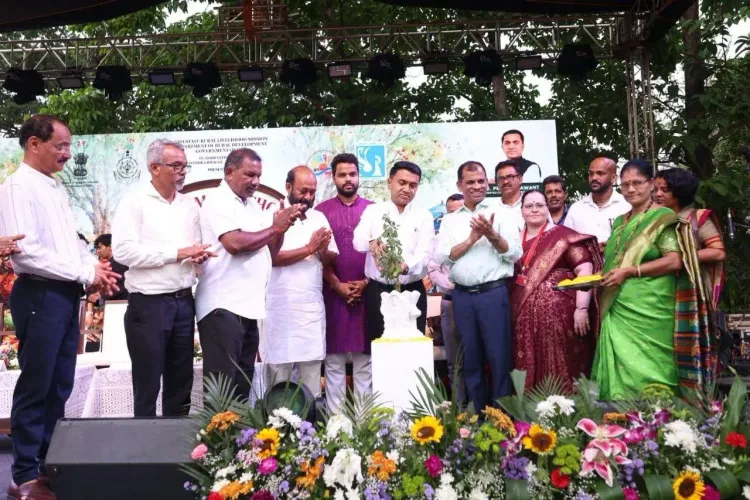
Goa Chief Minister Pramod Sawant attended the Purumentacho Bazar at Ravindra Bhavan, Sankhali, organised by the Goa State Rural Livelihood Mission to give self-help groups and local entrepreneurs a direct marketplace. The event advances the state's Swayampurna Goa mission, women empowerment goals and Vocal for Local priorities.
Key Takeaways
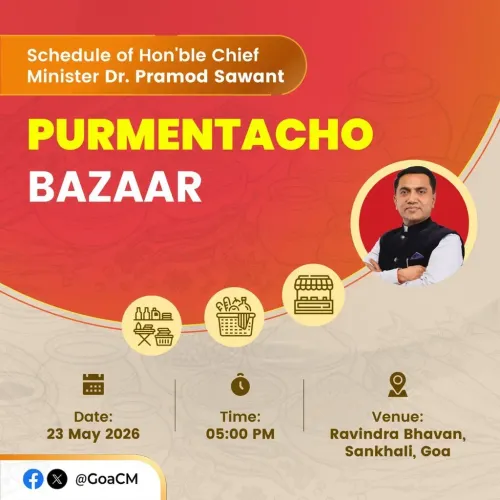
Goa CM Pramod Sawant attended the Purumentacho Bazar at Ravindra Bhavan, Sankhali on 23 May 2026 .
The event was organised by the Goa State Rural Livelihood Mission (GSRLM) , the state arm of the national NRLM launched in 2011 .
The bazar provides self-help groups and local entrepreneurs a direct platform to showcase and sell products, bypassing intermediaries.
The initiative is aligned with the state's Swayampurna Goa mission and the central government's Vocal for Local and Atmanirbhar Bharat campaigns.
Rural women form the primary beneficiary group, with the event reinforcing women-led enterprise as a core pillar of Goa's rural economy strategy.
Further district-level editions of the Purumentacho Bazar are anticipated as part of Goa's rural livelihood calendar.
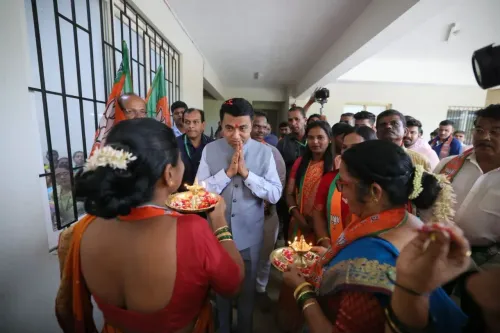
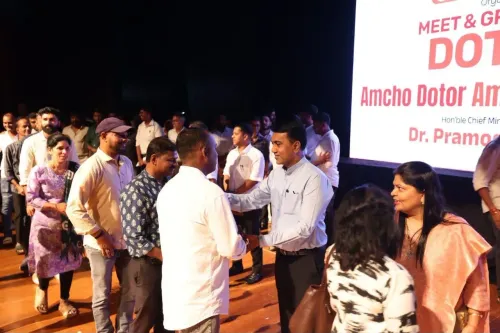
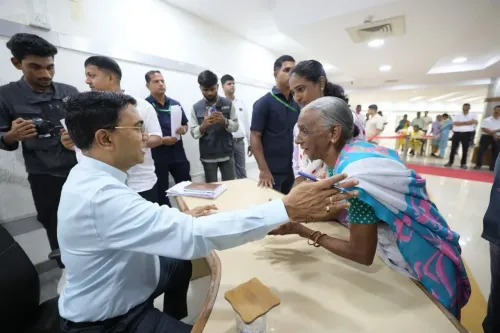
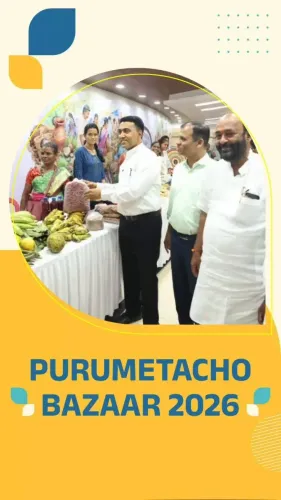
Goa Chief Minister Pramod Sawant on Saturday, 23 May 2026, attended the Purumentacho Bazar at Ravindra Bhavan, Sankhali, interacting with entrepreneurs, self-help group members and customers at the marketplace organised by the Goa State Rural Livelihood Mission (GSRLM).
Context
The Purumentacho Bazar — a Konkani phrase meaning 'market of the people' — serves as a dedicated retail platform where rural self-help groups and local entrepreneurs can directly showcase and sell their products to consumers. Chief Minister Sawant described the event as 'a valuable platform for SHGs and local ventures to showcase and sell their products,' underscoring the state government's focus on bridging rural producers with urban and semi-urban buyers.
Ravindra Bhavan in Sankhali, North Goa, is a regular venue for community and livelihood exhibitions organised by state agencies, giving the event an established institutional footing.
Policy Backdrop
The GSRLM is Goa's state-level arm of the National Rural Livelihoods Mission (NRLM), which was launched nationally in 2011 to organise rural poor into self-help groups and support sustainable livelihood pathways. Goa has layered its own Swayampurna Goa initiative on top of this national framework, explicitly linking local self-reliance with the broader Atmanirbhar Bharat and Vocal for Local campaigns championed by the central government.
Chief Minister Sawant noted that the initiative 'reflects the spirit of women empowerment, self-reliance and rural entrepreneurship while encouraging local businesses and traditional products,' positioning the bazar as a convergence point for multiple policy priorities. The Swayampurna Goa mission has consistently emphasised women-led enterprises and the preservation of traditional Goan crafts and food products as economic assets.
Stakeholders and Impact
The primary beneficiaries of the Purumentacho Bazar are rural women who form the backbone of Goa's self-help group network. By providing a curated marketplace, the GSRLM allows SHG members to bypass intermediaries and retain a larger share of revenue from their goods. Sawant specifically appreciated 'the efforts of all SHGs, entrepreneurs and organisers for strengthening livelihoods and contributing towards a Swayampurna Goa.'
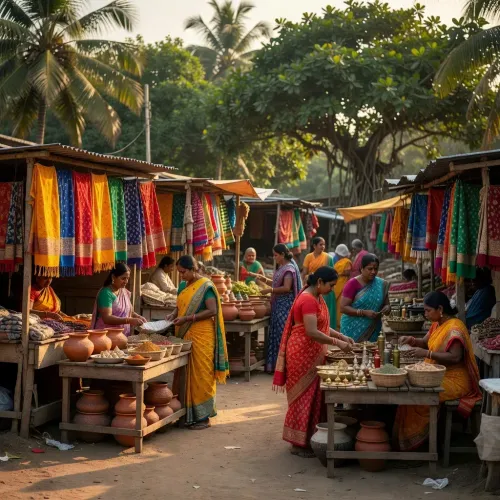
Local entrepreneurs and vendors of traditional products — ranging from Goan pickles and cashew-based goods to handloom textiles — also gain direct consumer access at such events, reinforcing the state's push to keep demand for local products within Goa's own economy. The event mirrors similar NRLM-aligned SHG bazaars held across BJP-led states as demonstrations of grassroots economic participation.
What's Next
The Goa government is expected to extend the Purumentacho Bazar format to other districts as part of its ongoing rural livelihood calendar, with subsequent editions likely to be held at taluka and district headquarters across the state. Observers will watch for any fresh budgetary allocations aimed at scaling SHG marketing infrastructure, including permanent retail outlets or e-commerce linkages for rural producers. The frequency and geographic spread of such bazaars will be a key indicator of how seriously the state intends to institutionalise direct-to-consumer channels for self-help groups beyond one-off events.
Point of View
Vocal for Local, and women's economic empowerment — allowing the state administration to align local optics with national messaging at minimal fiscal cost. The Swayampurna Goa overlay on the NRLM framework also signals Goa's intent to brand its rural development work distinctively rather than simply implementing Delhi's template. Whether these periodic bazaars translate into sustained income gains for SHG members will depend on the state's willingness to invest in permanent marketing infrastructure beyond event-based interventions.
NationPress
8 Oct 2026
Frequently Asked Questions
What is the Purumentacho Bazar in Goa?
The Purumentacho Bazar is a marketplace event organised by the Goa State Rural Livelihood Mission where self-help groups and local entrepreneurs sell traditional and locally made products directly to consumers.
What is Swayampurna Goa?
Swayampurna Goa is a state government initiative that promotes self-reliance, local entrepreneurship and sustainable rural development in Goa, complementing the national Atmanirbhar Bharat and Vocal for Local campaigns.
What is the Goa State Rural Livelihood Mission?
The Goa State Rural Livelihood Mission is the state-level implementing body for the National Rural Livelihoods Mission, which was launched in 2011 to organise rural poor into self-help groups and support sustainable livelihoods.
Where was the Purumentacho Bazar held in May 2026?
The Purumentacho Bazar was held at Ravindra Bhavan in Sankhali, North Goa, on 23 May 2026.
How does the Purumentacho Bazar help women in Goa?
The bazar gives rural women who are members of self-help groups a direct retail platform to sell their products without intermediaries, helping them retain more income and gain market exposure for traditional Goan goods.