Dr. Jitendra Singh Marks 3 Years Since Chandrayaan-3 Launch
Synopsis
Union Science and Technology Minister Dr. Jitendra Singh marked three years since the Chandrayaan-3 launch from Sriharikota in July 2023, hailing the mission — which made India the first country to land near the Moon's south pole — as the foundation of a new era of ISRO success stories.
Key Takeaways
Jitendra Singh posted a throwback on 9 July 2026 marking three years since the Chandrayaan-3 launch.
Chandrayaan-3 was launched on 14 July 2023 from the Satish Dhawan Space Centre, Sriharikota , aboard the LVM3-M4 rocket.
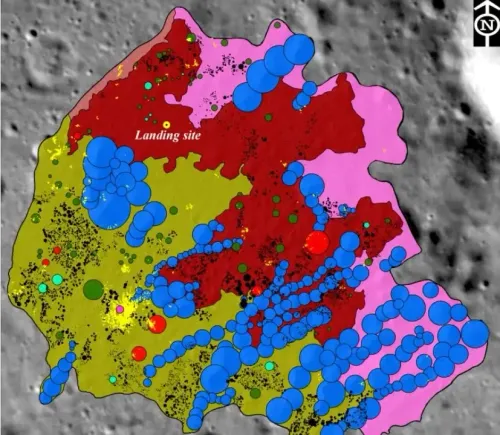
The mission's Vikram lander successfully soft-landed near the lunar south pole on 23 August 2023 , a global first.
India became only the fourth nation in history to achieve a soft landing on the Moon.
The minister credited the mission with establishing India's space supremacy and triggering a series of ISRO success stories.
Upcoming milestones include the Gaganyaan crewed mission and the proposed Chandrayaan-4 sample-return mission.
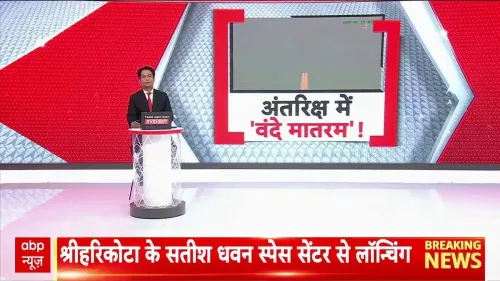
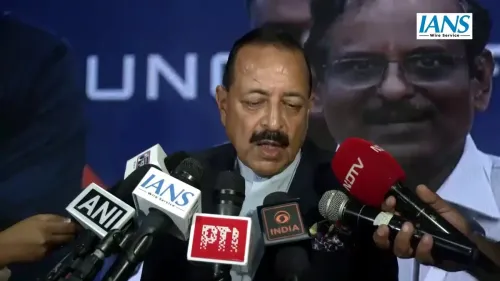
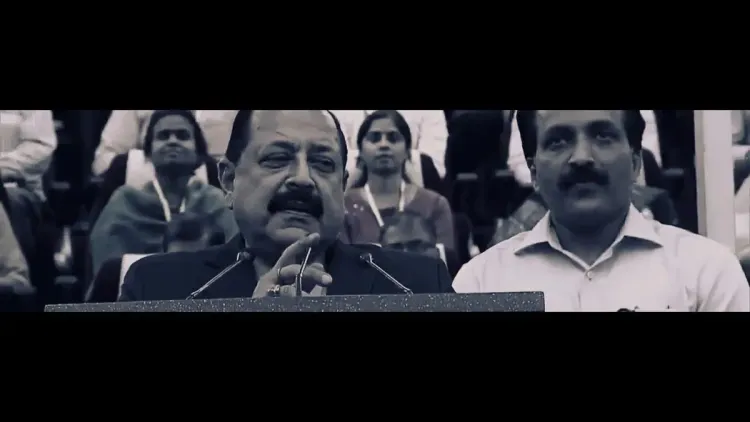
Union Science and Technology Minister Dr. Jitendra Singh on Thursday, 9 July 2026, shared a throwback post marking exactly three years since the launch of Chandrayaan-3 from Sriharikota in July 2023, calling it a moment 'etched in history' that established the supremacy of India's space capabilities.
Context
In the post, Dr. Jitendra Singh recalled how, in July 2023, 'every Indian and the world had zoomed in to Sriharikota' as ISRO launched Chandrayaan-3 on mankind's first journey to the South Pole of the Moon. He credited the mission with setting 'in motion a series of ISRO success stories.' The minister's commemoration arrives as the three-year anniversary of the landmark launch comes full circle.
Chandrayaan-3 lifted off on 14 July 2023 aboard the LVM3-M4 rocket from the Satish Dhawan Space Centre at Sriharikota in Andhra Pradesh. On 23 August 2023, the mission's Vikram lander achieved a successful soft landing near the lunar south pole, making India the first country in the world to accomplish this feat — and only the fourth nation ever to achieve a soft landing on the Moon.
Policy Backdrop
The road to Chandrayaan-3 was paved by lessons from Chandrayaan-2, launched in July 2019, which demonstrated orbiter success but experienced a setback during its landing attempt. The government approved Chandrayaan-3 as a focused follow-on mission to conclusively demonstrate indigenous landing and rover technology, with the Department of Space steering the programme's self-reliant design philosophy.
Under the broader framework of space-sector reform, India has opened its launch infrastructure and satellite services to private players, with ISRO transitioning toward a higher launch cadence. The success at the lunar south pole gave significant momentum to this policy direction, signalling that indigenous propulsion and guidance systems had reached mission-critical maturity.
Stakeholders and Impact
ISRO scientists and engineers remain the central stakeholders in this legacy, having executed the mission within a lean budget widely estimated to be among the most cost-efficient lunar programmes globally. Space research institutions and academic bodies across India have drawn upon Chandrayaan-3's scientific data — particularly from the Pragyan rover's spectroscopic analysis of the lunar south pole surface — to advance planetary science research.
For the broader public, the mission crystallised India's identity as a credible space power. The live telecast of the landing drew tens of millions of viewers and became a rare moment of unified national celebration, reinforcing public and political support for sustained space investment.
What's Next
Attention in India's space programme has since turned to Gaganyaan, the country's first crewed spaceflight mission, whose timeline remains under active parliamentary scrutiny. Discussions around Chandrayaan-4 — envisioned as a sample-return mission — and potential international lunar collaborations are also being tracked by the space community as the next chapter in India's lunar ambitions.
As the three-year milestone of the Chandrayaan-3 launch is observed, the government's continued emphasis on this achievement underscores space exploration's growing centrality in India's science diplomacy and its aspiration to be a leading spacefaring nation by the end of the decade.
Point of View
' the minister frames Chandrayaan-3 not merely as an ISRO milestone but as a civilisational moment, reinforcing the government's broader narrative of India as a rising global power. The timing, three years on, also serves as a soft preamble to anticipated announcements around Gaganyaan and Chandrayaan-4, keeping space policy in the public eye. Neutrally assessed, the post reflects how science diplomacy and domestic political communication have become increasingly intertwined in India's space narrative.
NationPress
7 Oct 2026
Frequently Asked Questions
When was Chandrayaan-3 launched?
Chandrayaan-3 was launched on 14 July 2023 from the Satish Dhawan Space Centre at Sriharikota, Andhra Pradesh, aboard the LVM3-M4 rocket.
Was Chandrayaan-3 successful?
Yes. The Vikram lander achieved a successful soft landing near the Moon's south pole on 23 August 2023 , making India the first country to land at the lunar south pole and only the fourth nation to achieve a soft landing on the Moon.
Why is the Moon's south pole significant for space exploration?
The lunar south pole is believed to contain water ice in permanently shadowed craters, making it a key area of interest for future human missions and resource utilisation in deep space exploration.
What did Dr. Jitendra Singh say about Chandrayaan-3 in July 2026?
On 9 July 2026 , Dr. Jitendra Singh posted a throwback marking three years since the launch, calling it a moment 'etched in history' that established India's space supremacy and set off a series of ISRO success stories.
What is India's next major space mission after Chandrayaan-3?
India's next major milestone is Gaganyaan , the country's first crewed spaceflight mission, with Chandrayaan-4 — a proposed lunar sample-return mission — also in the planning pipeline.