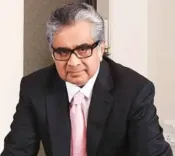
Dr. Jitendra Singh pays tribute to Veer Savarkar on birth anniversary
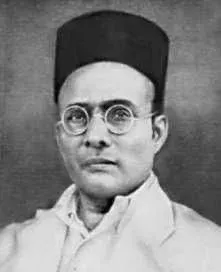
Synopsis
Union Minister Dr. Jitendra Singh marked Veer Savarkar's birth anniversary on 28 May 2026, saluting the revolutionary as an ardent patriot, writer, and social reformer. The tribute follows a consistent BJP government practice of officially honouring Savarkar on his jayanti each year.
Key Takeaways
Jitendra Singh , Union Minister for Science and Technology, posted a tribute to Veer Savarkar on 28 May 2026 .
He described Savarkar as a 'fierce patriot, celebrated revolutionary, writer and social reformer.' Veer Vinayak Damodar Savarkar was born on 28 May 1883 in Bhagur, Maharashtra .
The tribute is part of a consistent pattern of BJP-led government ministers publicly honouring Savarkar on his birth anniversary.
Savarkar remains a politically significant and contested figure in Indian historical discourse, with debates over his legacy recurring each year around his jayanti.
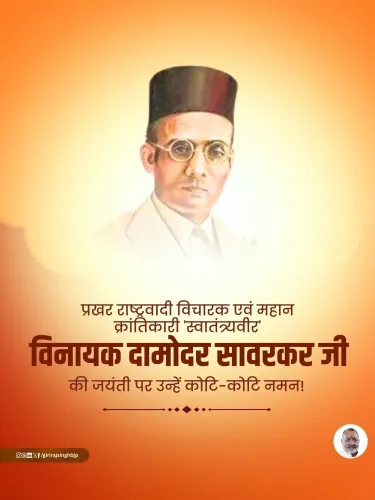
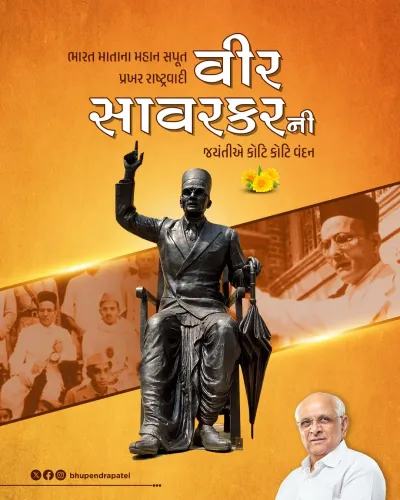
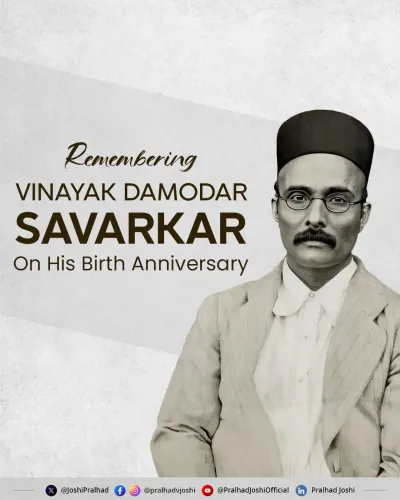
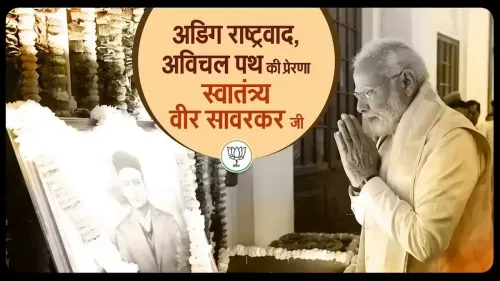
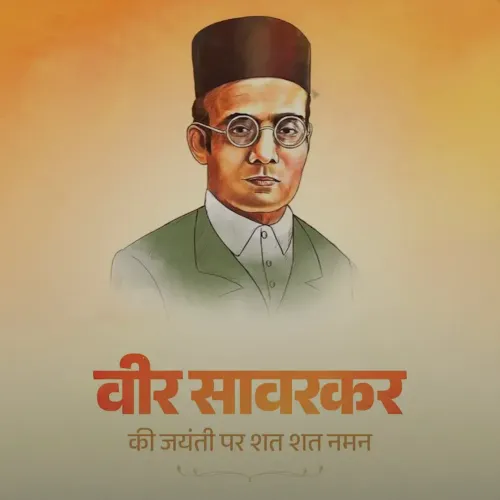
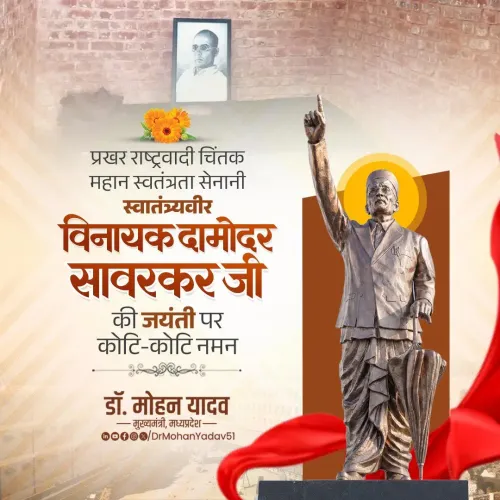
Union Science and Technology Minister Dr. Jitendra Singh on Thursday, 28 May 2026, paid tribute to Veer Vinayak Damodar Savarkar on the revolutionary leader's birth anniversary, hailing him as a fierce patriot, celebrated revolutionary, writer, and social reformer.
In his post on X, Dr. Singh wrote: 'प्रखर राष्ट्रभक्त, प्रसिद्ध क्रांतिकारी, लेखक, समाज सुधारक वीर विनायक दामोदर सावरकर जी की जयंती पर उन्हें शत-शत नमन।' — translated as: 'On the birth anniversary of ardent patriot, celebrated revolutionary, writer and social reformer Veer Vinayak Damodar Savarkar, I bow to him a hundred times.'
Context
Veer Vinayak Damodar Savarkar was born on 28 May 1883 in Bhagur, Maharashtra. He became one of the most consequential and contested figures of India's independence movement — a revolutionary who organised armed resistance against British colonial rule from a young age, and later a political thinker who articulated the ideology of Hindutva.
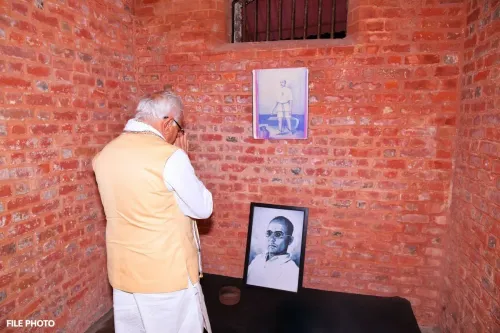
Savarkar was imprisoned by British authorities and spent years in the cellular jail in Andaman and Nicobar Islands, a period that became central to his legacy as a symbol of sacrifice and endurance in nationalist memory.
Policy Backdrop
Ministers of the BJP-led central government have consistently issued public tributes to Savarkar on his birth and death anniversaries as part of a broader effort to foreground leaders associated with cultural nationalism and the revolutionary strand of the independence movement.
This pattern of official recognition extends beyond social media posts to institutional measures — including proposals to confer the Bharat Ratna on Savarkar, a demand that has periodically surfaced in parliamentary and public discourse. Dr. Singh's tribute fits squarely within this established practice of the ruling dispensation.
Stakeholders and Impact
Savarkar remains a deeply polarising historical figure in Indian public life. For BJP supporters and adherents of the Hindutva ideological tradition, tributes such as this affirm the government's commitment to honouring a figure they regard as an unsung hero of the freedom struggle.
Critics from opposition parties and certain historians, however, contest the framing of Savarkar's legacy, pointing to debates around his mercy petitions to the British government and his ideological positions. The annual cycle of tributes thus consistently reignites this wider historical and political conversation.
What's Next
Similar commemorative posts and events from other central ministers and BJP-governed state governments are expected through the day, as 28 May is observed as Savarkar Jayanti across the party's network of organisations. The anniversary will likely be accompanied by events organised by the Rashtriya Swayamsevak Sangh and affiliated bodies, keeping Savarkar's legacy at the centre of political and cultural discourse for the day.
Point of View
Consistent with the BJP government's sustained effort to rehabilitate and mainstream Savarkar's legacy within the official nationalist canon. Each such tribute renews a proxy debate about whose sacrifices the Indian state chooses to honour, making Savarkar Jayanti a recurring flashpoint between the ruling party and the opposition. For the BJP, these tributes serve a dual purpose: affirming ideological lineage and consolidating the party's core support base. The cumulative weight of such official recognition — from the Prime Minister downward — has progressively shifted the terms of public discourse around Savarkar from controversy to commemoration.
NationPress
12 Oct 2026
Frequently Asked Questions
When is Veer Savarkar's birth anniversary?
Veer Vinayak Damodar Savarkar was born on 28 May 1883, and his birth anniversary — Savarkar Jayanti — is observed every year on 28 May.
Why do BJP ministers pay tribute to Savarkar every year?
BJP ministers regularly honour Savarkar on his birth and death anniversaries as part of the party's ideological tradition, which regards him as a key figure in the revolutionary and cultural-nationalist streams of India's independence movement.
Who is Dr. Jitendra Singh?
Dr. Jitendra Singh is the Union Minister of State (Independent Charge) for Science and Technology and Earth Sciences, and also holds responsibilities in the Prime Minister's Office and the Department of Personnel.
What is Veer Savarkar known for?
Savarkar is known for his revolutionary activities against British colonial rule, his years of imprisonment in the cellular jail in the Andaman Islands, his prolific writing, and for developing the political ideology of Hindutva.
Is Veer Savarkar a controversial figure in India?
Yes, Savarkar is a polarising figure: while he is celebrated by BJP and affiliated organisations as an unsung hero of the freedom struggle, critics raise questions about his mercy petitions to the British and his ideological positions, making his legacy a recurring subject of political and historical debate.