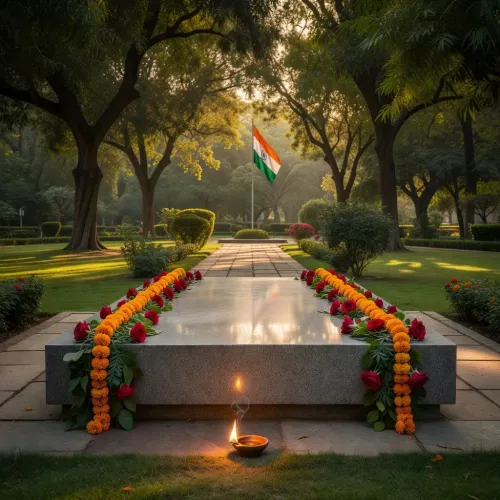
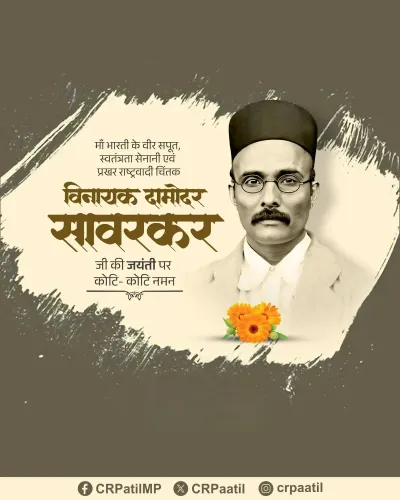
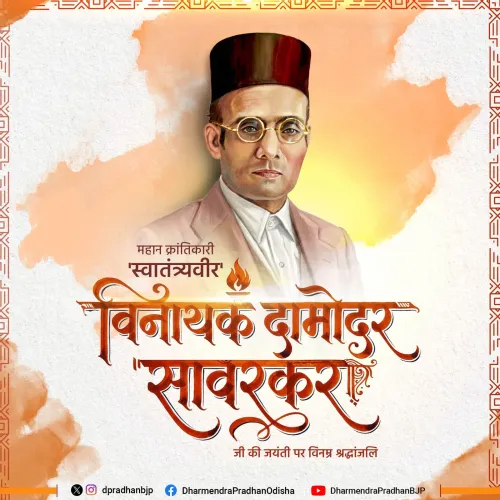
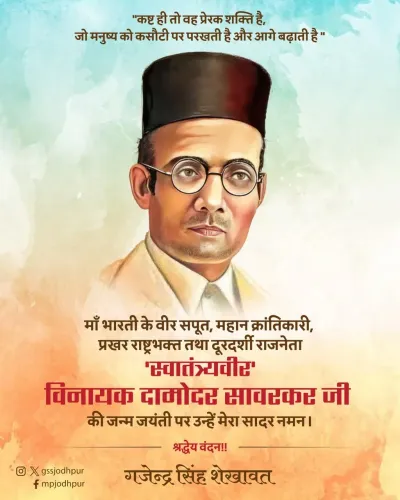
Rajnath Singh pays tribute to Veer Savarkar on his birth anniversary
Synopsis
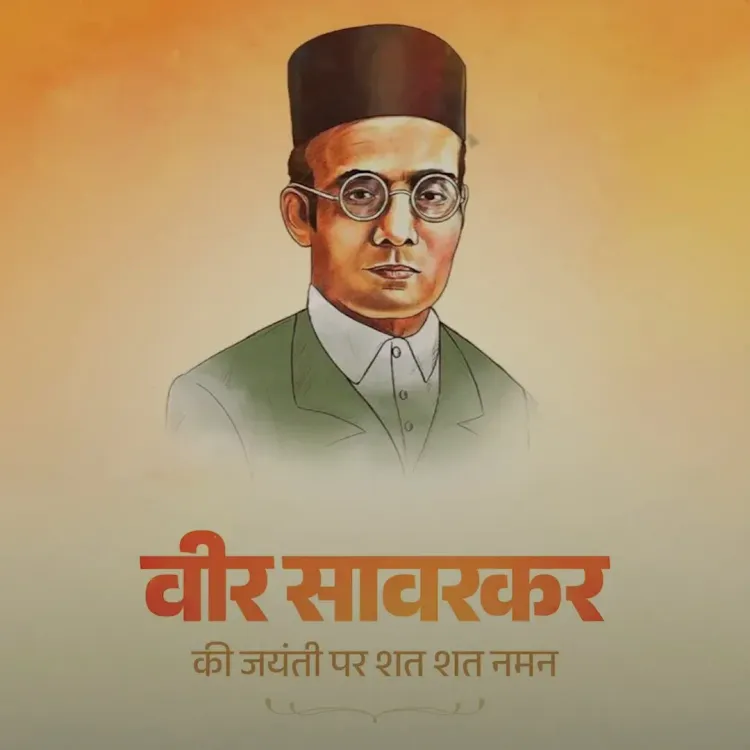
Union Defence Minister Rajnath Singh on 28 May 2026 paid tribute to Veer Vinayak Damodar Savarkar on his birth anniversary, describing the freedom fighter, poet and philosopher as an eternal source of inspiration for Indians through his sacrifice and selfless national service.
Key Takeaways
Rajnath Singh paid tribute to Veer Vinayak Damodar Savarkar on his birth anniversary on 28 May 2026 .
Singh described Savarkar as a 'fervent nationalist thinker, orator, poet and philosopher' who endured great suffering for India's freedom.
Savarkar was born on 28 May 1883 and was imprisoned at the Cellular Jail, Andaman Islands during the freedom struggle.
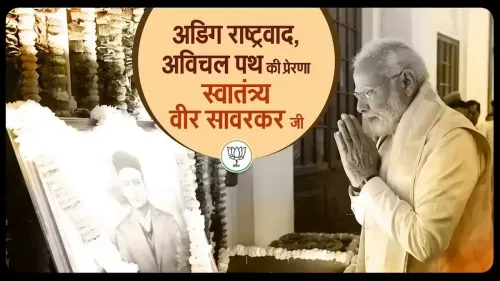
A portrait of Savarkar was installed in the Central Hall of Parliament in 2016 , marking formal institutional recognition of his legacy.
The BJP-led central government has observed Savarkar Jayanti with official statements and events since 2014 .
Singh said Savarkar's devotion to the motherland 'will continue to inspire the countrymen forever'.
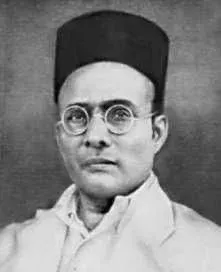
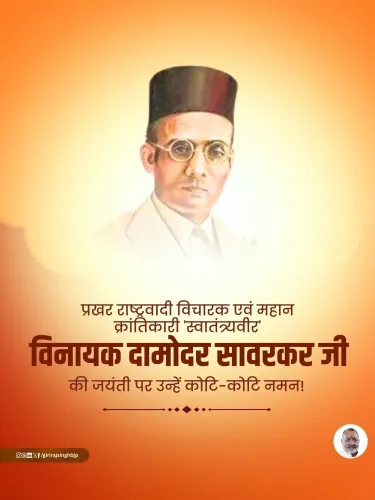
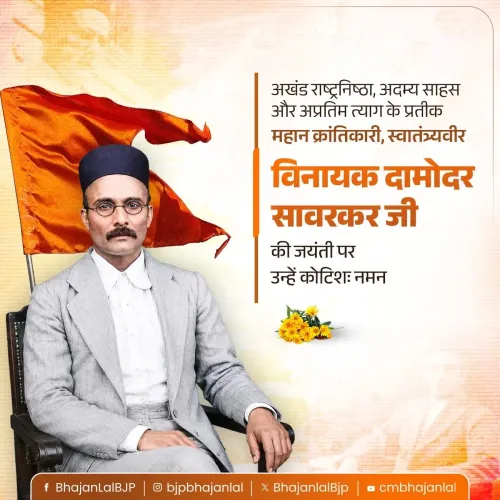
Union Defence Minister Rajnath Singh on Thursday, 28 May 2026 paid tribute to freedom fighter Veer Vinayak Damodar Savarkar on his birth anniversary, honouring him as a fervent nationalist thinker, poet, and philosopher who dedicated his life to India's independence.
In his post, Rajnath Singh wrote in Hindi: 'महान स्वतंत्रता सेनानी वीर विनायक दामोदर सावरकर की जयंती पर मैं उन्हें नमन करता हूँ' ('On the birth anniversary of great freedom fighter Veer Vinayak Damodar Savarkar, I pay my respects to him'). He described Savarkar's life as 'an indelible saga of sacrifice, struggle and selfless service to the nation', and said that Savarkar's devotion to the motherland and his dedication to nation-building 'will continue to inspire the countrymen forever'.
Context
Veer Vinayak Damodar Savarkar was born on 28 May 1883 and went on to become one of the most debated figures in India's independence movement. He was a prolific writer, poet, and political philosopher who articulated an early and assertive form of cultural nationalism. He endured prolonged imprisonment at the Cellular Jail in the Andaman Islands — a British-era penal colony notorious for its harsh conditions — for his revolutionary activities against colonial rule.
Savarkar's legacy encompasses both his role as a revolutionary who challenged British imperialism and his later ideological writings, which have made him a contested but central figure in Indian political discourse. His contributions as an orator and poet are cited alongside his political activism.
Policy Backdrop
Since 2014, the central government has consistently marked Savarkar Jayanti with official statements and events, foregrounding his contributions alongside other revolutionaries of the independence era. In 2016, a portrait of Savarkar was installed in the Central Hall of Parliament, a formal institutional recognition of his place in the nation's history.
The Bharatiya Janata Party (BJP), which leads the current Union government, has long emphasised Savarkar's legacy as part of its broader effort to highlight revolutionary and cultural-nationalist strands within the freedom struggle. Annual commemorations on 28 May have become a consistent feature of the party's political calendar.
Stakeholders and Impact
Tributes from senior Union ministers such as Rajnath Singh carry institutional weight, signalling the government's continued recognition of Savarkar as a mainstream freedom fighter. For BJP supporters and nationalist organisations, such statements reinforce the party's ideological positioning and its reading of India's independence history.
The anniversary also draws attention from political opponents and historians who hold varying assessments of Savarkar's legacy, making the day a recurring flashpoint in India's ongoing debates about how the freedom struggle is remembered and taught.
What's Next
Similar tributes are expected from other Union ministers and state-level BJP units throughout the day, as is customary on Savarkar Jayanti. Observers will watch for any references to Savarkar's legacy in upcoming parliamentary discussions on freedom-fighter memorials or infrastructure projects linked to the Andaman Islands, where the Cellular Jail remains a national memorial site.
The annual cycle of official commemorations suggests that Savarkar's place in the government's historical narrative will remain prominent, with his birth anniversary continuing to serve as a moment for the ruling dispensation to articulate its vision of India's freedom struggle.
Point of View
Singh reinforces the government's framing of Savarkar as an unambiguous hero of the independence movement — a framing that remains contested in academic and opposition circles. The annual cadence of such tributes from senior cabinet ministers signals that Savarkar's commemoration has been institutionalised, not left to party functionaries alone. This pattern is likely to persist and may intensify as the government approaches the centenary of several milestones from the independence era.
NationPress
20 Sept 2026
Frequently Asked Questions
When is Veer Savarkar's birth anniversary?
Veer Vinayak Damodar Savarkar's birth anniversary falls on 28 May every year; he was born on 28 May 1883 .
What did Rajnath Singh say about Savarkar?
Rajnath Singh said Savarkar was a fervent nationalist thinker, orator, poet and philosopher who endured great suffering for India's freedom, calling his life 'an indelible saga of sacrifice, struggle and selfless national service'.
Why was Savarkar imprisoned in the Cellular Jail?
Savarkar was imprisoned at the Cellular Jail in the Andaman Islands by British colonial authorities for his revolutionary activities against British rule in India.
Has the Indian government officially recognised Savarkar?
Yes. In 2016 , a portrait of Savarkar was installed in the Central Hall of Parliament , and since 2014 the central government has marked his birth anniversary with official statements and events.
Why do BJP leaders pay tribute to Savarkar every year?
BJP leaders pay tribute to Savarkar annually on 28 May as part of the party's broader effort to highlight revolutionary and cultural-nationalist contributions to India's independence movement, consistent with the party's ideological emphasis on cultural nationalism.