Pradhan Pays Tribute to Savarkar on Birth Anniversary
Synopsis
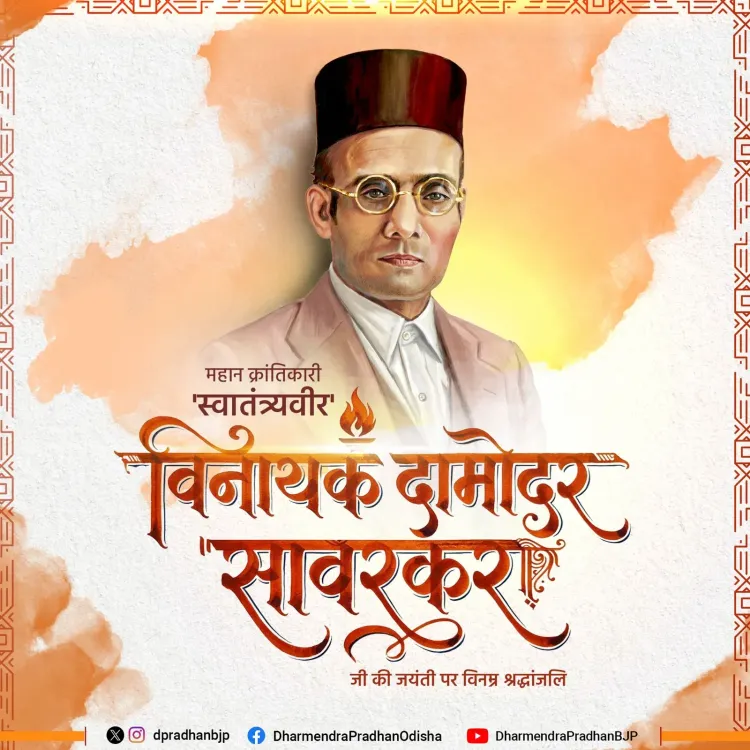
Union Education Minister Dharmendra Pradhan marked Vinayak Damodar Savarkar's birth anniversary on May 28, 2026, honouring the revolutionary's courage at the Cellular Jail and his nationalist legacy — a tribute that carries added weight given Pradhan's oversight of India's education curriculum.
Key Takeaways
Union Education Minister Dharmendra Pradhan paid tribute to Vinayak Damodar Savarkar on his birth anniversary, May 28, 2026 .
Pradhan praised Savarkar's 'indomitable courage, sharp nationalist thought, and unwavering resolve' during the freedom struggle.
He specifically highlighted Savarkar's endurance of 'harsh tortures' at the Cellular Jail in the Andaman and Nicobar Islands from 1911 onward.
A portrait of Savarkar was unveiled in the Central Hall of Parliament in 2003 by the NDA government, marking an early formal elevation of his legacy.
As Education Minister, Pradhan's public framing of Savarkar's legacy has direct implications for how the freedom struggle is taught under NCERT curricula.
Successive BJP governments have made annual commemorations of Savarkar a consistent feature of official political culture.
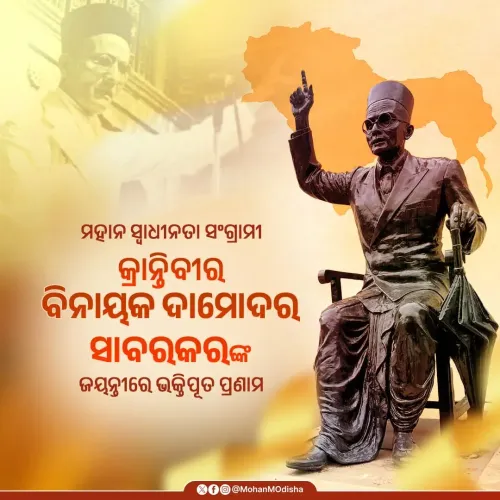
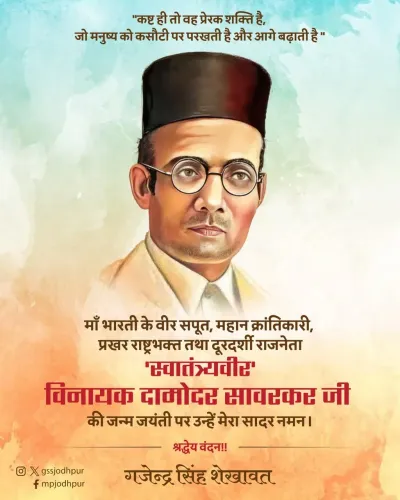
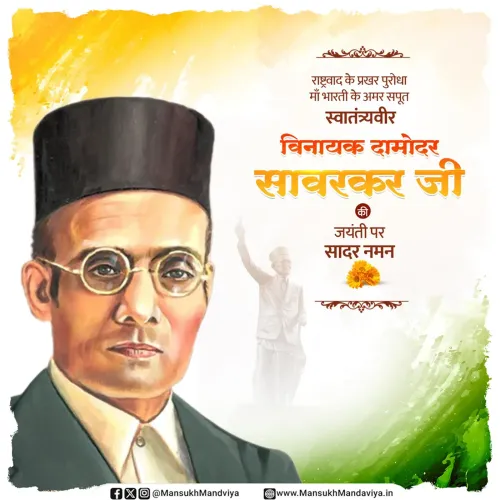
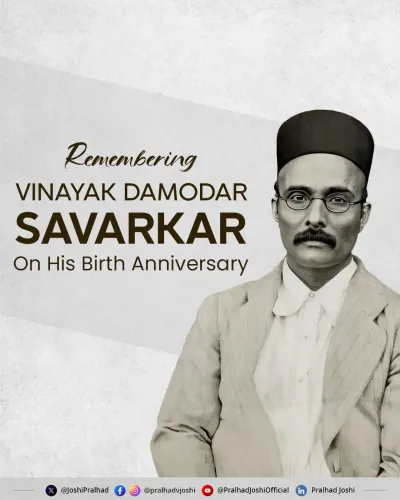
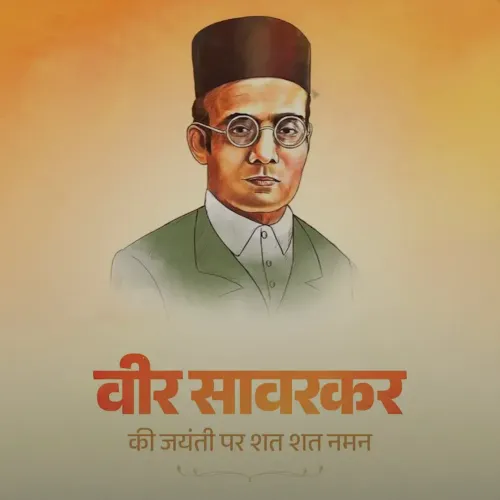
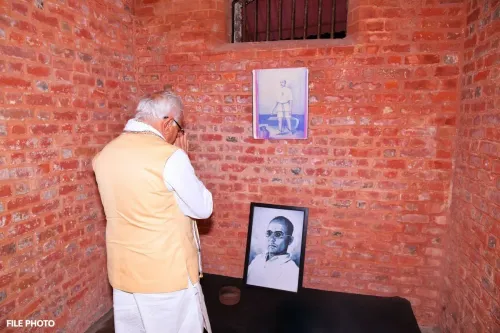
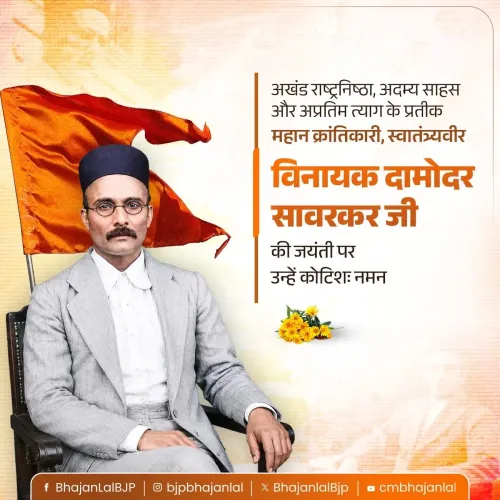
Union Education Minister Dharmendra Pradhan on Thursday, May 28, 2026, paid tribute to freedom fighter Vinayak Damodar Savarkar on his birth anniversary, honouring him as a revolutionary who gave everything for the nation and showed indomitable courage throughout the independence struggle.
Context
Posting in Hindi on X, Pradhan described Savarkar as a 'mahaan krantikari' (great revolutionary) and offered what he called 'bhaavpurn naman' — a heartfelt salute — to the leader known by the honorific 'Swatantryaveer'. He wrote that Savarkar 'gave a new direction to the freedom struggle with indomitable courage, sharp nationalist thought, and unwavering resolve.'
Pradhan specifically invoked Savarkar's imprisonment at the Cellular Jail in the Andaman and Nicobar Islands, noting that 'even amid the harsh tortures of the Cellular Jail, his morale remained unshaken and he kept the national interest supreme.' He concluded that Savarkar's life is 'an unparalleled example of sacrifice, brilliance, and national dedication' that should inspire all to remain on the path of duty in defence of national pride and self-respect.
Policy Backdrop
Savarkar, born on May 28, 1883, was sentenced to two consecutive life terms and held at the Cellular Jail — the British colonial penal settlement in the Andamans — from 1911 onward under exceptionally harsh conditions. He is widely regarded as one of the foremost ideologues of Hindutva and remains a contested but towering figure in Indian political memory.
The NDA government unveiled a portrait of Savarkar in the Central Hall of Parliament in 2003, signalling a formal elevation of his status within the national commemorative canon. Successive BJP-led governments have since reinforced his legacy through official events, infrastructure naming, and inclusion in public discourse on the freedom struggle — positioning him alongside, and sometimes in contrast to, leaders foregrounded in the earlier Congress-era national narrative.
As Union Education Minister, Pradhan oversees NCERT curriculum policy and higher education frameworks, making his public statements on historical figures carry added institutional weight in shaping how those figures are presented to students across India.
Stakeholders and Impact
Annual ministerial tributes to Savarkar carry significance beyond ceremony for students and youth, the primary stakeholders of the education ministry. The framing of Savarkar's legacy — emphasising sacrifice, nationalist thought, and resilience — feeds directly into ongoing debates about how the freedom struggle is taught in schools and colleges.
For the broader BJP base, such tributes are ideologically resonant, affirming the party's long-standing commitment to recognising leaders it argues were marginalised by the post-independence establishment. Opposition voices have historically contested the degree of Savarkar's celebration at the official level, keeping his legacy a live political flashpoint.
What's Next
Observers will watch whether this year's birth anniversary tribute is accompanied by any concrete policy announcements — such as references to Savarkar in forthcoming NCERT textbook revisions or state-level education programmes. With curriculum reform already under discussion under the National Education Policy 2020 framework, the ideological contours of historical representation in classrooms remain a closely watched space. Pradhan's consistent public honouring of Savarkar signals that the minister's educational vision remains aligned with the BJP's broader project of recentring nationalist icons outside the dominant Congress-era narrative.
Point of View
It is a signal about whose legacies are being institutionalised in India's classrooms. The BJP has methodically elevated Savarkar from a contested figure to a mainstream national icon over two decades, and each ministerial homage reinforces that arc. Pradhan's emphasis on the Cellular Jail and nationalist resolve echoes the party's broader counter-narrative to the Congress-era freedom struggle canon. With NCERT revisions ongoing under the NEP 2020 framework, the ideological stakes of such tributes extend well beyond social media.
NationPress
20 Oct 2026
Frequently Asked Questions
When is Vinayak Damodar Savarkar's birth anniversary?
Vinayak Damodar Savarkar was born on May 28, 1883 , and his birth anniversary is observed every year on May 28.
Why was Savarkar imprisoned in the Cellular Jail?
Savarkar was sentenced to two consecutive life terms by British colonial authorities for his anti-British revolutionary activities and was held at the Cellular Jail in the Andaman and Nicobar Islands from 1911 onward, where prisoners faced extremely harsh conditions.
What is 'Swatantryaveer' — the title used for Savarkar?
'Swatantryaveer' is an honorific in Marathi meaning 'brave freedom fighter' or 'hero of independence,' and it is the most widely used title for Vinayak Damodar Savarkar in Maharashtra and among his admirers across India.
Why does the Education Minister's tribute to Savarkar matter for schools?
As Union Education Minister, Dharmendra Pradhan oversees NCERT curriculum policy, so his public framing of historical figures like Savarkar can influence how they are represented in school textbooks and education programmes across India.
Has the Indian government officially recognised Savarkar at the national level?
Yes. In 2003 , the NDA government unveiled a portrait of Savarkar in the Central Hall of Parliament , and successive BJP-led governments have held official commemorations and named public infrastructure after him.