Shekhawat Pays Tribute to Savarkar on Birth Anniversary
Synopsis
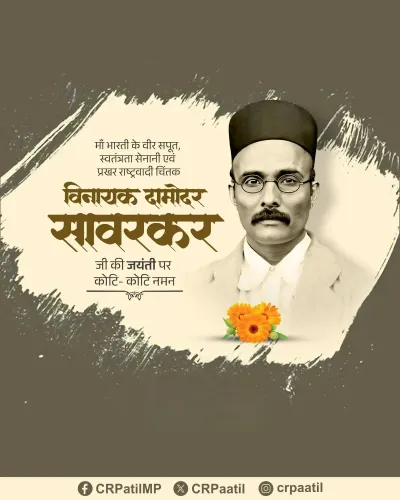
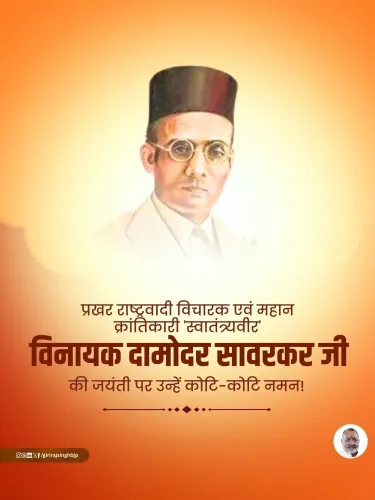
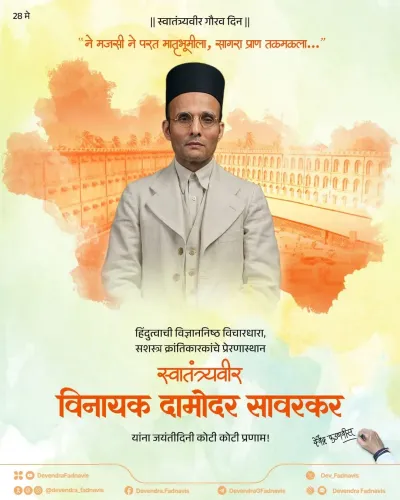
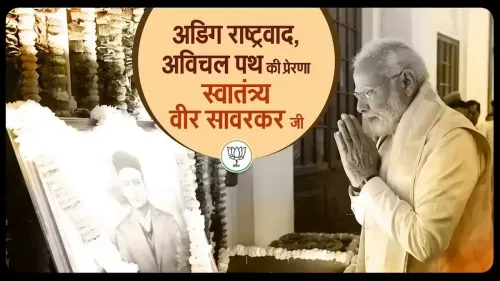
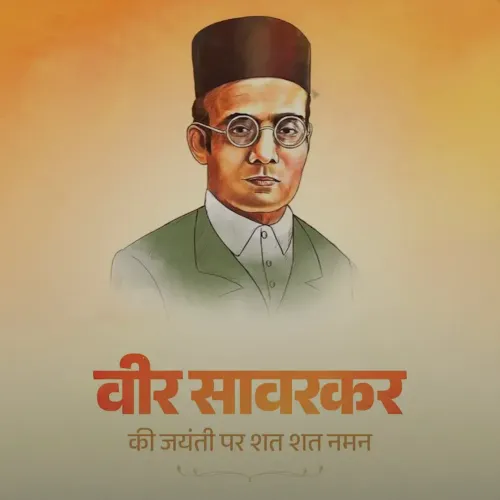
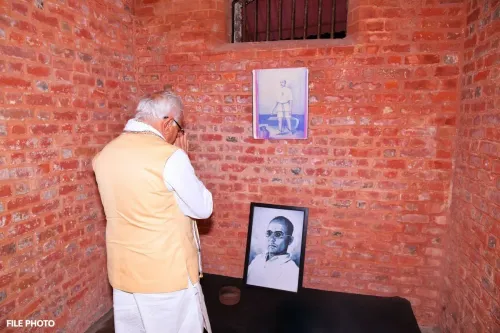
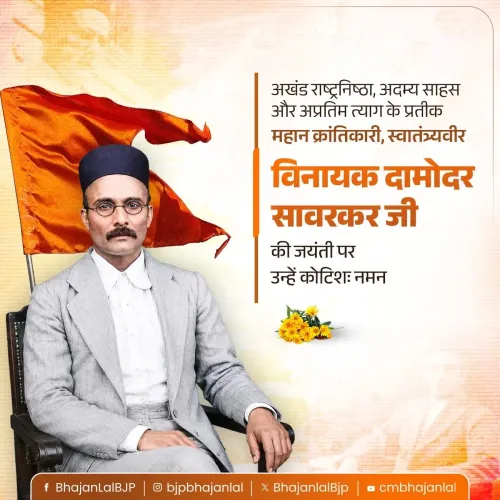
Union Culture and Tourism Minister Gajendra Singh Shekhawat on 28 May 2026 paid tribute to Vinayak Damodar Savarkar on his birth anniversary, describing him as a visionary patriot whose sacrifice is a heritage for future generations of India.
Key Takeaways
Union Culture and Tourism Minister Gajendra Singh Shekhawat paid tribute to Vinayak Damodar Savarkar on his birth anniversary, 28 May 2026 .
Shekhawat described Savarkar as a 'brave son of Mother India,' a great revolutionary, a fierce patriot, and a far-sighted leader.
The minister framed Savarkar's life of suffering and sacrifice as an enduring 'heritage' for India's coming generations.
The tribute follows a consistent BJP practice of formally marking Savarkar's birth anniversary with public homages by senior leaders.
In 2003 , the NDA government installed Savarkar's portrait in the Central Hall of Parliament , signalling official recognition of his role in the freedom struggle.
As Union Culture Minister, Shekhawat's tribute carries added institutional weight given his portfolio's direct role in shaping national historical memory.
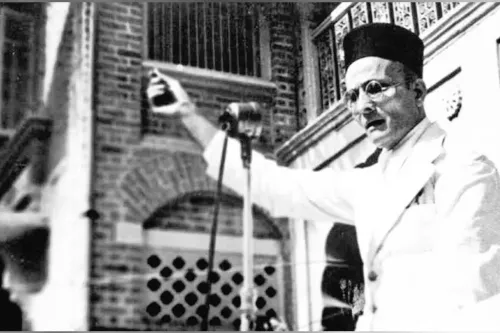
Union Culture and Tourism Minister Gajendra Singh Shekhawat on Thursday, 28 May 2026 paid tribute to independence activist and Hindutva ideologue Vinayak Damodar Savarkar on his birth anniversary, hailing him as a 'brave son of Mother India' and a visionary statesman whose life of sacrifice remains a legacy for future generations.
Context
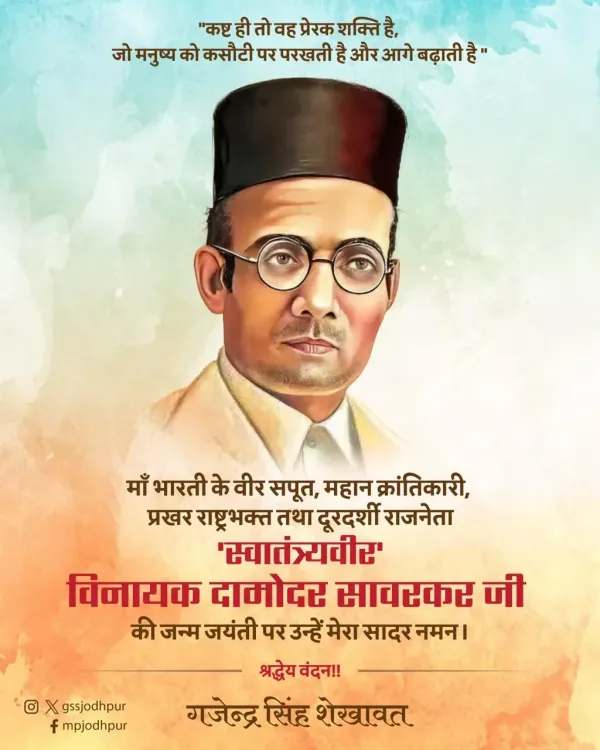
Posting in Hindi on 28 May, Shekhawat opened with a philosophical line — 'Kasht hi to wah prerak shakti hai, jo manushya ko kasauti par parakhti hai aur aage badhati hai' ('Suffering is indeed that motivating force which tests a person and propels them forward') — framing Savarkar's life of hardship as a source of national inspiration. He described Savarkar as a 'Swatantryaveer' (freedom-hero), a great revolutionary, a fierce patriot, and a far-sighted leader, offering his 'respectful salutation' on the occasion.
Shekhawat added that Savarkar's 'life-penance, sacrifice, and dedication for the motherland is a heritage for the coming generations of the country.' The post was accompanied by an image and drew immediate attention from nationalist communities online.
Policy Backdrop
The tribute fits a well-established pattern within the Bharatiya Janata Party: senior leaders and ministers mark 28 May each year with formal public homages to Savarkar, presenting him as a symbol of sacrifice and ideological clarity in India's freedom struggle. This practice gained institutional weight in 2003, when the then-NDA government unveiled Savarkar's portrait in the Central Hall of Parliament, formally recognising his role alongside other independence figures.
As Union Minister of Culture, Shekhawat occupies a portfolio directly concerned with how the nation curates and communicates its historical memory — giving such tributes an added layer of official resonance beyond ordinary political messaging.
Savarkar: Who He Was
Vinayak Damodar Savarkar, born 28 May 1883 in Bhagur, Maharashtra, was a lawyer, writer, and revolutionary who advocated armed resistance against British rule. He spent years imprisoned in the Cellular Jail in the Andaman Islands — an experience that has become central to his image as a figure of exceptional personal endurance. He is also credited with articulating the foundational philosophy of Hindutva, making him a revered but contested figure in Indian political and historical discourse.
His legacy remains a subject of active debate among historians, political parties, and civil society — with admirers citing his anti-colonial militancy and critics raising questions about certain petitions he submitted during his imprisonment and his later political positions.
What's Next
With the BJP in government at the Centre and Shekhawat holding the Culture portfolio, observers will watch for any state-level commemorations, new memorial projects, or cultural initiatives linked to Savarkar in the months ahead. The annual cycle of tributes from senior ministers consistently reinforces the party's effort to place Hindutva-associated figures at the centre of India's official independence narrative — a framing that is likely to intensify as the country moves closer to the centenary of independence in 2047.
Point of View
His words carry an institutional register that an ordinary party statement would not. The BJP's annual Savarkar commemoration cycle is a deliberate act of historical repositioning — one that seeks to mainstream a figure who remains contested in the broader national conversation. With the centenary of independence approaching in 2047, the Culture Ministry's alignment with this narrative is likely to translate into tangible policy choices around memorials, curricula, and cultural programming. The tribute also signals that Hindutva ideological lineage will remain a central, not peripheral, thread in the government's official cultural identity.
NationPress
15 Sept 2026
Frequently Asked Questions
When is Vinayak Damodar Savarkar's birth anniversary?
Vinayak Damodar Savarkar was born on 28 May 1883 in Bhagur, Maharashtra, and his birth anniversary is observed on 28 May each year.
Why do BJP leaders pay tribute to Savarkar every year?
BJP leaders regard Savarkar as a symbol of anti-colonial sacrifice and Hindutva ideology. The party has consistently sought to elevate his place in India's official independence narrative, a practice that gained institutional weight when the NDA government installed his portrait in Parliament's Central Hall in 2003.
What is Gajendra Singh Shekhawat's role in the government?
Gajendra Singh Shekhawat is the Union Minister of Culture and Tourism, a senior BJP leader, and the Lok Sabha MP from Jodhpur, Rajasthan.
What did Shekhawat say about Savarkar on his Jayanti in 2026?
Shekhawat described Savarkar as a 'brave son of Mother India,' a great revolutionary, and a far-sighted leader, and said his life of sacrifice and dedication to the motherland is a heritage for India's future generations.
Who was Savarkar and why is he a controversial figure?
Vinayak Damodar Savarkar was a lawyer, writer, and independence activist who spent years in the Cellular Jail in the Andaman Islands and articulated the foundational philosophy of Hindutva. He is revered by many as a freedom hero but remains contested due to debates among historians about certain aspects of his political positions and actions during his imprisonment.