Sonowal hails JNPort's 2.25 Mn TEU Q1 FY27 milestone
Synopsis
Union Minister Sarbananda Sonowal has congratulated Jawaharlal Nehru Port Authority for recording 2.25 million TEUs in Q1 FY27, citing 15 per cent cargo traffic growth as proof of India's expanding EXIM trade and a decade-long push to modernise port infrastructure under initiatives like Sagarmala.
Key Takeaways
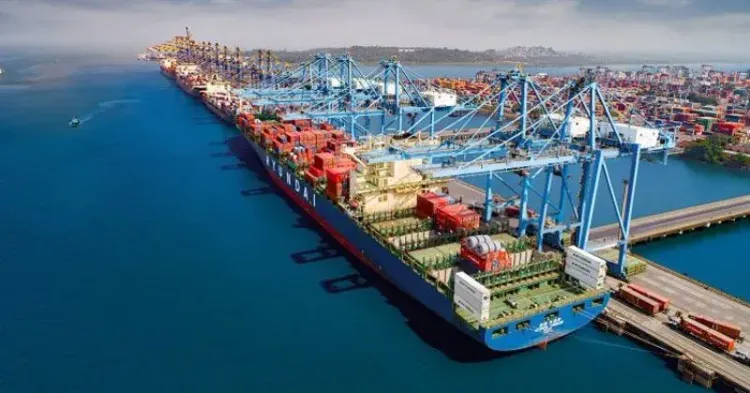
JNPA , India's largest container port at Navi Mumbai , handled 2.25 million TEUs in Q1 FY 2026-27 .
Cargo traffic at the port rose 15 per cent year-on-year in the quarter.
Union Minister Sarbananda Sonowal attributed the milestone to enhanced port efficiency built over the last 12 years .
The performance aligns with policy goals set under the Sagarmala Project (2015) and the National Logistics Policy (2022) .
Growth reflects both domestic manufacturing recovery and shifting global supply-chain patterns favouring Indian ports.
JNPA's proposed fourth container terminal expansion remains a key project to watch for future capacity additions.
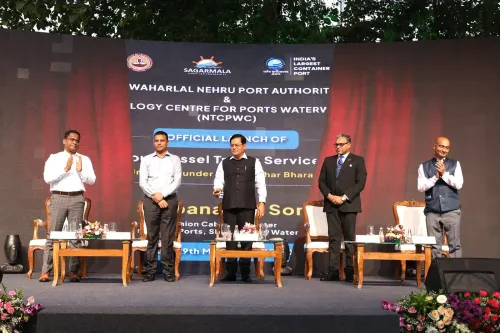
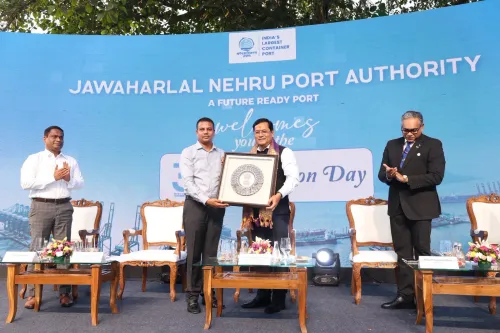
Union Minister of Ports, Shipping and Waterways Sarbananda Sonowal on 9 July 2026 congratulated the team at Jawaharlal Nehru Port Authority (JNPA), India's largest container port, for handling 2.25 million TEUs in the first quarter of FY 2026-27 — a performance the minister described as reflecting a 15 per cent rise in cargo traffic and evidence of the country's expanding EXIM trade.
Context
Sonowal, posting on X, said the throughput figure was 'an exceptional milestone that shows India's booming EXIM trade and enhanced port efficiency developed in the last 12 years.' The congratulatory message was directed at the operational team of @JNPort, located at Navi Mumbai, Maharashtra, which serves as the country's principal gateway for containerised cargo.
A 15 per cent quarterly growth rate in cargo traffic is a notably strong clip for a port of JNPA's scale, where absolute volume movements have an outsized effect on national logistics data. The Q1 FY27 figure of 2.25 million TEUs places the port on a trajectory that, if sustained, would mark a record annual throughput for the facility.
Policy Backdrop
JNPA's performance sits within a broader government push to modernise India's port infrastructure. The Sagarmala Project, launched in 2015, set out to reduce logistics costs through port-led development, better road and rail connectivity, and industrial cluster creation along the coastline. The National Logistics Policy of 2022 sharpened that ambition by targeting a reduction in logistics costs to 8 per cent of GDP through integrated multimodal improvements.
The National Infrastructure Pipeline, announced in 2019, included dedicated capital allocations for port capacity augmentation. JNPA has been a consistent beneficiary of these outlays, with successive phases of container terminal expansion and berth deepening carried out over the past decade. The port's integration with PM Gati Shakti — the multimodal connectivity framework — has further accelerated cargo movement by linking it to dedicated freight corridors.
Stakeholders and Impact
The most direct beneficiaries of JNPA's throughput growth are EXIM traders, container shipping lines and port operators who depend on the facility for time-sensitive cargo. A 15 per cent rise in traffic signals improved vessel turnaround times and berth utilisation, which translate into lower per-unit logistics costs for exporters and importers alike.
The numbers also carry macroeconomic significance. Rising container volumes at India's busiest port reflect both a recovery in domestic manufacturing and a gradual shift in global supply-chain routing that is favouring Indian gateways over regional transshipment hubs. This trend, if it deepens, could position Navi Mumbai as a more prominent node in Asian trade lanes.
What's Next
Attention will turn to JNPA's subsequent quarterly traffic data and the progress of its proposed fourth container terminal expansion, which would add significant capacity to handle future volume growth. At the policy level, parliamentary updates on Sagarmala Phase-II projects and the ministry's annual port-capacity targets will indicate whether the government intends to accelerate investment in response to the strong Q1 showing.
For Minister Sonowal's ministry, the Q1 FY27 data provides a data point to anchor arguments for continued infrastructure spending ahead of the next Union Budget cycle, as the government seeks to position India as a globally competitive maritime trade destination.
Point of View
Shipping and Waterways a tangible metric to validate its decade-long infrastructure investment narrative ahead of budget discussions. Sonowal's public congratulations serve a dual purpose: recognising operational staff while reinforcing the BJP government's port-modernisation record as a campaign-ready policy achievement. The 15 per cent growth figure, if it holds across subsequent quarters, would meaningfully strengthen India's case for attracting transshipment traffic currently routed through regional hubs. The milestone also adds momentum to Sagarmala Phase-II advocacy, where the ministry needs demonstrated returns to justify further capital outlays.
NationPress
9 Jul 2026
Frequently Asked Questions
How many TEUs did JNPort handle in Q1 FY27?
Jawaharlal Nehru Port Authority handled 2.25 million TEUs in the first quarter of FY 2026-27, according to Union Minister Sarbananda Sonowal's post on 9 July 2026.
What is the cargo traffic growth rate at JNPA in Q1 FY27?
JNPA recorded a 15 per cent rise in cargo traffic in Q1 FY27 compared to the same period in the previous financial year.
Where is Jawaharlal Nehru Port Authority located?
JNPA is located in Navi Mumbai, Maharashtra and is designated as India's largest container port by volume.
What is the Sagarmala Project and how does it relate to JNPA?
The Sagarmala Project , launched in 2015 , is a central government initiative to modernise ports and reduce logistics costs through port-led development. JNPA has been a key beneficiary, receiving investment for berth deepening and terminal expansion under the scheme.
What did Sonowal say about India's port efficiency?
Minister Sonowal called the Q1 FY27 throughput 'an exceptional milestone' and said it reflects India's 'booming EXIM trade and enhanced port efficiency developed in the last 12 years.'