Sonowal Reviews JNPA Operations, Targets Export Efficiency

Synopsis
Union Minister Sarbananda Sonowal held a stakeholder meeting at JNPA in Mumbai on 29 May 2026 to review operational issues, ease congestion, and strengthen exporter support at India's largest container port, reinforcing the government's port-led development agenda.
Key Takeaways
Sarbananda Sonowal chaired a stakeholder review meeting at JNPA, Mumbai on 29 May 2026 .
The meeting focused on reducing congestion, improving operational efficiency, and boosting support for exporters and the maritime community.
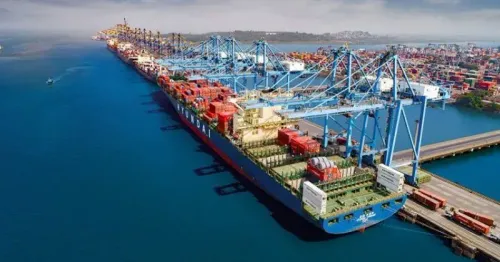
JNPA is India's largest container port and a critical hub for the country's export economy.
The review is aligned with the Sagarmala Project (2015) and Maritime India Vision 2030 policy frameworks.
The engagement fits within the broader PM Gati Shakti and National Logistics Policy push to cut India's logistics costs.
Follow-up directives on capacity augmentation and exporter facilitation guidelines are anticipated from the shipping ministry.
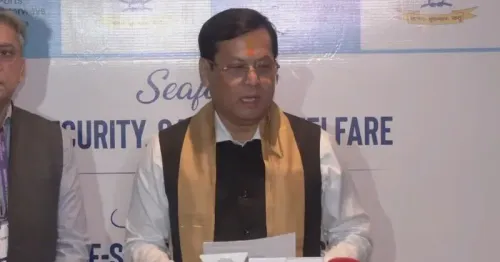
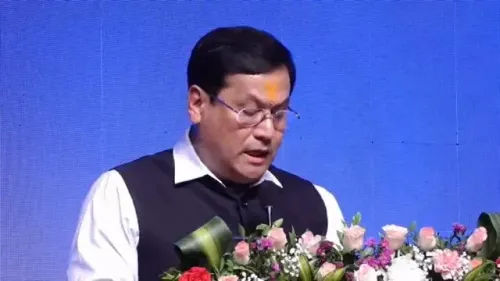
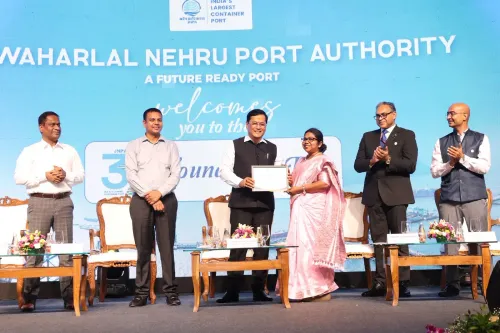
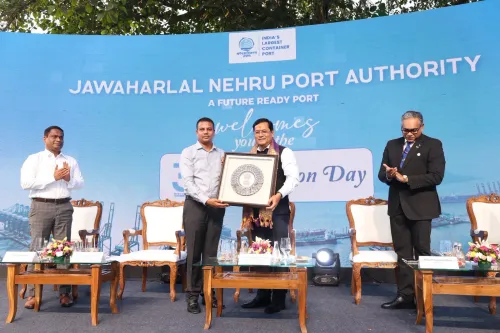
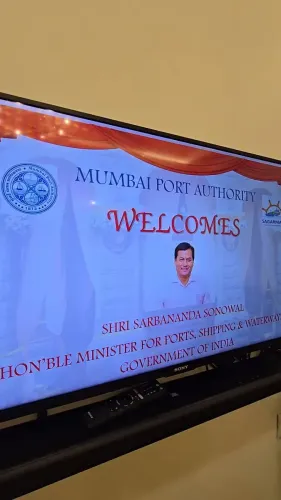
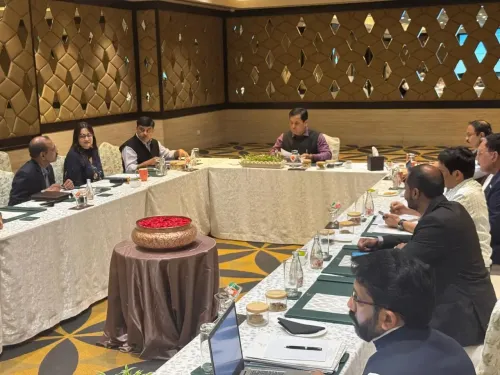
Union Minister of Ports, Shipping and Waterways Sarbananda Sonowal held a stakeholder meeting at Jawaharlal Nehru Port Authority (JNPA) in Mumbai on Friday, 29 May 2026, to review operational challenges, ease congestion, and strengthen support for exporters and the broader maritime community.
Context
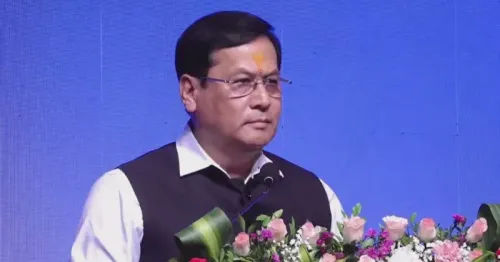
The meeting brought together port operators, exporters, and maritime stakeholders to address key efficiency bottlenecks at JNPA, India's largest container port located in Navi Mumbai. Sonowal described the session as 'productive' and underscored the port's role as a symbol of India's maritime ambitions, stating that 'JNPA's efficiency, resilience and commitment to excellence reflect the strength, aspirations and capabilities of India's maritime sector.'
JNPA handles a dominant share of India's containerised cargo and is a critical gateway for the country's export economy. Any improvement in its throughput and turnaround times has direct downstream benefits for Indian exporters competing in global markets.
Policy Backdrop
The review fits squarely within the government's long-running infrastructure push. The Sagarmala Project, launched in 2015, set the framework for port-led development, modernisation, and coastal shipping promotion. Maritime India Vision 2030, released in 2021, further outlined ambitious targets for port capacity, efficiency improvements, and green infrastructure across India's coastline.
The meeting also aligns with the broader PM Gati Shakti framework and the National Logistics Policy, both of which aim to integrate multimodal transport infrastructure and reduce India's logistics costs — a persistent drag on export competitiveness. Reducing congestion at a port of JNPA's scale directly contributes to lowering the cost of doing business for Indian manufacturers and traders.
Stakeholders and Impact
Exporters using JNPA stand to benefit most immediately from any operational improvements that emerge from the review. Congestion at major container ports raises dwell times, increases freight costs, and can result in missed shipping windows — all of which erode the margins of export-dependent industries including textiles, pharmaceuticals, and engineering goods.
Port operators and shipping lines also have a direct stake in efficiency gains, as faster vessel turnaround improves berth utilisation and overall capacity without requiring large capital investments. The Ministry of Ports, Shipping and Waterways has consistently positioned such stakeholder consultations as a mechanism for ground-level feedback to inform policy and operational decisions.
What's Next
Follow-up announcements on JNPA capacity augmentation projects and new guidelines for exporter facilitation are expected at the next shipping ministry review cycle. The ministry has been progressively expanding JNPA's berth capacity and digital infrastructure, and outcomes from this consultation could shape the next tranche of operational directives.
With India targeting significant growth in merchandise exports over the coming years, the performance of gateway ports like JNPA will remain under close ministerial scrutiny. Sonowal's on-ground engagement signals that the ministry intends to maintain direct oversight of operational realities rather than relying solely on administrative reporting.
Point of View
Signalling that operational efficiency — not just capital investment — is now a ministerial priority. The timing reinforces the government's narrative ahead of trade competitiveness benchmarks, where India's logistics cost as a share of GDP remains higher than peer economies. By publicly framing JNPA as a reflection of India's maritime aspirations, Sonowal is also building political equity around infrastructure delivery in a sector that rarely captures mass attention. The meeting is unlikely to produce immediate structural change, but it sustains momentum for incremental operational reforms that cumulatively affect export costs.
NationPress
20 Sept 2026
Frequently Asked Questions
Why did Sarbananda Sonowal visit JNPA in Mumbai?
Sonowal visited JNPA on 29 May 2026 to chair a stakeholder meeting focused on reviewing operational issues, reducing port congestion, and improving support for exporters and the maritime community.
What is JNPA and why is it important?
JNPA, or Jawaharlal Nehru Port Authority, is India's largest container port located in Navi Mumbai. It handles a major share of the country's containerised cargo and is a key gateway for Indian exports.
What government schemes govern India's port development?
India's port development is guided primarily by the Sagarmala Project launched in 2015 and Maritime India Vision 2030 released in 2021, which set targets for capacity, efficiency, and green infrastructure at Indian ports.
How does JNPA congestion affect Indian exporters?
Congestion at JNPA raises cargo dwell times and freight costs, causes missed shipping windows, and erodes profit margins for export-dependent industries such as textiles, pharmaceuticals, and engineering goods.
What is expected to follow Sonowal's JNPA review meeting?
Follow-up announcements on JNPA capacity augmentation projects and new exporter facilitation guidelines are expected at the shipping ministry's next review cycle.