Rajnath Singh Addresses IPRD 2026 Maritime Dialogue in Delhi
Synopsis
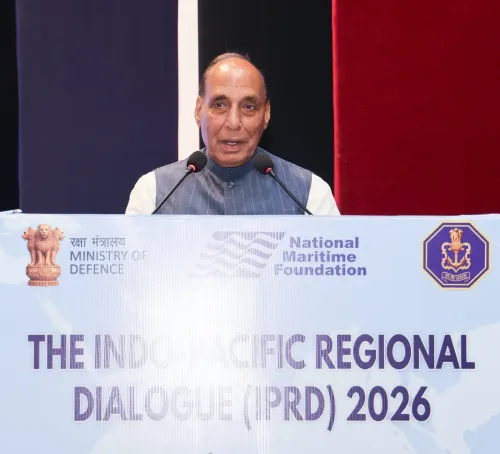
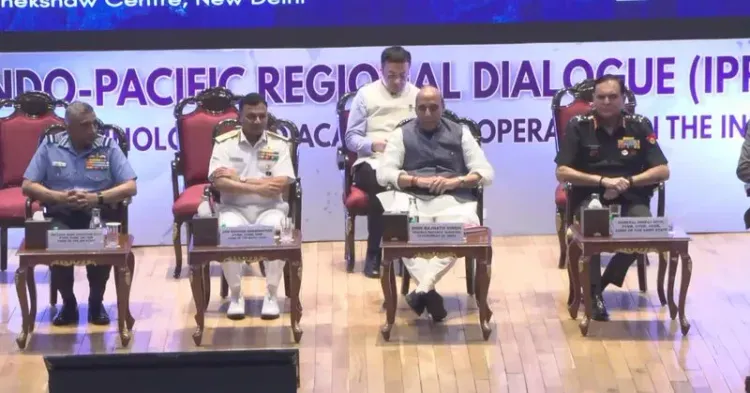
Union Defence Minister Rajnath Singh addressed the Commemorative Session of the Indo-Pacific Regional Dialogue in New Delhi on November 4, 2026 — the flagship annual maritime security forum co-hosted by the Indian Navy and the National Maritime Foundation since 2018.
Key Takeaways
Rajnath Singh addressed the Commemorative Session of IPRD 2026 in New Delhi on November 4, 2026 .
The Indo-Pacific Regional Dialogue has been held annually since 2018 , co-organised by the Indian Navy and the National Maritime Foundation .
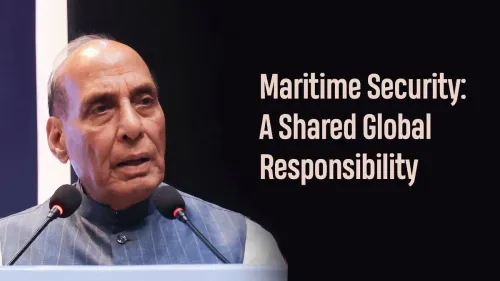
IPRD is a Track 1.5 forum designed to advance maritime security, rules-based order, and connectivity discussions across the Indo-Pacific.
India's strategic framing for IPRD is rooted in the SAGAR doctrine — Security and Growth for All in the Region — articulated in 2018 .
The dialogue treats the Indian Ocean and the western Pacific as a single, integrated strategic space — a posture India has consistently reinforced at successive editions.
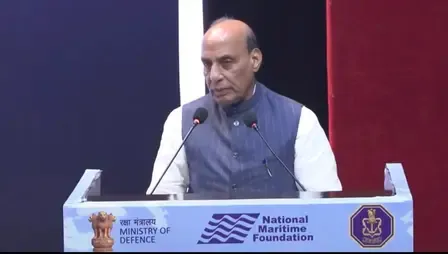
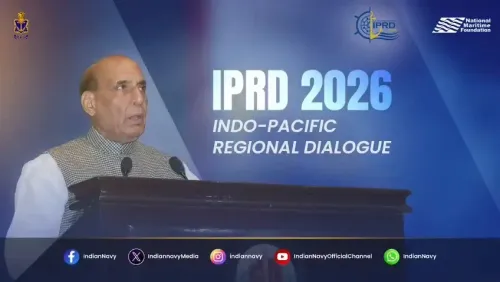
India's strategic maritime voice rang out from New Delhi on Wednesday, November 4, 2026, as Union Defence Minister Rajnath Singh took the stage at the Commemorative Session of the Indo-Pacific Regional Dialogue (IPRD 2026) — the flagship annual forum where navies, strategists, and policymakers converge to shape the rules of engagement across the world's most contested waterways.
What IPRD Is — and Why It Matters
The Indo-Pacific Regional Dialogue is not a routine conference. Organised jointly by the National Maritime Foundation and the Indian Navy, it has served since its founding in 2018 as one of India's most consequential Track 1.5 platforms — sitting between formal diplomacy and academic debate, with the authority to shape both. It was born in the same year India formally articulated its Indo-Pacific vision and the SAGAR doctrine — Security and Growth for All in the Region — giving the dialogue a clear strategic DNA from day one.
Each successive edition has coincided with deepening naval engagement, expanded participation from like-minded nations, and a firming-up of the idea that the Indian Ocean and the western Pacific form a single, indivisible strategic theatre. The 2026 Commemorative Session marks a significant milestone in that eight-year arc.
India's Indo-Pacific Doctrine in the Room
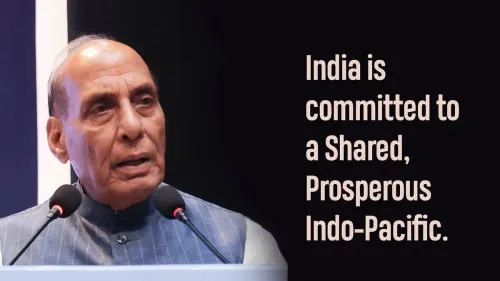
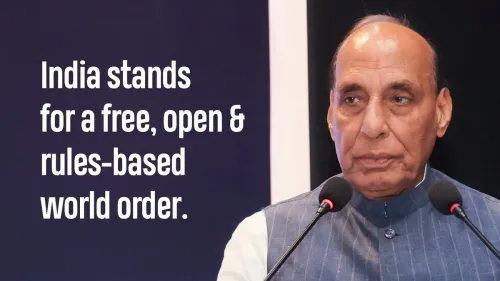
Rajnath Singh's presence at the session carries institutional weight. As Union Defence Minister — and a former Home Minister and Chief Minister of Uttar Pradesh — he brings both political authority and policy continuity to the platform. India has consistently used IPRD editions to reinforce its commitment to a free, open, and rules-based Indo-Pacific, and ministerial-level participation signals that the 2026 session is squarely within that tradition.
The National Maritime Foundation, the think tank anchoring the event from New Delhi, has built the IPRD into a credible convening platform that draws naval chiefs, strategic analysts, and defence officials from across the Indo-Pacific littoral. Its partnership with the Indian Navy ensures that the dialogue stays closely tethered to operational and strategic realities, not just academic theory.
Eight Years of a Doctrine Finding Its Footing
When India first articulated its Indo-Pacific framework in 2018, sceptics questioned whether it was more aspiration than architecture. Eight years on, the IPRD series stands as one of the clearest pieces of institutional evidence that the framework has acquired staying power — regular cadence, expanding participation, and direct ministerial engagement. The commemorative framing of the 2026 session suggests the dialogue itself is being marked as a mature, landmark institution.
What emerges from the closed sessions — any new policy positions, naval cooperation frameworks, or connectivity proposals — will be the detail to track in the hours and days ahead.
Point of View
Launched in 2018, has graduated from doctrine to durable architecture. The commemorative framing of the 2026 edition invites a stocktaking of eight years of maritime diplomacy — and ministerial participation sets the tone for whatever policy signals emerge from closed-door sessions. For India's neighbours and partner navies, the message is consistent: the Indian Ocean is not peripheral, it is central. The strategic test now is whether the dialogue's outputs translate into harder operational cooperation.
NationPress
4 Nov 2026
Frequently Asked Questions
What is the Indo-Pacific Regional Dialogue (IPRD)?
The Indo-Pacific Regional Dialogue is an annual maritime security forum organised by the National Maritime Foundation in collaboration with the Indian Navy. It has been held since 2018 and serves as a Track 1.5 platform for discussions on maritime security, rules-based order, and regional connectivity.
Why did Rajnath Singh attend IPRD 2026?
As Union Defence Minister, Rajnath Singh addressed the Commemorative Session of IPRD 2026 in New Delhi on November 4, 2026, reinforcing India's high-level political commitment to the Indo-Pacific dialogue process.
What is India's SAGAR doctrine?
SAGAR stands for Security and Growth for All in the Region. India articulated this Indo-Pacific doctrine in 2018, the same year the IPRD series was launched, establishing the strategic framework for the dialogue.
Where is the IPRD 2026 being held?
The Commemorative Session of IPRD 2026 is being held in New Delhi, India.
What is the National Maritime Foundation?
The National Maritime Foundation is a New Delhi-based think tank that co-organises the Indo-Pacific Regional Dialogue annually with the Indian Navy, serving as the institutional anchor for India's premier maritime security dialogue platform.