Rajnath Singh calls Indian Navy Indo-Pacific's trusted security force
Synopsis
Union Defence Minister Rajnath Singh on 11 July 2026 hailed the Indian Navy as the Indo-Pacific's trusted security force, underscoring its dual mandate as First Responder and Preferred Security Partner — from anti-piracy patrols to disaster relief — in line with India's SAGAR doctrine.
Key Takeaways
Rajnath Singh on 11 July 2026 described the Indian Navy as the Indo-Pacific region's most trusted security force.
The Navy has been framed as both 'First Responder' and 'Preferred Security Partner' across disaster relief and anti-piracy operations.
India's anti-piracy deployments in the Gulf of Aden began in October 2008 and have since expanded to the Strait of Malacca and Western Pacific .
The statement reinforces the SAGAR doctrine, first articulated by PM Modi in Mauritius in 2015 , positioning India as a net security provider.
The remarks align with India's Act East Policy and its role within the Quad alongside the US, Japan, and Australia.
Upcoming Malabar and Milan naval exercises will be watched as practical tests of the stated doctrine.
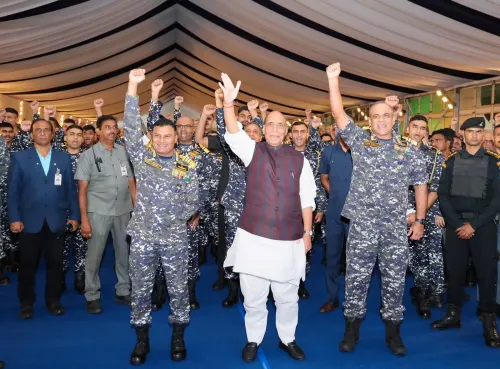
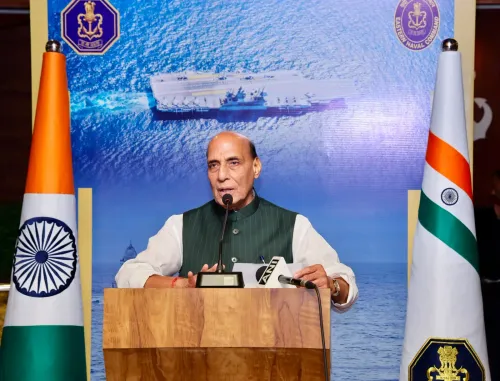
Union Defence Minister Rajnath Singh on Saturday, 11 July 2026, reaffirmed the Indian Navy's central role across the Indo-Pacific, describing it as the region's most reliable security provider — from maritime and economic security to disaster relief and anti-piracy operations.
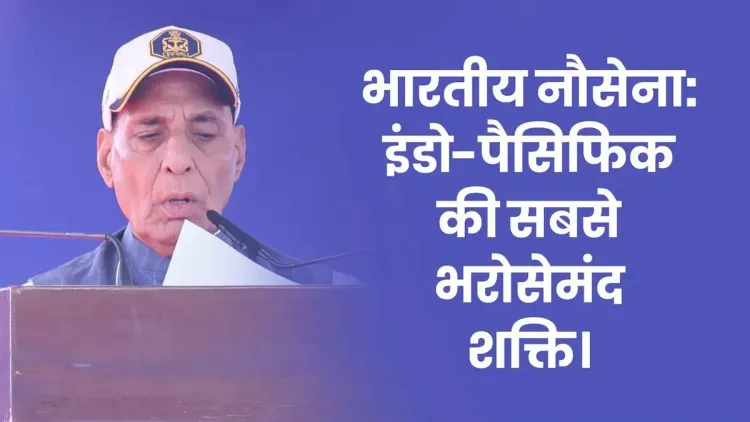
Posting on X, Rajnath Singh wrote: 'मैरीटाइम सिक्योरिटी से इकोनॉमिक सिक्योरिटी तक, भारतीय नौसेना पूरे Indo-Pacific क्षेत्र की भरोसेमंद शक्ति है।' ('From maritime security to economic security, the Indian Navy is the trusted force of the entire Indo-Pacific region.') He added that the Navy has consistently played the role of 'First Responder' and 'Preferred Security Partner' across every challenge — from disaster relief to anti-piracy operations.
Context
The statement positions the Indian Navy not merely as a coastal defence force but as a full-spectrum regional security provider. The framing of 'First Responder' and 'Preferred Security Partner' has become a recurring motif in India's naval diplomacy, reflecting a deliberate effort to distinguish New Delhi's approach from that of other major powers active in the same waters.
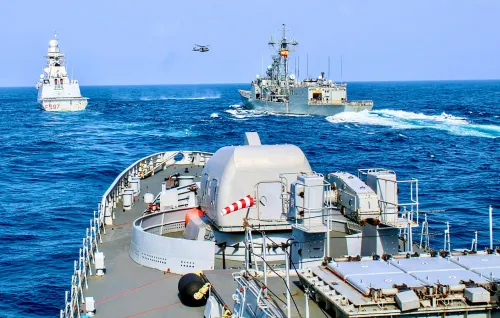
India's anti-piracy deployments in the Gulf of Aden began in October 2008 and have since expanded to the Strait of Malacca and the broader Western Pacific, giving the Navy an operational footprint that matches its diplomatic rhetoric.
Policy Backdrop
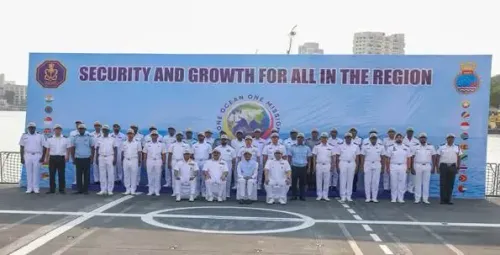
The remarks align directly with the SAGAR (Security and Growth for All in the Region) doctrine articulated by Prime Minister Narendra Modi in Mauritius in 2015, which formally designated India as a net security provider in the Indian Ocean Region. SAGAR has since expanded in scope to encompass the broader Indo-Pacific, underpinning joint exercises, humanitarian assistance and disaster relief (HADR) missions, and capacity-building programmes with island and coastal states.
This policy trajectory runs parallel to India's Act East Policy and its deepening engagement within the Quad framework alongside the United States, Japan, and Australia. Together, these initiatives have steadily raised the Indian Navy's profile as a multilateral security actor rather than a unilateral one.
Stakeholders and Impact
The primary beneficiaries of India's expanded naval posture are the littoral states of the Indo-Pacific — particularly smaller island nations and coastal economies that depend on secure sea lanes for trade and on timely HADR response during cyclones and other natural disasters. For these partners, the Indian Navy's forward presence offers a credible alternative to dependence on any single external power.
Growing Chinese naval activity in the Indian Ocean and the broader Indo-Pacific has sharpened the strategic salience of Rajnath Singh's framing. By emphasising economic security alongside traditional maritime security, the statement signals that New Delhi views the protection of trade routes, undersea cables, and energy corridors as inseparable from its defence mandate.
What's Next
Attention will now turn to upcoming multilateral naval exercises — including the Malabar and Milan series — as practical demonstrations of the doctrine Rajnath Singh has articulated. Bilateral logistics agreements and maritime security pacts with Indo-Pacific partners are also being watched as the next concrete step in translating this strategic positioning into binding commitments.
As India's naval footprint continues to expand, the Defence Ministry's language of 'preferred partner' over 'dominant power' will likely remain central to how New Delhi markets its regional security offer — particularly to nations wary of great-power competition on their doorstep.
Point of View
The Defence Ministry is broadening the Navy's mandate in public discourse to include trade-route protection and undersea infrastructure — domains that will define the next phase of Indo-Pacific competition. The statement also reinforces the Quad's collective framing without naming it, giving New Delhi diplomatic flexibility. Expect this vocabulary to appear in forthcoming bilateral agreements and multilateral exercise communiques as India seeks to lock in its 'preferred partner' brand before the next round of great-power jostling in the region.
NationPress
10 Oct 2026
Frequently Asked Questions
What did Rajnath Singh say about the Indian Navy on 11 July 2026?
Rajnath Singh stated that the Indian Navy is the trusted force of the entire Indo-Pacific region, serving as both 'First Responder' and 'Preferred Security Partner' in roles ranging from disaster relief to anti-piracy operations.
What is India's SAGAR doctrine?
SAGAR stands for 'Security and Growth for All in the Region' — a doctrine articulated by PM Narendra Modi in Mauritius in 2015 that designates India as a net security provider in the Indian Ocean and broader Indo-Pacific.
When did India start anti-piracy operations in the Gulf of Aden?
The Indian Navy began continuous anti-piracy deployments in the Gulf of Aden in October 2008, later expanding its presence to the Strait of Malacca and the Western Pacific.
What is the Indian Navy's role in the Indo-Pacific?
The Indian Navy conducts anti-piracy patrols, humanitarian assistance and disaster relief (HADR) missions, joint exercises, and capacity-building programmes with coastal and island states across the Indo-Pacific.
How does India's naval posture relate to the Quad?
India's naval expansion complements its Quad partnership with the United States, Japan, and Australia, with shared maritime security goals and joint exercises such as Malabar forming the operational backbone of this alignment.