Rajnath Singh invokes Shivaji to champion defence self-reliance
Synopsis
Union Defence Minister Rajnath Singh on 23 May 2026 linked India's defence indigenisation programme to Chhatrapati Shivaji Maharaj's 17th-century naval and fort network, calling it a historical model of self-reliant economy and framing current Atmanirbhar Bharat efforts as its modern continuation.
Key Takeaways
Union Defence Minister Rajnath Singh posted on 23 May 2026 invoking Chhatrapati Shivaji Maharaj's naval and fort network as a precedent for defence self-reliance.
Singh described Shivaji's maritime system as not just a military strategy but 'a powerful model of a self-reliant economy.' He stated India is 'once again building a strong fortress of self-reliance' inspired by that legacy.
The Atmanirbhar Bharat Abhiyan , launched in May 2020 , underpins current defence indigenisation targets including reduced import dependence for naval platforms.
Defence Procurement Procedures since 2016 have progressively prioritised domestic design and manufacture, especially for the Indian Navy .
The post signals continued political commitment ahead of expected parliamentary debates on the next Defence Procurement Procedure and naval budget allocations.
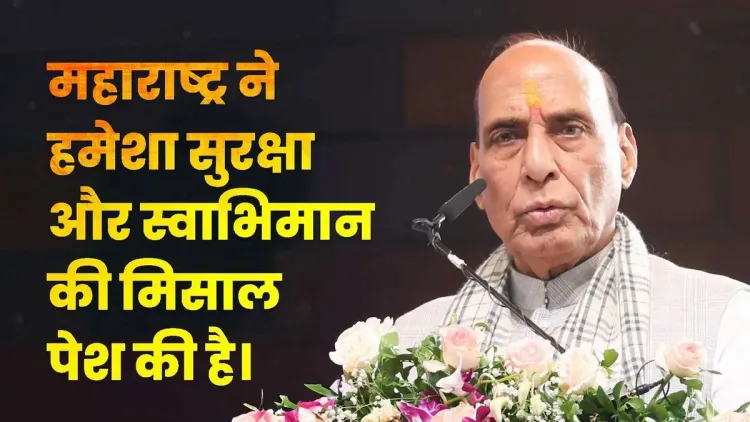
Union Defence Minister Rajnath Singh on Saturday, 23 May 2026, invoked the legacy of Chhatrapati Shivaji Maharaj to frame India's ongoing defence indigenisation drive as a continuation of Maharashtra's centuries-old tradition of maritime self-reliance and strategic autonomy.
Posting on X in Hindi, Singh wrote: 'Maharashtra ne hamesha suraksha aur swabhiman ki misal pesh ki hai' — 'Maharashtra has always set an example of security and self-respect.' He argued that the naval fleet and fort network built by the 17th-century Maratha king were not merely a military strategy but 'a powerful model of a self-reliant economy.' Singh added that India is today 'once again building a strong fortress of self-reliance' inspired by that legacy.
Context
Chhatrapati Shivaji Maharaj established one of the earliest organised naval forces on India's western seaboard, complemented by a chain of coastal forts that gave the Maratha Empire significant control over maritime trade and security. Historians credit this network with enabling the empire to resist larger regional powers. Singh's post draws a direct line from that 17th-century model to the current national programme of defence indigenisation.
Maharashtra carries deep symbolic weight in this framing — the state's coastline, its historical forts, and its association with Shivaji's legacy make it a recurring reference point in Indian defence discourse, particularly around naval capability and coastal security.
Policy Backdrop
The Atmanirbhar Bharat Abhiyan, launched by Prime Minister Narendra Modi in May 2020, set explicit targets for indigenous defence production and a reduction in import dependence. Successive Defence Procurement Procedures since 2016 have progressively prioritised domestic design, development, and manufacture — particularly for naval platforms including warships and submarines.
Singh's reference to 'building a strong fortress of self-reliance' aligns with this multi-year policy push, which seeks to position India's defence industrial base as both a strategic asset and an economic engine. The Indian Navy and domestic shipyards have been central to this effort, with several indigenously built vessels commissioned in recent years.
Stakeholders and Impact
The primary beneficiaries of the indigenisation drive are Indian Navy planners and domestic defence manufacturers, who have seen a growing share of capital procurement budgets directed toward home-built platforms. Public-sector shipyards as well as private defence firms stand to gain from sustained policy commitment to domestic sourcing.
Singh's framing of the programme through a historical and cultural lens also serves a broader public-communication purpose — anchoring a techno-industrial policy in a narrative of civilisational continuity that resonates across Maharashtra and beyond.
What's Next
Attention will turn to upcoming parliamentary debates on the next iteration of the Defence Procurement Procedure and the share of domestic capital expenditure allocated to naval shipyards in the forthcoming Union Budget. Singh's statement signals that the political will behind defence indigenisation remains strong, and further policy announcements anchored in this self-reliance framework are likely.
The invocation of Shivaji's maritime legacy at this moment suggests the government intends to keep the historical-strategic narrative active as it builds the case for deeper investment in indigenous naval capability.
Point of View
Embedding a techno-industrial policy — defence indigenisation — within a civilisational narrative that commands broad cultural legitimacy in Maharashtra and across the Hindi belt. By invoking Shivaji's naval architecture as an early model of self-reliant economy, the Defence Minister elevates Atmanirbhar Bharat from a budget line to a statement of national identity. This approach follows a consistent pattern since 2014 of using historical reference points to build durable public support for structural defence reforms. With budget and procurement debates on the horizon, the post also functions as a pre-emptive political signal that the government's commitment to domestic naval production is non-negotiable.
NationPress
22 Sept 2026
Frequently Asked Questions
Why did Rajnath Singh mention Chhatrapati Shivaji Maharaj in a defence post?
Singh invoked Shivaji Maharaj's 17th-century naval fleet and coastal fort network as a historical precedent for self-reliant defence and economy, drawing a parallel with the current Atmanirbhar Bharat indigenisation programme.
What is Atmanirbhar Bharat in the context of defence?
Atmanirbhar Bharat Abhiyan, launched in May 2020 by Prime Minister Narendra Modi, includes specific targets for indigenous defence production and reducing India's dependence on imported military equipment, especially for the Indian Navy.
What did Rajnath Singh say about Maharashtra and defence?
Singh said Maharashtra has always set an example of security and self-respect, and that Shivaji Maharaj's naval and fort system was both a military strategy and a powerful model of self-reliant economy.
What is India's current policy on indigenous naval shipbuilding?
Since 2016, successive Defence Procurement Procedures have prioritised domestic design, development and manufacture of naval platforms. Several indigenously built warships have been commissioned under this policy.
What should one watch for next in India's defence indigenisation policy?
Key developments to track include parliamentary debates on the next Defence Procurement Procedure and the allocation of domestic capital expenditure to naval shipyards in the forthcoming Union Budget.