Rajnath Singh: Self-Reliance Is the Foundation of National Security
Synopsis
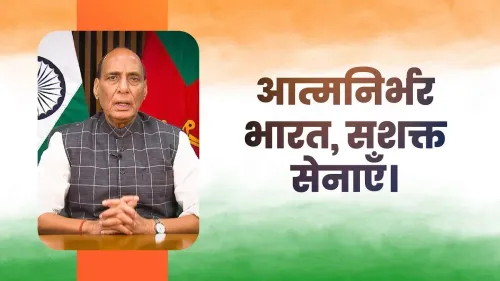
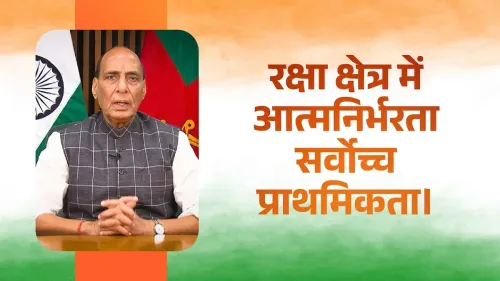
Union Defence Minister Rajnath Singh declared on September 24, 2026 that national security is genuinely resilient only when self-reliant, reaffirming the government's 'Design in India, Develop in India, Manufacture in India' vision for strategic and industrial independence.
Key Takeaways
Rajnath Singh posted on September 24, 2026 articulating India's defence self-reliance doctrine.
He framed the vision as a three-step triad: Design in India, Develop in India, Manufacture in India .
The statement is grounded in the Atmanirbhar Bharat Abhiyan launched in May 2020 , with explicit defence production and export targets.
A negative import list introduced in 2020 mandates domestic sourcing for specified defence items.
DRDO remains the institutional anchor for indigenous defence research, design, and development.
The government's approach combines strategic autonomy goals with private-sector participation and growing defence exports.
National security is only as strong as the nation's ability to build its own defences — and Union Defence Minister Rajnath Singh made that case with striking clarity on Thursday, September 24, 2026, in a post on X that distilled India's multi-year defence indigenisation drive into a single, sharply articulated vision.
Singh wrote, in Hindi: 'Rashtriya suraksha vastav mein tabhi mazboot aur resilient hoti hai, jab woh atmanirbhar ho' — 'National security is truly strong and resilient only when it is self-reliant.' He went on to frame the government's direction as a triad: 'Design in India, Develop in India, and Manufacture in India' — a formulation that extends the familiar Make in India branding into the specific architecture of the defence supply chain.
Why 'Design' Comes Before 'Manufacture'
The sequencing in Singh's formulation is deliberate. Importing a platform built abroad is one dependency; having foreign engineers hold the design is a deeper, more strategic one. By placing design first, the minister signals that India's ambition is not merely to assemble hardware on domestic soil but to own the intellectual architecture of its weapons systems — from blueprint to battlefield.
That gap between assembly and genuine indigenisation has long been the central tension in Indian defence policy. DRDO, the Defence Research and Development Organisation, sits at the heart of closing it — tasked with in-house design and development of everything from missiles to armoured vehicles.
The Policy Architecture Behind the Slogan
Singh's statement draws directly from the Atmanirbhar Bharat Abhiyan, launched in May 2020, which set explicit production and export targets for the defence sector. That same year, the government introduced a negative import list for defence items — a hard stop on procuring specified equipment from abroad — to force and incentivise domestic alternatives.
The Make in India programme, running since 2014, provided the earlier scaffolding, but the post-2020 push folded private-sector participation and defence exports more explicitly into the self-reliance calculus. The logic is dual-track: reduce import dependence for strategic autonomy, and grow a domestic defence industry for economic weight.
What India's Indigenisation Drive Still Has to Prove
The vision is clear; the execution is the harder story. Progress is measured in annual defence production value, export figures, and the pace at which new indigenisation lists retire foreign-sourced components. Each budget cycle and each procurement reform announcement becomes a data point on whether the 'Design-Develop-Manufacture' triad is moving from ministerial post to factory floor.
Singh's framing — that resilience and self-reliance are inseparable — is not merely rhetorical. A defence supply chain tethered to foreign suppliers carries a single point of failure that no treaty can fully insure against. That is the strategic argument India has been building for years, and on Thursday, its Defence Minister compressed it into one post.
The question now is speed: how quickly India's indigenous research, innovation, and manufacturing ecosystem can match the ambition of the language.
Point of View
Atmanirbhar Bharat — directly to hard security outcomes, making indigenisation a patriotic as much as a procurement argument. By elevating 'design' above 'manufacture' in his triad, the minister subtly acknowledges the critique that assembly-line localisation is insufficient without IP ownership. The statement keeps pressure on DRDO and private-sector partners to deliver, even as it credits the broader policy direction. Ultimately, it is a reminder that for the BJP government, defence self-reliance remains both a strategic imperative and a potent electoral signal ahead of future budget cycles.
NationPress
25 Sept 2026
Frequently Asked Questions
What did Rajnath Singh say about national security and self-reliance?
Singh stated that national security is truly strong and resilient only when it is self-reliant, and reaffirmed the government's 'Design in India, Develop in India, Manufacture in India' vision for defence.
What is the Atmanirbhar Bharat Abhiyan in defence?
Atmanirbhar Bharat Abhiyan is a government initiative launched in May 2020 that promotes self-reliance across sectors, with specific defence production and export targets and a negative import list to push indigenous manufacturing.
What is the negative import list for defence in India?
Introduced in 2020, the negative import list specifies defence items that cannot be procured from foreign sources, compelling the armed forces and manufacturers to develop or source those items domestically.
What role does DRDO play in India's defence indigenisation?
DRDO, the Defence Research and Development Organisation, is the primary government body responsible for the indigenous research, design, and development of defence technologies and systems in India.
How does Make in India relate to defence manufacturing?
The Make in India programme, launched in 2014, was explicitly extended to the defence sector to boost domestic manufacturing, private-sector participation, and defence exports alongside reducing import dependence.