Rajnath Singh: Defence self-reliance must be globally competitive
Synopsis
Union Defence Minister Rajnath Singh declared on 26 October 2026 that India's defence self-reliance goal goes beyond domestic production — it must be cost-effective, quality-driven, and globally competitive, while closing supply-chain gaps through targeted R&D.
Key Takeaways
Rajnath Singh redefined defence self-reliance as requiring cost-effective, quality-driven, and globally competitive output — not just higher domestic manufacturing volumes.
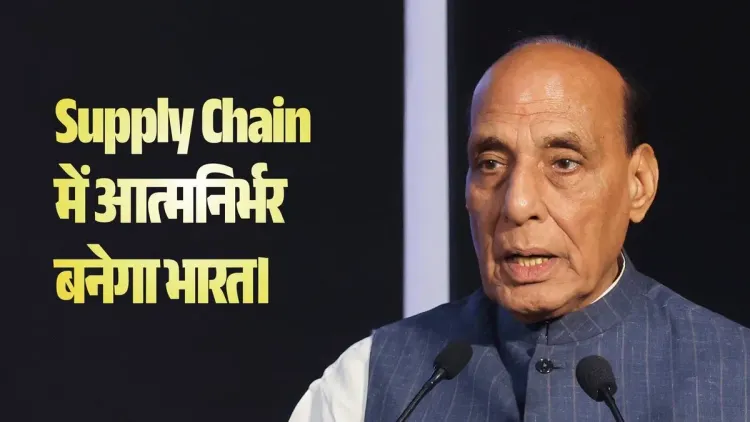
He called for identifying supply-chain vulnerabilities and achieving self-sufficiency in critical technologies through R&D .
The Atmanirbhar Bharat initiative (launched May 2020 ) and a negative import list banning 101 platforms form the existing policy foundation.
The DPEPP 2020 set formal targets for indigenisation and defence exports, which Singh's statement pushes further toward global benchmarks.
Singh framed the agenda as essential to both Economic Strength and National Security , citing supply disruptions from COVID-19 and border tensions as strategic lessons.
Domestic production is only the starting line — not the finish. Union Defence Minister Rajnath Singh sharpened India's defence self-reliance doctrine on Monday, 26 October 2026, insisting that true atmanirbharta (self-reliance) demands cost-effective, quality-driven, and globally competitive output, not just higher factory numbers at home.
Posting in Hindi on X, Singh laid out a three-part test for defence self-reliance: 'Cost-Effective, Quality-Driven aur Globally Competitive' — cost-effective, quality-driven, and globally competitive. He added that identifying supply-chain vulnerabilities and achieving self-sufficiency in critical technologies through research and development were equally non-negotiable. 'This is necessary for both our Economic Strength and National Security,' he said.
From import bans to export ambitions: the policy arc behind the post
Singh's statement sits at the sharper end of a six-year policy push. The Atmanirbhar Bharat initiative, launched in May 2020, gave defence manufacturing a dedicated lane, and the Ministry of Defence followed that August with a landmark negative import list banning 101 weapons systems and platforms from being procured abroad — a direct signal to domestic industry to step up. The Defence Production and Export Promotion Policy (DPEPP) 2020 then set hard targets for ramping up both indigenous production and exports.
But Singh's framing on Monday goes a critical step further. Import substitution — making things at home that were once bought abroad — is now treated as a baseline, not an achievement. The minister's emphasis on global competitiveness implies a harder standard: Indian defence goods must be able to win orders on international markets, not merely fill a domestic quota protected by import bans.
Supply-chain lessons written in crisis
The minister's explicit call to 'identify supply-chain vulnerabilities' carries the fingerprints of two overlapping crises. The COVID-19 pandemic exposed brittle global supply chains across sectors; simultaneously, sustained border tensions forced defence planners to confront how quickly access to foreign spares and systems could be disrupted by geopolitics. Together, those shocks accelerated the consensus that critical technology dependence is a strategic liability — not merely an economic inefficiency.
DRDO and other research institutions stand at the centre of Singh's prescription. R&D investment, in his framing, is the mechanism that converts identified vulnerabilities into sovereign capabilities — closing the gap between what India can currently produce and what it genuinely needs to stop importing.
Why the 'globally competitive' bar changes the conversation
The distinction Singh draws matters for defence manufacturers, armed forces procurement planners, and exporters alike. A product that is domestically mandated but globally uncompetitive creates a different set of risks: cost overruns borne by the armed forces, reputational drag on export ambitions, and no incentive to push quality past the minimum threshold. By tying self-reliance explicitly to international competitiveness, Singh signals that industrial policy must now be judged by export order books as much as by import-substitution statistics.
The next test will come in how those standards are operationalised — in negative import list revisions, in R&D budget allocations in the forthcoming defence budget, and in export performance figures. The ambition is clear. The arithmetic will follow.
Point of View
But by how well Indian defence products can compete abroad. That pivot matters because import bans alone can produce expensive, mediocre platforms — protected from foreign competition but unfit for export. By yoking self-reliance to global competitiveness and R&D-led capability building, Singh implicitly raises the accountability bar for both DRDO and private defence manufacturers. Watch whether the next defence budget translates this ambition into rupees — especially in R&D allocations and export-promotion incentives.
NationPress
26 Oct 2026
Frequently Asked Questions
What did Rajnath Singh say about defence self-reliance?
On 26 October 2026, Singh said India's defence self-reliance goal must go beyond increasing domestic production to being cost-effective, quality-driven, and globally competitive, and must include identifying supply-chain vulnerabilities and building critical technology capabilities through R&D.
What is the Atmanirbhar Bharat defence initiative?
Atmanirbhar Bharat is a national self-reliance initiative launched in May 2020 with a dedicated focus on indigenous defence manufacturing and reducing India's dependence on defence imports.
What is India's negative import list in defence?
In August 2020, the Ministry of Defence issued the first negative import list banning 101 weapons systems and platforms from being imported, to push domestic manufacturers to develop those capabilities instead.
Why is supply-chain resilience important for India's defence sector?
Supply disruptions during the COVID-19 pandemic and sustained border tensions exposed India's dependence on foreign spares and systems, making the identification and elimination of supply-chain vulnerabilities a strategic priority.
What is the Defence Production and Export Promotion Policy (DPEPP)?
The DPEPP 2020 is a policy framework that set targets for increasing India's indigenous defence manufacturing output and growing its defence exports, forming a key pillar of the Atmanirbhar Bharat defence agenda.