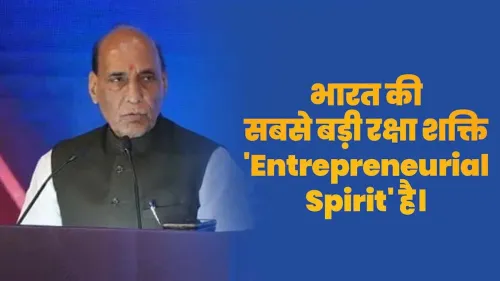
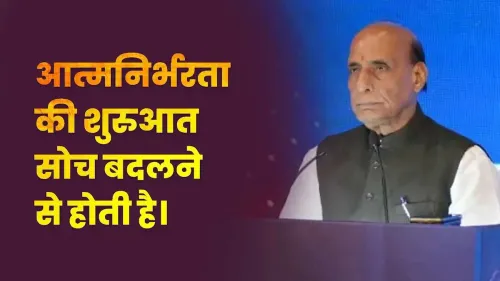
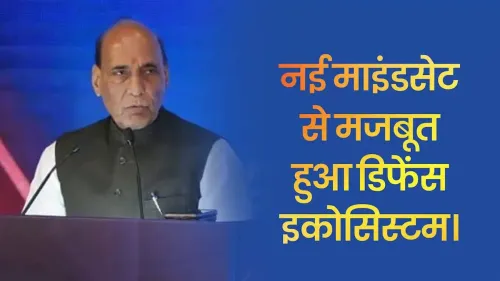
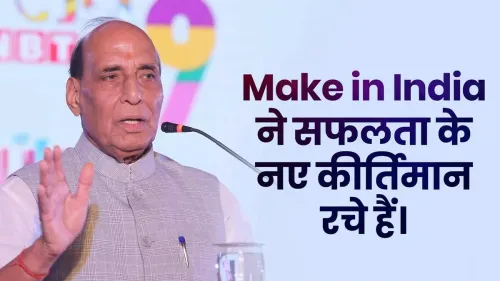
Rajnath Singh pitches self-reliant, future-ready defence ecosystem
Synopsis
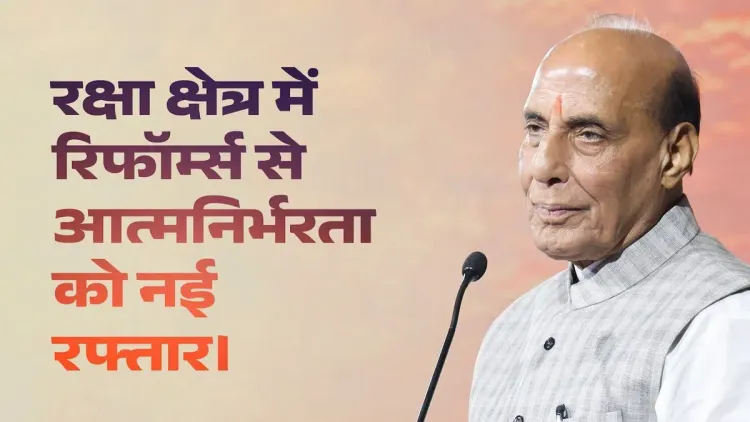
Union Defence Minister Rajnath Singh on 15 October 2026 highlighted sweeping reforms — including a negative import list, higher FDI limits, and public-private partnerships — driving India toward a self-reliant, future-ready defence manufacturing ecosystem under PM Modi.
Key Takeaways
Defence Minister Rajnath Singh called for building a self-reliant, future-ready defence ecosystem on 15 October 2026 .
He cited defence reforms, ease of doing business , and public-private partnerships as the three pillars creating new manufacturing opportunities.
The government introduced a negative import list in 2020 to force domestic substitution of specified defence items.
The FDI limit via the automatic route in defence was raised to 74 per cent to attract private capital.
The Atmanirbhar Bharat framework specifically identified defence as a sector requiring structural reduction in import dependence.
Startups, MSMEs, and innovators have been explicitly named as co-builders of India's strategic security supply chain.
India's defence sector is in the middle of its most ambitious structural overhaul in decades — and Union Defence Minister Rajnath Singh wants every startup, MSME, and innovator in the country to know there is a seat at the table. On Thursday, 15 October 2026, Singh took to X to frame the transformation as a civilisational mission, not just a procurement policy.
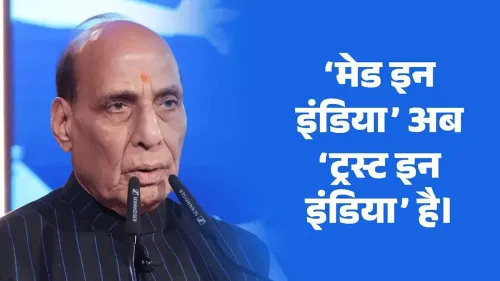
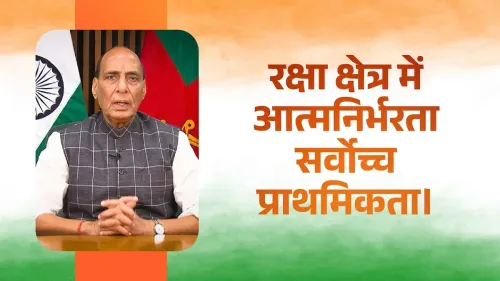
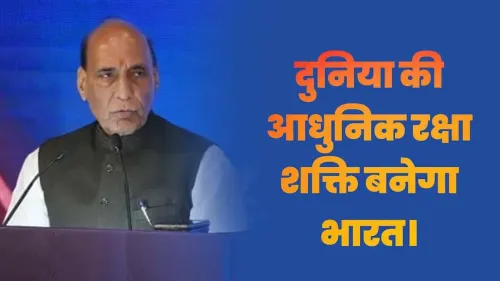
In the post, Singh wrote — 'आज हमारा लक्ष्य एक आत्मनिर्भर और फ्यूचर-रेडी डिफेन्स इकोसिस्टम बनाना है' — 'Today our goal is to build a self-reliant and future-ready defence ecosystem, where industry, startups, MSMEs, and innovators together strengthen the nation's security.' He credited Prime Minister Narendra Modi's leadership, pointing to defence reforms, ease of doing business measures, and public-private partnerships as the three forces unlocking new manufacturing opportunities.
The reform architecture behind the rhetoric
The policy scaffolding Singh referenced was built over several years. In 2020, the government rolled out the Defence Production and Export Promotion Policy, setting targets for indigenous manufacturing and a roadmap to grow defence exports. The same year, a negative import list — which bars the purchase of specified items from foreign suppliers — was introduced to force domestic substitution. The FDI ceiling via the automatic route was simultaneously raised to 74 per cent, opening the sector to serious private capital without bureaucratic gate-keeping.
Together, these moves dismantled much of the legacy monopoly that state-owned enterprises had held over Indian defence production. Private players — from large industrial houses to garage-scale deep-tech startups — were suddenly competing for contracts that had once been the exclusive preserve of public-sector undertakings.
Startups and MSMEs: the new front line of Make in India
Singh's specific call-out of startups and MSMEs is deliberate. The broader Atmanirbhar Bharat self-reliance framework, launched in 2020, identified defence as a strategic vertical where import dependence had to be structurally reduced. Small and medium enterprises have since emerged as suppliers of components, sub-systems, and dual-use technologies that larger defence contractors depend on — making MSME health directly relevant to force readiness.
Public-private partnerships have also reshaped how defence corridors in states like Uttar Pradesh and Tamil Nadu are being developed, with land, infrastructure, and regulatory clearances bundled to attract anchor investors and their supplier ecosystems in tandem.
What Singh's message signals ahead
Posts like this from the Defence Minister typically precede or accompany major industry conclaves, budget announcements, or showcase events like DefExpo or Aero India — forums where partnership deals and new negative-import-list additions are routinely unveiled. Watchers of the sector will track whether the indigenisation push translates into higher capital allocations for domestic procurement in the next defence budget cycle.
The ambition Singh has articulated is clear: not just to buy Indian, but to build an ecosystem so deep and diverse that India's security supply chain becomes genuinely sovereign. Whether the pipeline of startups and MSMEs can scale fast enough to meet that ambition is the central question every procurement officer — and every venture fund with a defence thesis — is now asking.
Point of View
Which has been a structural bottleneck in India's self-reliance journey. Politically, it also reinforces the BJP's 'strong and sovereign India' narrative heading into budget season, where capital allocation for domestic procurement will be the real test of intent. The question analysts will watch is whether regulatory and payment-cycle frictions — perennial complaints from small defence suppliers — are addressed as visibly as the macro-policy architecture has been.
NationPress
15 Oct 2026
Frequently Asked Questions
What is India's Atmanirbhar Bharat policy in defence?
Atmanirbhar Bharat is a self-reliance initiative launched in 2020 that includes targets for domestic defence manufacturing, a negative import list barring foreign purchase of specified items, and higher FDI limits to attract private investment into the sector.
What did Rajnath Singh say about India's defence sector?
On 15 October 2026, Defence Minister Rajnath Singh stated that defence reforms, ease of doing business, and public-private partnerships under PM Modi's leadership have opened new opportunities, with the goal of building a self-reliant and future-ready defence ecosystem involving industry, startups, MSMEs, and innovators.
What is India's negative import list in defence?
The negative import list, introduced in 2020, is a catalogue of defence items that the government has barred from being procured from foreign suppliers, compelling the armed forces to source them domestically and incentivising local manufacturing.
How has India changed FDI rules for the defence sector?
In 2020, India raised the FDI ceiling in the defence sector to 74 per cent via the automatic route, allowing foreign companies to invest significant stakes without requiring prior government approval, aimed at attracting technology and capital into domestic manufacturing.
What role do MSMEs and startups play in India's defence manufacturing?
MSMEs and startups supply components, sub-systems, and dual-use technologies to larger defence contractors, making them integral to the Atmanirbhar Bharat vision; the government has specifically included them in defence corridor development and procurement frameworks.