Rajnath Singh: India's Defence Strength Rooted in Entrepreneurial Spirit
Synopsis
Union Defence Minister Rajnath Singh has said India's defence power is rooted in its entrepreneurial spirit, with DPSUs, private industry, MSMEs, startups, and Defence Corridors collectively building a self-reliant and globally credible security ecosystem.
Key Takeaways
Rajnath Singh on 18 July 2026 stated that India's defence strength is grounded in its entrepreneurial spirit.
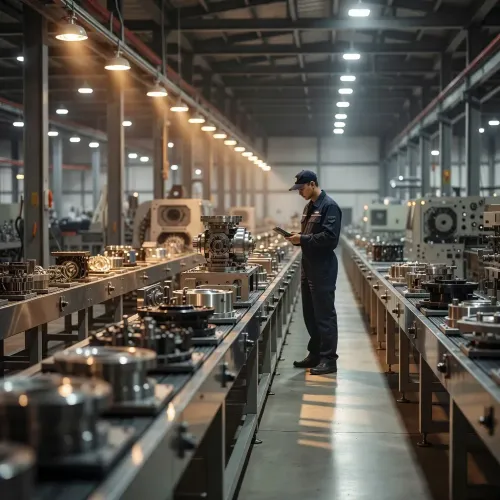
He cited DPSUs, private industry, MSMEs, startups, innovation centres, and Defence Corridors as the combined builders of India's defence ecosystem.
Two Defence Industrial Corridors — in Uttar Pradesh and Tamil Nadu — were announced in 2018 to cluster manufacturing and R&D investment.
The Atmanirbhar Bharat initiative ( May 2020 ) introduced a negative import list for defence and raised the FDI cap to 74 per cent via the automatic route.
The minister positioned India not merely as a self-reliant nation but as a 'credible security partner' for the world.
The broader policy shift since 2014 has moved India from near-total import dependence toward a mixed public-private defence production ecosystem.
Union Defence Minister Rajnath Singh on Saturday, 18 July 2026, underscored that India's defence power is increasingly grounded in its entrepreneurial energy, citing the combined force of public-sector undertakings, private industry, startups, and innovation centres as the pillars of a self-reliant security ecosystem.
Context
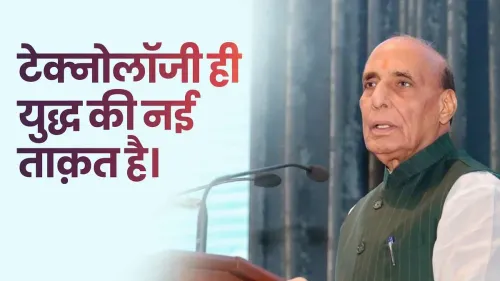
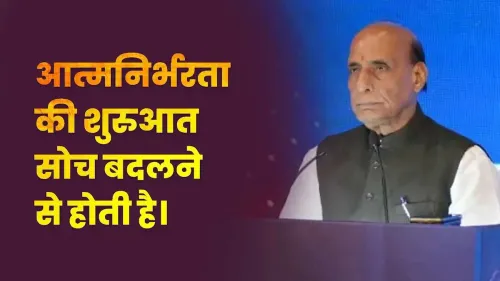
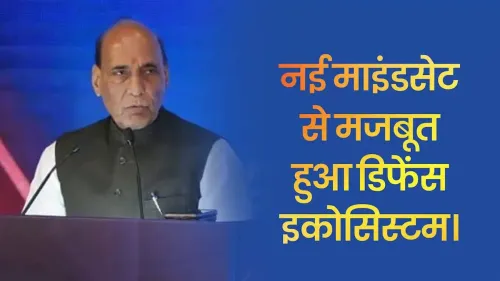
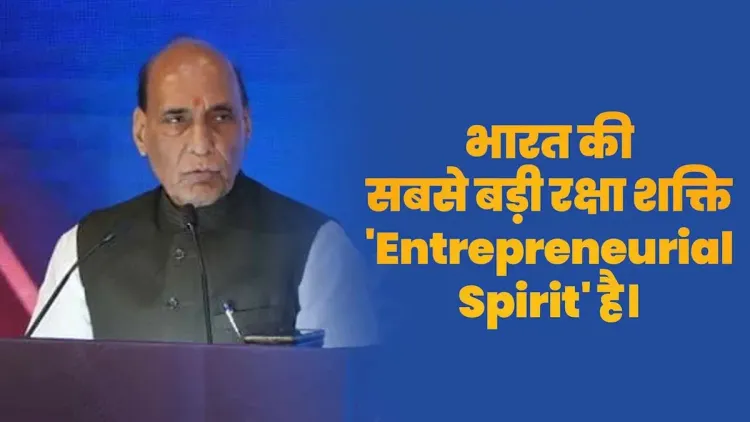
In his post, Rajnath Singh wrote: 'भारत की रक्षा शक्ति देश की Entrepreneurial Spirit में भी निहित है' — 'India's defence strength is also rooted in the country's entrepreneurial spirit.' He highlighted that DPSUs, private industry, MSMEs, startups, innovation centres, and Defence Corridors are together building a robust defence ecosystem. The minister added that this new thinking is making India not just self-reliant but also a 'credible security partner' for the world.
The statement reflects a deliberate framing of national security as inseparable from industrial and commercial capability — a position that has been central to India's defence policy since 2014.
Policy Backdrop
The architecture Rajnath Singh described has been assembled over several years. In 2018, the government announced two Defence Industrial Corridors — one in Uttar Pradesh and one in Tamil Nadu — designed to cluster manufacturing, testing, and research facilities and attract private investment into defence production.
The Atmanirbhar Bharat initiative, launched in May 2020, gave the indigenisation drive formal policy weight: it introduced a negative import list for defence items and raised the foreign direct investment cap to 74 per cent via the automatic route. Successive Defence Procurement Procedure revisions from 2016 onward have prioritised categories that favour indigenous design, development, and production.
Defence Public Sector Undertakings (DPSUs) such as HAL and BEL remain the backbone of state-owned manufacturing, while MSMEs supply components and sub-assemblies across the lower tiers of the supply chain.
Stakeholders and Impact
The ecosystem the minister described draws in a wide range of actors: established DPSUs, large private defence firms, micro, small and medium enterprises (MSMEs), early-stage startups, and academic or institutional innovation centres. For the armed forces, a deeper domestic industrial base reduces dependence on foreign suppliers and shortens procurement timelines.
For India's international partners, the framing of the country as a 'credible security partner' signals an ambition to move beyond being a buyer in global arms markets toward becoming a supplier and co-developer — particularly for nations seeking to diversify away from traditional arms exporters. India's defence export target and its growing engagement with friendly nations on joint production underscore this direction.
What's Next
Analysts and industry stakeholders will watch the next revision of the Defence Procurement Procedure and outcomes at upcoming defence expos for concrete signals on private-sector order books and export agreements. The degree to which startups and MSMEs are integrated into major platform programmes — rather than remaining peripheral suppliers — will be a key measure of how deeply the ecosystem vision translates into practice.
As India deepens strategic partnerships across regions, the minister's framing suggests that defence industrial capacity will be positioned as a diplomatic and economic asset, not merely a security one.
Point of View
The minister signals that the government wants the defence story to resonate beyond traditional industry to a younger, entrepreneurial audience. The 'credible security partner' formulation is significant: it positions India's indigenisation drive not as protectionism but as a qualification for deeper strategic and export relationships globally. Taken together, the statement advances a long-running effort to recast India's defence identity from a large importer to a capable, self-sufficient, and outward-looking security actor.
NationPress
17 Oct 2026
Frequently Asked Questions
What did Rajnath Singh say about India's defence ecosystem?
Rajnath Singh said India's defence strength is rooted in its entrepreneurial spirit, and that DPSUs, private industry, MSMEs, startups, innovation centres, and Defence Corridors are together building a robust defence ecosystem that makes India both self-reliant and a credible security partner globally.
What are India's Defence Industrial Corridors?
India's Defence Industrial Corridors are two manufacturing and R&D clusters announced in 2018 — one in Uttar Pradesh and one in Tamil Nadu — designed to attract private investment and consolidate defence production capacity in dedicated geographic zones.
What is Atmanirbhar Bharat in the context of defence?
Atmanirbhar Bharat, launched in May 2020, is India's self-reliance programme that in the defence sector introduced a negative import list restricting foreign procurement of specified items and raised the FDI cap in defence manufacturing to 74 per cent via the automatic route.
What role do MSMEs play in India's defence sector?
MSMEs form the lower-tier supply chain in India's defence sector, providing components, sub-assemblies, and specialised services to larger DPSUs and private defence firms, making them essential to the cost-competitiveness and scalability of domestic production.
Is India becoming a defence exporter?
India has been actively working to expand defence exports as part of its broader indigenisation strategy, positioning itself as a supplier and co-developer for nations seeking alternatives to traditional arms exporters, though specific export volumes and agreements continue to evolve.