Rajnath Singh: Defence Output Hits Rs 1.78 Lakh Crore High
Synopsis
Union Defence Minister Rajnath Singh announced India's defence production reached a record Rs 1.78 lakh crore in FY 2025-26, a 15.6% annual rise and a 110% jump since FY 2020-21, surpassing the government's own 2020 policy target and reflecting a decade of Atmanirbhar Bharat reforms.
Key Takeaways
India's annual defence production hit an all-time high of Rs 1.78 lakh crore in FY 2025-26 , announced by Union Defence Minister Rajnath Singh .
This represents a 15.6% growth over FY 2024-25 output of Rs 1.54 lakh crore .
Production has surged 110% since FY 2020-21 , when it stood at Rs 84,643 crore .
Indigenous defence output has grown nearly fourfold from Rs 43,746 crore in FY 2013-14 .
The figure surpasses the Rs 1.75 lakh crore target set under the Defence Production and Export Promotion Policy (2020) .
Growth is attributed to private sector participation, simplified licensing, Defence Industrial Corridors , and the broader Atmanirbhar Bharat framework.
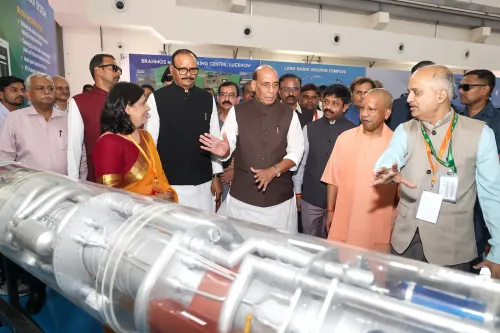
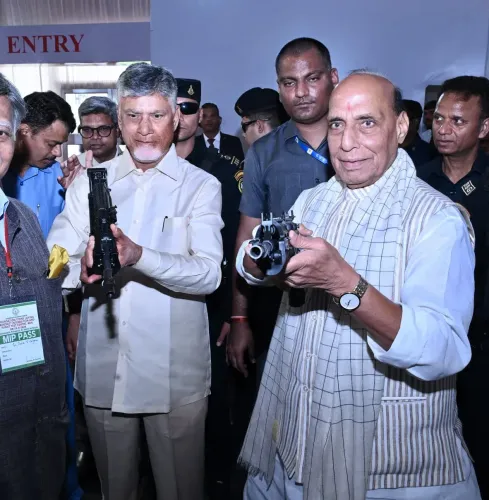
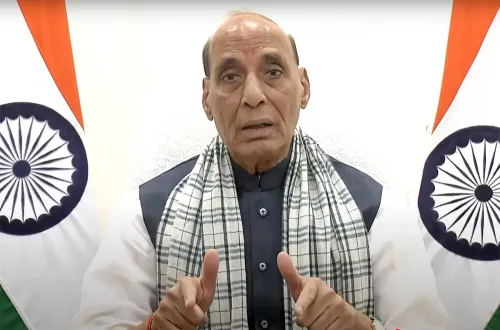
Union Defence Minister Rajnath Singh announced on Wednesday, 17 June 2026 that India's annual defence production has reached an all-time high of Rs 1.78 lakh crore in Financial Year 2025–26, marking a significant milestone in the country's push for self-reliance in defence manufacturing.
Context
In his post on X, Singh stated that the figure represents a 15.6% growth over the previous fiscal year's output of Rs 1.54 lakh crore. He further noted a 110% increase since FY 2020–21, when production stood at Rs 84,643 crore, and a nearly fourfold rise from Rs 43,746 crore recorded in FY 2013–14.
The minister credited the milestone to 'the collective efforts of the Department of Defence Production and all other stakeholders,' attributing the broader upward trajectory to sustained policy support, new initiatives, increased private sector participation, and growing export capabilities.
Policy Backdrop
The surge in production figures is the outcome of a decade-long policy overhaul initiated after 2014. The government's Defence Production and Export Promotion Policy (2020) had set a target of Rs 1.75 lakh crore in annual production — a benchmark that the latest figures now surpass. Successive Defence Procurement Procedures, including DPP-2016 and DAP-2020, introduced higher indigenous content requirements and a negative import list to reduce dependence on foreign weapons systems.
Two Defence Industrial Corridors — in Uttar Pradesh and Tamil Nadu — were notified in March 2019 to attract investment and create dedicated manufacturing clusters. Simplified licensing norms and offset-linked FDI reforms have widened the industrial base beyond traditional Defence Public Sector Undertakings (DPSUs) to include a growing number of private-sector firms.
Stakeholders and Impact
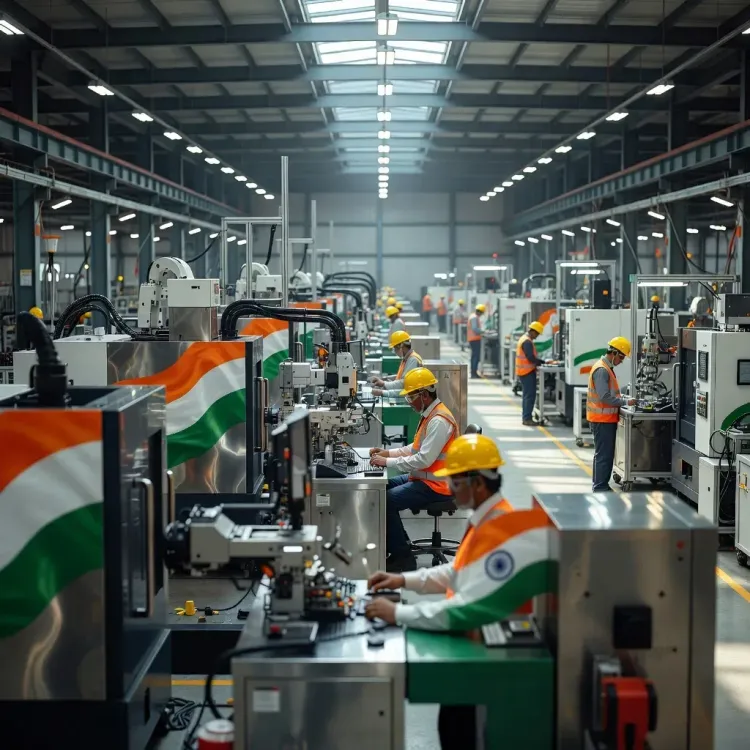
The expansion of India's defence industrial base involves a broad coalition of stakeholders: defence PSUs, private manufacturers, the three armed services, and an emerging cohort of defence exporters. Increased private sector participation has been a defining feature of recent growth, with companies now involved in producing platforms ranging from ammunition and electronics to aircraft components and naval vessels.
For the armed forces, higher domestic production translates into greater supply-chain resilience and reduced foreign-exchange outflows on imports. For industry, the growing order book represents sustained revenue visibility, particularly as India positions itself as a credible defence exporter to partner nations.
What's Next
The government's Atmanirbhar Bharat framework continues to set more ambitious targets for both production and exports. Singh indicated in his post that 'the defence production sector is poised for continued acceleration in the years ahead,' citing sustained policy support and new initiatives as key enablers.
Audited production and export figures are expected to be scrutinised during the next Union Budget cycle and by parliamentary standing committees. Industry observers will also watch for possible upward revisions of production and export targets at upcoming defence showcases. The trajectory signals India's intent to transition from being one of the world's largest defence importers to a significant global supplier.
Point of View
Quantifiable deliverable on its flagship Atmanirbhar Bharat narrative ahead of future electoral cycles. The fourfold rise from FY 2013-14 levels is a deliberate political framing, anchoring the comparison to the pre-Modi era. However, the critical test for the sector's maturity lies not just in production volumes but in the value and complexity of what is being produced — a distinction that audited parliamentary data and export composition figures will eventually illuminate. The trajectory also signals India's ambition to leverage its growing industrial base for strategic partnerships, using defence exports as a tool of foreign policy.
NationPress
19 Sept 2026
Frequently Asked Questions
What is India's defence production in FY 2025-26?
India's annual defence production reached an all-time high of Rs 1.78 lakh crore in FY 2025-26 , according to an announcement by Union Defence Minister Rajnath Singh on 17 June 2026 .
By how much has India's defence production grown?
Defence production grew by 15.6% compared to FY 2024-25 (Rs 1.54 lakh crore), and has increased by 110% since FY 2020-21, when it stood at Rs 84,643 crore .
What was India's defence production target under the 2020 policy?
The Defence Production and Export Promotion Policy (2020) set a target of Rs 1.75 lakh crore in annual production by 2025. The FY 2025-26 figure of Rs 1.78 lakh crore surpasses that target.
What is Atmanirbhar Bharat in defence?
Atmanirbhar Bharat (Self-Reliant India) in defence refers to the government's policy framework to reduce dependence on foreign arms imports by boosting domestic manufacturing, increasing indigenous content requirements, and promoting private sector participation in the defence industry.
What are India's Defence Industrial Corridors?
India has two Defence Industrial Corridors — in Uttar Pradesh and Tamil Nadu — notified in March 2019 to attract investment, create manufacturing clusters, and support the growth of domestic defence production capacity.