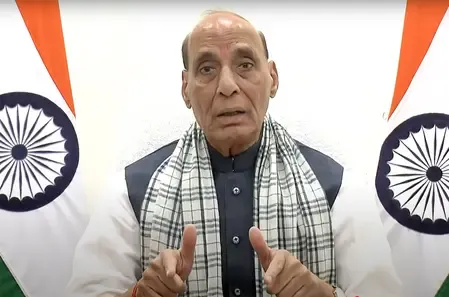
Rajnath Singh: Defence output doubles to ₹26,282 cr since 2020

Synopsis
Union Defence Minister Rajnath Singh has cited official figures showing India's defence production nearly doubled to ₹26,282 crore and exports surged over 56-fold to ₹4,561 crore since FY 2019-20, crediting the corporatisation of the Ordnance Factory Board into seven DPSUs as the key structural driver.
Key Takeaways
Defence production grew from ₹12,755 crore (FY 2019-20) to ₹26,282 crore (FY 2025-26) , nearly doubling in six years.
Defence exports surged from ₹81 crore to ₹4,561 crore over the same period — a more than 56-fold increase.
The Ordnance Factory Board was dissolved and corporatised into seven DPSUs in October 2021 to grant operational and commercial autonomy.
Gains are attributed to enhanced autonomy, innovation, research, and export orientation under the new DPSU structure.
The figures align with India's Atmanirbhar Bharat drive to indigenise defence production and reduce import dependence.
Future milestones to watch include FY 2026-27 defence budget allocations and new export authorisations from the Ministry of Defence.
Union Defence Minister Rajnath Singh on Friday, 19 June 2026, highlighted a sharp rise in India's defence production and exports, attributing the gains to the corporatisation of the defence sector and the resulting increases in autonomy, innovation, research, and export orientation.
In a post on X, the Minister stated that defence production had grown from ₹12,755 crore in FY 2019-20 to ₹26,282 crore in FY 2025-26, while defence exports had surged from ₹81 crore to ₹4,561 crore over the same period — a more than 56-fold increase in export value.
Context
Singh's post, written in Hindi, noted: 'रक्षा क्षेत्र में कॉरपोरेटाइजेशन से बड़ा बदलाव देखने को मिला है' ('Corporatisation has brought a major transformation in the defence sector'). He credited enhanced autonomy, innovation, research, and export orientation as the drivers behind the production and export jump.
The figures span roughly six years and capture the period immediately before and after a landmark structural reform in India's defence manufacturing ecosystem. The data points to a near-doubling of production value and an exponential rise in exports.
Policy Backdrop
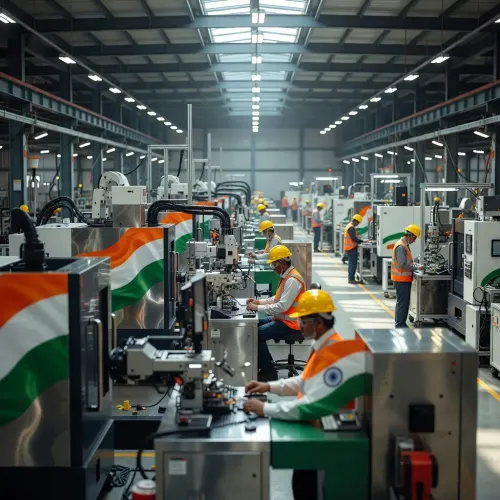
The structural trigger for these gains was the dissolution of the Ordnance Factory Board (OFB) in October 2021, when it was corporatised into seven new Defence Public Sector Undertakings (DPSUs), including Munitions India Limited. The reform was designed to grant operational and commercial autonomy to units that had previously functioned as government departments with limited market incentives.
The seven DPSUs were empowered to pursue independent research and development, enter commercial contracts, and target export markets — capabilities that were structurally constrained under the OFB model. This shift sits within the broader Atmanirbhar Bharat framework, which seeks to indigenise defence procurement, reduce import dependence, and build a globally competitive domestic industry.
Complementary measures have included positive indigenisation lists that restrict imports of specified defence items, increased foreign direct investment limits in the sector, and dedicated defence industrial corridors in Uttar Pradesh and Tamil Nadu.
Stakeholders and Impact
The primary beneficiaries of corporatisation have been the seven DPSUs and their supply chains, which now include a growing number of private micro, small, and medium enterprises. Higher export volumes signal that Indian-manufactured defence equipment is finding buyers in international markets, strengthening the country's position as a credible arms supplier.
For domestic manufacturers and private-sector firms that have entered the defence supply chain under liberalised rules, the data reinforces the commercial case for continued investment. Rising export receipts also reduce the unit-cost burden on the Indian armed forces by spreading fixed production costs across a larger order book.
What's Next
Attention will now turn to defence budget allocations for FY 2026-27 and any new export authorisations or offset agreements that the Ministry of Defence may announce. Whether the export trajectory — which has accelerated sharply — can be sustained will depend on the pace of new product certifications, diplomatic clearances for recipient countries, and the competitiveness of Indian platforms against established global suppliers.
As India pushes to become one of the world's top defence exporters within this decade, the corporatisation model's long-term success will be measured not just by production volumes but by the complexity and value-addition of what leaves Indian shores.
Point of View
Framing a structural bureaucratic reform as a national-security and economic success story. The near-doubling of production and the exponential export growth give the government a concrete metric to anchor its Atmanirbhar Bharat narrative ahead of budget discussions. However, the figures also invite scrutiny — the export base in FY 2019-20 was extremely small at ₹81 crore, making percentage gains outsized, and the absolute export number of ₹4,561 crore, while significant, remains modest against global defence trade volumes. The broader arc here is India's deliberate pivot from being the world's largest arms importer toward building a credible export identity — a transition that corporatisation alone cannot complete without sustained R&D investment and diplomatic market access.
NationPress
19 Sept 2026
Frequently Asked Questions
What is India's defence production in 2025-26?
According to Union Defence Minister Rajnath Singh, India's defence production reached ₹26,282 crore in FY 2025-26 , up from ₹12,755 crore in FY 2019-20.
How much have India's defence exports grown?
India's defence exports grew from ₹81 crore in FY 2019-20 to ₹4,561 crore in FY 2025-26 , a more than 56-fold increase, as cited by Defence Minister Rajnath Singh.
What is the corporatisation of the Ordnance Factory Board?
In October 2021 , the Indian government dissolved the Ordnance Factory Board and reorganised it into seven Defence Public Sector Undertakings (DPSUs) to grant them greater operational autonomy, commercial orientation, and export capability.
What are the seven DPSUs formed after OFB corporatisation?
The seven DPSUs created from the Ordnance Factory Board include Munitions India Limited and six other entities. They were formed to independently pursue R&D, commercial contracts, and export markets.
What is Atmanirbhar Bharat in defence?
Atmanirbhar Bharat ('self-reliant India') in the defence context refers to a government policy drive to indigenise defence manufacturing, reduce dependence on arms imports, and build India into a significant defence exporter through structural reforms and private-sector participation.