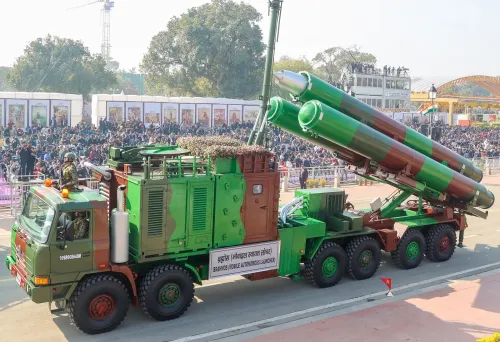
India's defence production hits ₹1.78 lakh crore; exports target ahead of schedule
Synopsis
India's defence production has quadrupled in a decade to ₹1.78 lakh crore, and exports have surged from under ₹1,000 crore to ₹38,424 crore — and Rajnath Singh says the next set of targets will fall even earlier than planned. The foundation stone laid in Nagpur on Friday isn't just a factory; it's a signal that India's military-industrial ambition is moving from aspiration to infrastructure.
Key Takeaways
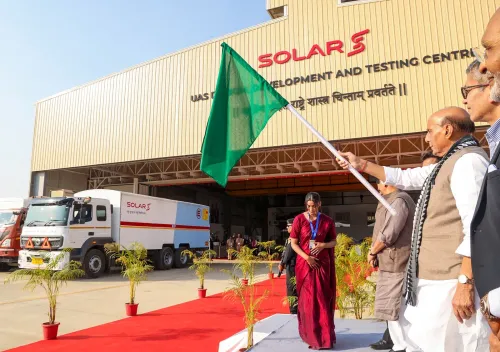
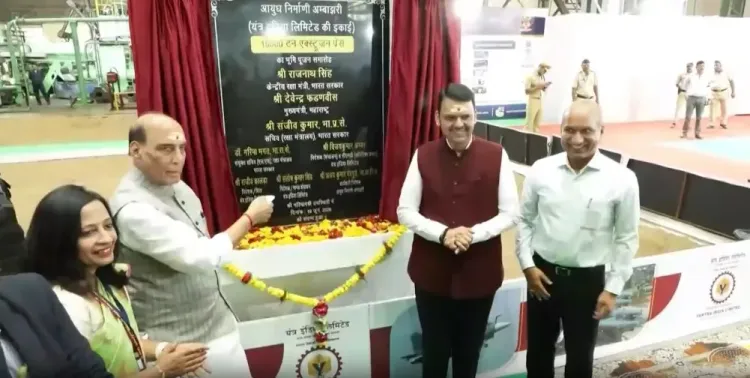
Rajnath Singh laid the foundation stone for a 10,000-Tons Aluminium Extrusion Press at Ordnance Factory Ambajhari, Nagpur on 19 June .
India's defence production reached a record ₹1.78 lakh crore in FY 2025-26 , up from ₹46,000 crore in 2014 .
Defence exports hit an all-time high of ₹38,424 crore in FY 2025-26, compared to under ₹1,000 crore in 2014.
India is on track to meet targets of ₹3 lakh crore in production and ₹50,000 crore in exports ahead of schedule.
DPSU exports grew from ₹81 crore pre-corporatisation to ₹4,561 crore in FY 2025-26; YIL alone contributed ₹397 crore .
Maharashtra CM Devendra Fadnavis positioned Nagpur as a key hub for indigenous defence manufacturing.
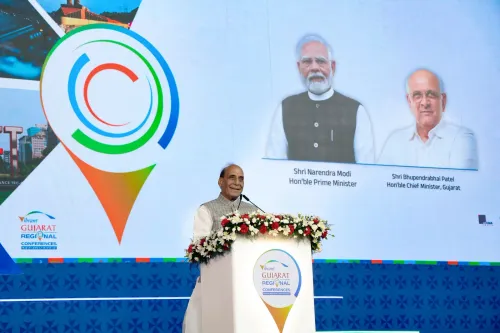
Defence Minister Rajnath Singh on Friday, 19 June declared that India is on course to surpass its mid-term defence production and export targets well ahead of schedule, as the country accelerates its push toward complete self-reliance in national security. Singh made the announcement at Ordnance Factory Ambajhari in Nagpur, where he laid the foundation stone for a 10,000-Tons Aluminium Extrusion Press — a facility that will serve as a backbone for fighter jets, missiles, and space programmes.
Record Numbers in Defence Output
Singh cited a dramatic decade-long transformation in India's defence-industrial base. Total defence production has climbed to a record ₹1.78 lakh crore in FY 2025-26, up from just ₹46,000 crore in 2014. On the export front, the numbers are equally striking: defence exports reached an all-time high of ₹38,424 crore in FY 2025-26, compared to less than ₹1,000 crore in 2014.
The minister added that India is now poised to achieve its upcoming targets of ₹3 lakh crore in defence production and ₹50,000 crore in defence exports much earlier than originally projected. He attributed the growth to four core pillars: technology, workforce, knowledge, and national faith.
Corporatisation Dividend: OFB to DPSUs
Singh highlighted the structural overhaul of the old Ordnance Factory Board (OFB), which was corporatised into Defence Public Sector Undertakings (DPSUs). The results, he said, have been exponential. Production by these units rose to ₹26,282 crore in FY 2025-26, up from ₹12,755 crore in the pre-corporatisation year of FY 2019-20. Exports by DPSUs surged from a mere ₹81 crore before corporatisation to ₹4,561 crore in FY 2025-26, with host unit Yantra India Limited (YIL) contributing ₹397 crore to that figure.
What the New Facility Will Produce
The proposed 10,000-Tons Aluminium Extrusion Press at Ordnance Factory Ambajhari is designed to manufacture large, highly complex aluminium alloy profiles capable of withstanding extreme operational conditions. According to an official release, its output will directly feed into modern fighter jets, aviation structures, advanced missiles, space programmes, railways, and other strategic industrial applications. Singh described it as one of the most advanced facilities of its kind in the country.
Singh also pointed to the performance of Made-in-India equipment during Operation Sindoor as evidence that a strong military-industrial base requires continuous Research and Development (R&D) and sustained capital infusion. He stressed that conventional hardware remains as vital today as it was in 1947, and will retain its relevance through 2047.
Nagpur Positioned as Defence Hub
Maharashtra Chief Minister Devendra Fadnavis, who was present at the ceremony, called the project a significant step toward the vision of an Aatmanirbhar (self-reliant) and Viksit (developed) Bharat. Fadnavis noted that deepening collaboration between DPSUs and the private sector is unlocking new capabilities for India, and that Nagpur is being positioned as a vital node in the country's indigenous defence manufacturing network.
With targets being met ahead of schedule and a new generation of strategic infrastructure coming online, India's defence-industrial trajectory appears set for further acceleration in the years ahead.
Point of View
But a significant share reportedly comes from ammunition, components, and legacy platforms rather than high-value systems. The ₹3 lakh crore production target and ₹50,000 crore export goal will test whether India can move up the value chain, not just scale existing lines. The corporatisation of OFB was a necessary reform, and the DPSU numbers validate it — yet private-sector participation, which is essential for R&D-led competitiveness, remains unevenly distributed. Operation Sindoor provided a live-fire proof-of-concept for Made-in-India hardware, but sustained geopolitical pressure is a fragile foundation for industrial policy.
NationPress
23 Sept 2026
Frequently Asked Questions
What is India's current defence production figure?
India's total defence production reached a record ₹1.78 lakh crore in FY 2025-26, up from ₹46,000 crore in 2014. Defence Minister Rajnath Singh announced the milestone at a ceremony in Nagpur on 19 June.
What are India's upcoming defence production and export targets?
India has set targets of ₹3 lakh crore in defence production and ₹50,000 crore in defence exports. Rajnath Singh said both targets are expected to be achieved ahead of the originally projected schedule.
What is the 10,000-Tons Aluminium Extrusion Press in Nagpur?
It is a high-capacity manufacturing facility being set up at Ordnance Factory Ambajhari, a unit of Yantra India Limited (YIL), in Nagpur. The press will produce large aluminium alloy profiles for use in fighter jets, missiles, space programmes, and railways.
How has the corporatisation of the Ordnance Factory Board impacted defence output?
Corporatising the OFB into Defence Public Sector Undertakings (DPSUs) has significantly boosted output. DPSU production rose to ₹26,282 crore in FY 2025-26 from ₹12,755 crore in FY 2019-20, while DPSU exports surged from ₹81 crore pre-corporatisation to ₹4,561 crore in FY 2025-26.
What role did Operation Sindoor play in validating India's defence manufacturing?
Rajnath Singh cited the performance of Made-in-India equipment during Operation Sindoor as evidence that domestic defence manufacturing has matured. He used it to argue for continued R&D investment and capital infusion into the military-industrial base.