Rajnath Singh calls on youth to modernise Indian agriculture
Synopsis
Union Defence Minister Rajnath Singh on 8 July 2026 called on India's youth to reimagine agriculture through innovation, skill, and entrepreneurship, envisioning a farming system that is modern, self-reliant, smart, nature-friendly, and sustainable — echoing the Atmanirbhar Bharat framework.
Key Takeaways
Rajnath Singh on 8 July 2026 urged Indian youth to adopt a new perspective on agriculture via innovation and entrepreneurship.
He called for an agricultural system that is modern, self-reliant, smart, nature-friendly, and sustainable.
The message aligns closely with the Atmanirbhar Bharat Abhiyan launched in May 2020 , which identified agri-modernisation as a key pillar.
The Skill India Mission (launched 2015 ) has specifically targeted agri-entrepreneurship as a priority sector for rural youth.
No new scheme or statistic was announced; the post reinforces an ongoing policy direction ahead of possible Budget or parliamentary action.
Union Defence Minister Rajnath Singh on Wednesday, 8 July 2026, called on India's youth to view agriculture through a fresh lens, urging them to harness innovation, skill, and entrepreneurship to build a farming ecosystem that is modern, self-reliant, smart, nature-friendly, and sustainable.
Context
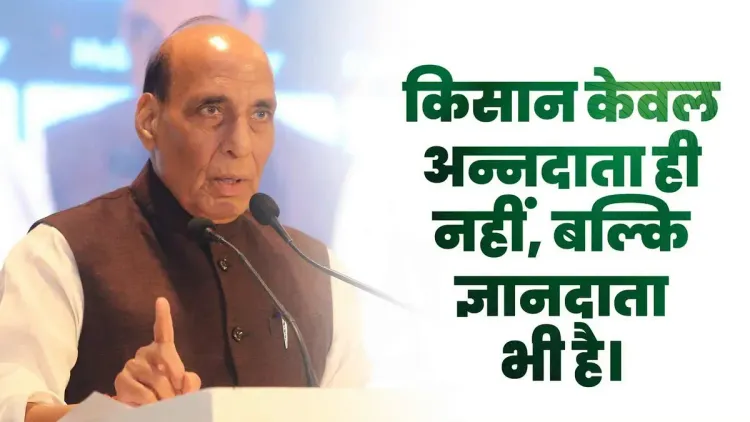
Posting in Hindi on X, Rajnath Singh wrote: 'देश के युवाओं को कृषि को नए दृष्टिकोण से देखने की आवश्यकता है' ('The youth of the country need to view agriculture from a new perspective'). He argued that through their innovation, skill, and entrepreneurial spirit, young Indians can contribute to building an agricultural system that is 'modern, self-reliant, smart, nature-friendly and sustainable.' The post was accompanied by a video, though no specific scheme announcement or new statistic was cited.
The call comes as India continues to grapple with rural youth migration to cities, climate stress on farmland, and the broader imperative of doubling farmers' income — goals that have defined agricultural policy conversations since 2019.
Policy Backdrop
Singh's appeal closely mirrors the language of the Atmanirbhar Bharat Abhiyan, the national self-reliance initiative launched in May 2020, which identified agriculture modernisation and private entrepreneurship as central pillars. The initiative explicitly encouraged technology-driven farming and reduced import dependence in food and agri-inputs.
The Skill India Mission, launched in 2015, similarly targeted agri-entrepreneurship as a priority sector, aiming to equip rural youth with market-ready capabilities. Successive Union Budgets since 2019 have reinforced these themes — from natural farming corridors to agri-startup incubation funds — reflecting a cross-government consensus that agriculture must evolve from subsistence to enterprise.
The emphasis on 'nature-friendly' and 'sustainable' farming also aligns with India's international climate commitments, including targets under the Paris Agreement to reduce the carbon intensity of its agricultural sector.
Stakeholders and Impact
The primary audience for Singh's message is rural youth and emerging agripreneurs — a demographic that policymakers consider pivotal to reversing farm distress and reducing urban migration pressure. India's agricultural sector employs roughly half the workforce but contributes a significantly smaller share to GDP, a structural gap that innovation-led farming is expected to help close.
Agri-tech startups, farmer-producer organisations, and skilling bodies are likely to read the statement as continued political endorsement of the ecosystem they operate in. For state governments, particularly those in agrarian belts like Uttar Pradesh, Punjab, and Maharashtra, such messaging from a senior Union Cabinet minister reinforces the case for directing resources toward agri-innovation hubs and rural skill centres.
What's Next
Observers will watch whether Singh's remarks prefigure any concrete policy announcements — whether in an upcoming parliamentary session, a Union Cabinet decision, or the next Union Budget — around agri-tech allocations or expanded skilling programmes for rural youth. Any follow-up parliamentary discussion on agricultural reforms or startup policy updates will be closely tracked by both the farming community and the agri-tech investment ecosystem.
As India positions itself as a global food-security partner, translating ministerial vision into funded, time-bound programmes for youth-led agricultural transformation will be the defining test of this policy direction.
Point of View
The statement bridges the ruling coalition's economic nationalism with its climate-conscious rural outreach. The timing, ahead of what could be a significant Budget cycle, suggests the party is priming its base and the agri-tech ecosystem for possible policy announcements. It also reinforces the government's long-running effort to retain aspirational rural youth within agriculture rather than lose them to urban informal labour markets.
NationPress
7 Oct 2026
Frequently Asked Questions
What did Rajnath Singh say about agriculture and youth?
On 8 July 2026 , Rajnath Singh said India's youth need to view agriculture from a new perspective and can use their innovation, skill, and entrepreneurship to build a farming system that is modern, self-reliant, smart, nature-friendly, and sustainable.
What is Atmanirbhar Bharat and how does it relate to agriculture?
Atmanirbhar Bharat Abhiyan , launched in May 2020 , is India's national self-reliance initiative. Agriculture modernisation and private entrepreneurship are core pillars, encouraging technology-driven farming and reduced dependence on imports.
What is the Skill India Mission and does it cover farming?
The Skill India Mission , launched in 2015 , aims to equip Indian youth with market-ready skills across sectors, including agri-entrepreneurship, to support rural economic development.
Why is youth involvement important for Indian agriculture?
India's agricultural sector employs roughly half the workforce but contributes a disproportionately smaller share to GDP. Youth-led innovation and entrepreneurship are seen as key to closing this gap, reducing farm distress, and slowing rural-to-urban migration.
Is there a new farm scheme announced by Rajnath Singh?
No new scheme or statistic was announced in the 8 July 2026 post. It reinforces the existing Atmanirbhar Bharat and Skill India policy direction, with concrete programme announcements expected to follow in parliamentary or Budget sessions.