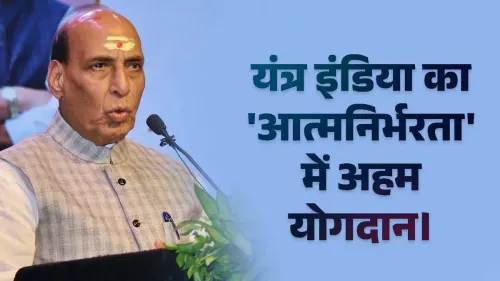
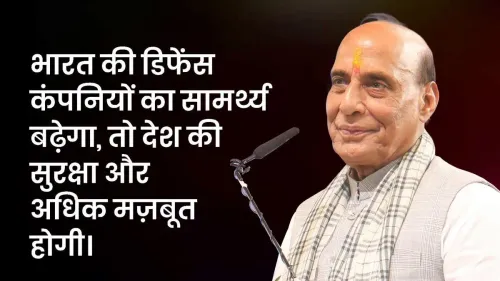
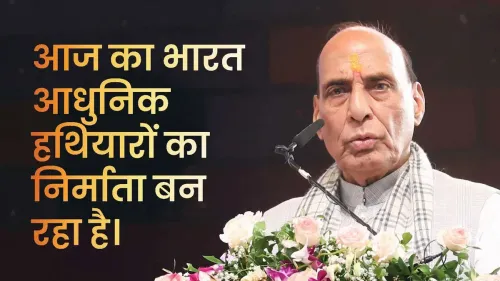
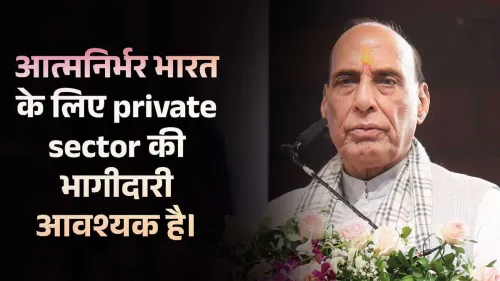
Rajnath Singh: R&D and capital key to Atmanirbhar Bharat
Synopsis
Union Defence Minister Rajnath Singh has called research and development and capital infusion the twin pillars of industrial progress, asserting that innovation-driven modernisation is the only route to achieving Atmanirbhar Bharat and the Viksit Bharat 2047 vision.
Key Takeaways
Rajnath Singh stated that R&D and capital infusion are the primary foundations of progress for any industrial institution in today's competitive era.
He linked technological modernisation directly to achieving Atmanirbhar Bharat and the Viksit Bharat 2047 national vision.
The Defence Production and Export Promotion Policy (DPEPP) , released in August 2020 , targets ₹1.75 lakh crore in defence turnover with increased R&D spending.
Positive Indigenisation Lists have progressively banned imports of specified defence items, pushing domestic design and manufacturing.
India's defence indigenisation drive, accelerated since 2014 , aims to reduce dependence on foreign suppliers and build strategic autonomy.
Next Union Budget allocations for defence R&D and DRDO will be a key indicator of how the government translates this rhetoric into fiscal commitment.
Union Defence Minister Rajnath Singh on Friday, June 19, 2026, underscored the centrality of research and development and capital infusion to India's industrial and strategic ambitions, stating that only institutions that embrace innovation will lead the future.
Context
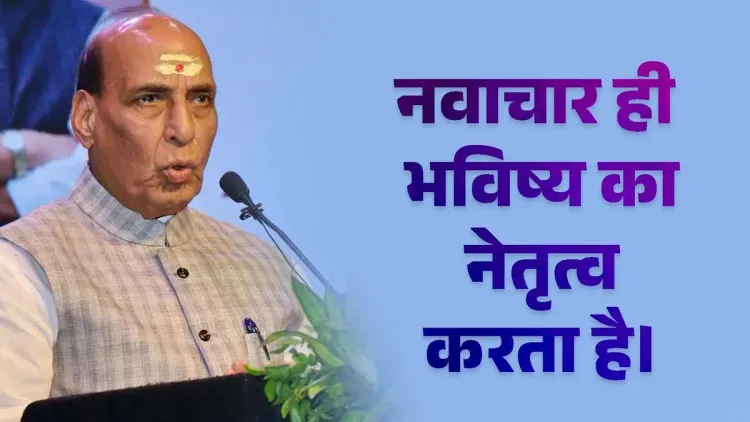
Posting on X, Rajnath Singh wrote in Hindi: 'आज के प्रतिस्पर्धी दौर में रिसर्च एंड डेवलपमेंट और कैपिटल इन्फ्यूज़न किसी भी औद्योगिक संस्था की प्रगति के प्रमुख आधार हैं' — 'In today's competitive era, research and development and capital infusion are the primary foundations of progress for any industrial institution.' He added that institutions which embrace innovation are the ones that will lead the future.
The post culminates in a direct invocation of two flagship national goals: Atmanirbhar Bharat (self-reliant India) and Viksit Bharat 2047, the government's vision to transform India into a fully developed economy by the centenary of independence. Singh argued that modern technology, R&D, and continuous modernisation are the only path to achieving those targets.
Policy Backdrop
The remarks align closely with a policy architecture that has been built over the past several years. The Atmanirbhar Bharat Abhiyan, announced in May 2020, designated defence as a priority sector for domestic manufacturing and reduced import dependence. That was followed in August 2020 by the Defence Production and Export Promotion Policy (DPEPP), which set a target of ₹1.75 lakh crore in defence turnover and called for a significant increase in R&D spending.
Successive Positive Indigenisation Lists have since banned the import of specified defence items, compelling public and private sector firms to design and manufacture domestically. The Ministry of Defence, which Rajnath Singh has led since 2019, has overseen these reforms alongside the Defence Research and Development Organisation (DRDO) and a growing ecosystem of private defence manufacturers.
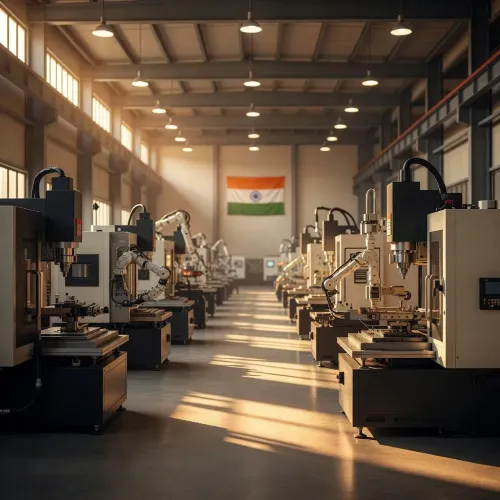
India's broader push for defence indigenisation, accelerated under Make in India since 2014, has been driven by the strategic imperative to reduce reliance on external suppliers and build long-term technological autonomy.
Stakeholders and Impact
The message is directed at the full spectrum of India's defence-industrial base — from DRDO laboratories and public sector undertakings to the rapidly expanding cohort of private sector defence firms. For these stakeholders, Singh's statement signals continued political support for R&D investment and capital mobilisation as non-negotiable priorities.
Domestic defence manufacturers stand to benefit from sustained procurement preferences and indigenisation mandates, while R&D institutions can expect policy emphasis on funding and modernisation. The framing of innovation as the determinant of future leadership also carries a message for industries beyond defence, given that Viksit Bharat 2047 is a whole-of-economy vision.
What's Next
Attention will now turn to the next Union Budget and its allocations for defence R&D and DRDO, as well as any revisions to the Positive Indigenisation Lists or the Defence Procurement Manual. Singh's remarks reinforce expectations that the government will maintain — and potentially deepen — fiscal and policy support for domestic defence technology development as the 2047 milestone draws closer on the planning horizon.
Point of View
Singh reinforces the ideological continuity between economic nationalism and strategic autonomy that has defined BJP-era defence policy. The timing — ahead of what will likely be a budget cycle with significant defence allocations — positions the Ministry of Defence as an active claimant for R&D funding. It also signals to the private sector that the political leadership remains committed to the indigenisation framework, sustaining investor confidence in domestic defence manufacturing.
NationPress
18 Sept 2026
Frequently Asked Questions
What did Rajnath Singh say about R&D and Atmanirbhar Bharat?
Rajnath Singh stated that research and development and capital infusion are the primary foundations of industrial progress, and that modern technology and continuous modernisation are essential to achieving both Atmanirbhar Bharat and the Viksit Bharat 2047 goal.
What is Viksit Bharat 2047?
Viksit Bharat 2047 is the Indian government's national vision to transform India into a fully developed economy by 2047, the centenary of independence, encompassing goals across defence indigenisation, technological modernisation, and broader economic development.
What is the Defence Production and Export Promotion Policy?
The Defence Production and Export Promotion Policy (DPEPP), released in August 2020, is India's framework for boosting domestic defence manufacturing, targeting ₹1.75 lakh crore in defence turnover and increased R&D investment, while reducing import dependence.
What are India's Positive Indigenisation Lists?
Positive Indigenisation Lists are government-notified lists of defence items whose import is banned, compelling domestic public and private sector firms to design and manufacture those items within India as part of the Atmanirbhar Bharat initiative.
How long has Rajnath Singh been Defence Minister?
Rajnath Singh has served as Union Defence Minister since 2019. He previously served as Union Home Minister and as Chief Minister of Uttar Pradesh, and is a senior leader of the Bharatiya Janata Party.