Rajnath Singh: India becoming innovator of advanced weapons systems

Synopsis
Union Defence Minister Rajnath Singh on 23 May 2026 declared India is becoming an innovator and manufacturer of cutting-edge weapons systems, citing the convergence of government vision and private-sector innovation as the force lifting the nation to new heights in defence self-reliance.
Key Takeaways
Union Defence Minister Rajnath Singh posted on 23 May 2026 that India is becoming an innovator and manufacturer of state-of-the-art weapons systems.
He credited the convergence of government vision and private-sector innovation as the driver of this transformation.
The post aligns with India's Atmanirbhar Bharat defence production pillar, launched in 2020 , which mandates progressive indigenisation of military platforms.
The iDEX scheme ( 2018 ) and Make in India programme ( 2014 ) form the policy architecture enabling private firms to develop and supply frontline defence technology.
Two Defence Industrial Corridors in Uttar Pradesh and Tamil Nadu provide the physical industrial base underpinning this shift.
Progress on positive indigenisation lists and outcomes at major defence expos will be the near-term tests of whether the ambition translates into delivered capability.
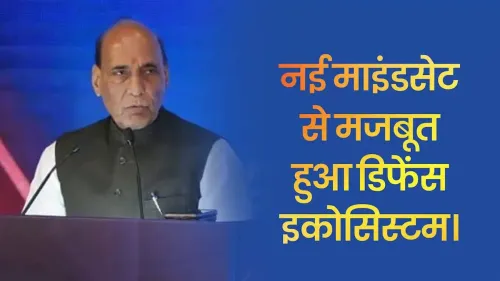
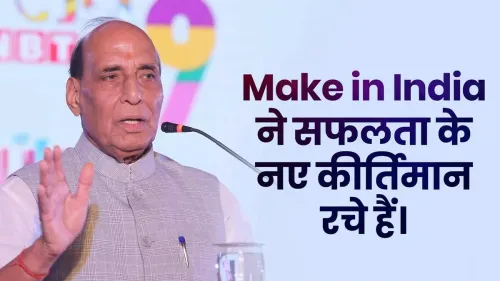
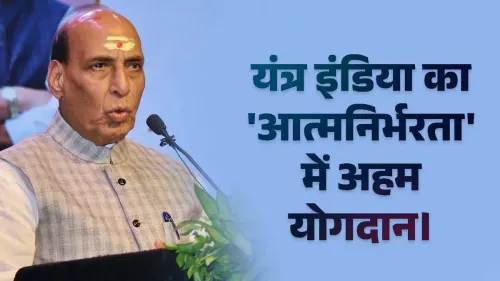
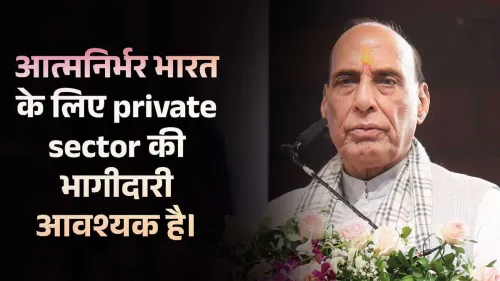
Union Defence Minister Rajnath Singh on Saturday, 23 May 2026 posted a pointed statement on X, declaring that India is emerging as an innovator and manufacturer of cutting-edge weapons systems — and that the convergence of government vision and private-sector innovation is driving the nation to new heights.
In the post, Singh wrote: 'आज का भारत अत्याधुनिक हथियार प्रणालियों का इनोवैटर और निर्माता बन रहा है।' ('Today's India is becoming an innovator and manufacturer of state-of-the-art weapons systems.'). He added that when the government's vision and the private sector's innovation come together, the nation reaches new heights — 'and today we are witnessing exactly that.'
Context
The statement arrives against the backdrop of India's sustained push to reduce its historic dependence on defence imports. For decades, India ranked among the world's largest arms importers, but successive administrations have sought to reverse that equation through indigenisation mandates and private-sector entry into a sector long dominated by public-sector undertakings.
The Atmanirbhar Bharat initiative, launched in 2020, placed defence production at the centre of India's self-reliance agenda. Positive indigenisation lists — barring the import of specified defence items — have been issued in phases, compelling the armed forces to source those platforms domestically.
Policy Backdrop
India's defence industry was formally opened to private-sector participation in 2001, with subsequent rounds of foreign direct investment liberalisation expanding the scope for technology absorption and joint ventures. The Make in India programme, launched in 2014, accelerated this shift by streamlining licensing and encouraging private firms to bid for defence contracts alongside state-owned enterprises.
The iDEX (Innovations for Defence Excellence) scheme, launched in 2018, created a structured bridge between defence startups, private innovators, and the requirements of the armed forces. It has since grown into one of the primary vehicles for channelling private-sector ingenuity into frontline military technology development.
Two dedicated Defence Industrial Corridors — in Uttar Pradesh and Tamil Nadu — have been established to cluster manufacturers, attract investment, and build supply chains capable of supporting large platform programmes. The corridors represent a deliberate effort to move beyond policy intent toward physical industrial capacity.
Stakeholders and Impact
Private defence firms — ranging from large conglomerates that have entered aerospace and naval shipbuilding to deep-technology startups working on drones, electronic warfare, and precision munitions — stand to gain most directly from the policy environment Singh is describing. The armed forces, as end-users, benefit from faster technology cycles and reduced foreign-exchange outgo on procurement.
The broader industrial ecosystem — component manufacturers, software developers, and materials scientists — is also drawn into defence value chains as prime contractors indigenise their supply lines. This multiplier effect is central to the government's argument that defence self-reliance generates wider economic dividends beyond the security domain.
What's Next
Attention will focus on the pace at which items on successive positive indigenisation lists are actually delivered by domestic manufacturers, and on the export trajectory of Indian-origin defence platforms. Major showcases such as DefExpo and Aero India have become barometers of how far private-sector led systems have matured from prototype to production-ready status.
Singh's framing — positioning the government-private partnership as the engine of a historic capability shift — signals that the political leadership intends to keep defence indigenisation as a high-visibility priority, with the private sector cast as an equal partner rather than a supplementary supplier.
Point of View
He is also making a case for sustained deregulation and procurement preference for domestic firms. The timing reflects a broader pattern of senior ministers using social media to frame ongoing policy as visible national achievement, building public and investor confidence ahead of major defence showcases. Whether the indigenisation targets hold up to scrutiny on delivery timelines and technology depth will determine how durable this narrative proves.
NationPress
8 Oct 2026
Frequently Asked Questions
What did Rajnath Singh say about India's defence manufacturing?
Rajnath Singh stated on 23 May 2026 that India is becoming an innovator and manufacturer of state-of-the-art weapons systems, and that the combination of government vision and private-sector innovation is taking the nation to new heights.
What is the Atmanirbhar Bharat defence initiative?
Atmanirbhar Bharat, launched in 2020, is India's self-reliance initiative with a dedicated defence production pillar that uses positive indigenisation lists to bar imports of specified items and compel domestic sourcing by the armed forces.
How is India's private sector involved in defence manufacturing?
India opened its defence industry to private-sector participation in 2001 and has since expanded FDI limits, launched the iDEX scheme in 2018 to fund defence startups, and set up two Defence Industrial Corridors to build domestic supply chains.
What is the iDEX scheme in India?
iDEX, or Innovations for Defence Excellence, is a government scheme launched in 2018 that connects startups and private innovators with defence requirements to develop indigenous military technology solutions.
What are India's Defence Industrial Corridors?
India has established two Defence Industrial Corridors — one in Uttar Pradesh and one in Tamil Nadu — to cluster manufacturers, attract investment, and build the supply chains needed to support large domestic defence platform programmes.