Rajnath Singh Hails CM Yogi for UP Defence Corridor Push
Synopsis
Defence Minister Rajnath Singh publicly praised CM Yogi Adityanath on 30 May 2026 for driving the Uttar Pradesh Defence Industrial Corridor, calling it a step toward making India's defence sector self-reliant under Atmanirbhar Bharat.
Key Takeaways
Rajnath Singh congratulated CM Yogi Adityanath on 30 May 2026 for the UP Defence Industrial Corridor 's role in advancing defence self-reliance.
The corridor spans six nodes — Lucknow, Kanpur, Agra, Aligarh, Jhansi and Chitrakoot — announced under Make in India in 2018 .
The initiative is a key pillar of Atmanirbhar Bharat , launched in 2020 to reduce India's defence import dependence.
The public endorsement from the Union Defence Minister signals strong Centre-State alignment on UP's industrial corridor agenda.
Focus now shifts to node-level milestones, UP-based MSME participation in defence events and potential new FDI announcements.
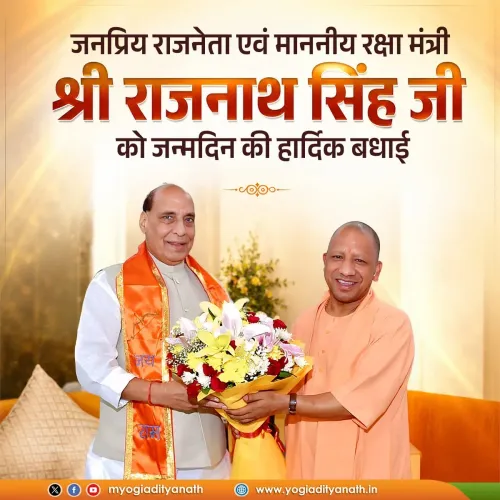
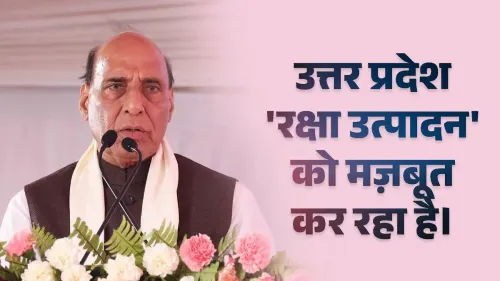
India's Defence Minister Rajnath Singh on Saturday, 30 May 2026 publicly congratulated Uttar Pradesh Chief Minister Yogi Adityanath, crediting his leadership for advancing the Uttar Pradesh Defence Industrial Corridor and steering the state toward self-reliance in the defence sector. The remarks, posted on X, underline the Centre's endorsement of UP's role as a manufacturing hub under the Atmanirbhar Bharat initiative.
Context
In his post, Rajnath Singh wrote — 'डिफेंस कॉरिडोर के माध्यम से उत्तर प्रदेश, भारत के रक्षा क्षेत्र को आत्मनिर्भर बना रहा है' ['Through the Defence Corridor, Uttar Pradesh is making India's defence sector self-reliant'] — before extending his congratulations directly to CM Yogi Adityanath. The post is notable because the compliment flows from the Union minister responsible for defence policy to the state's chief executive, signalling strong Centre-State alignment on this agenda.
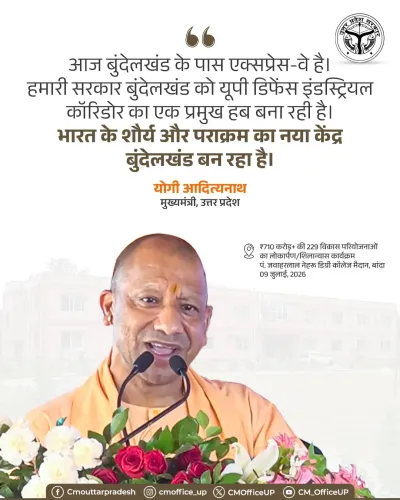
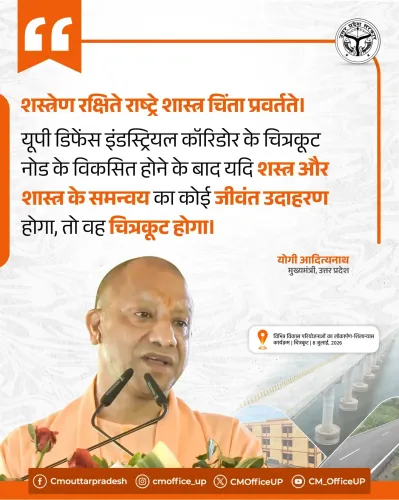
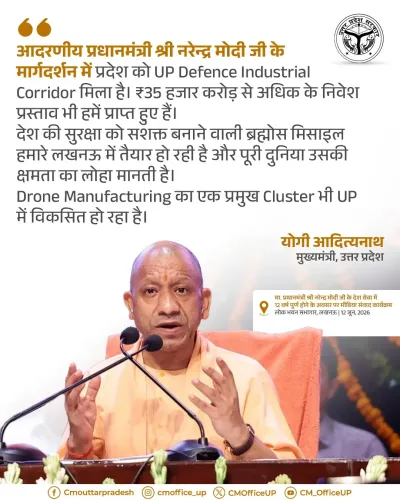
The Uttar Pradesh Defence Industrial Corridor was one of two such corridors announced by the Ministry of Defence in 2018 under the Make in India programme, the other being in Tamil Nadu. The UP corridor spans six nodes — Lucknow, Kanpur, Agra, Aligarh, Jhansi and Chitrakoot — designed to cluster defence manufacturers, research units and MSMEs in a single geographic belt.
Policy Backdrop
The corridor is a centrepiece of India's broader push to reduce import dependence in defence procurement, a goal formalised under Atmanirbhar Bharat, launched in 2020. The policy framework sets targets for indigenous production and mandates offset obligations on foreign defence purchases, creating a structural incentive for domestic manufacturers to scale up.
Uttar Pradesh has responded with dedicated policy incentives, land allocation along corridor nodes and a stated goal of attracting both large defence original equipment manufacturers and smaller ancillary units. CM Yogi Adityanath, who has held office since 2017, has consistently positioned industrial corridors — including the defence corridor — as flagships of the state's economic transformation narrative.
Stakeholders and Impact
The primary beneficiaries of a functional defence corridor are UP-based defence MSMEs, which gain proximity to larger contractors, shared infrastructure and access to state incentives. Larger private sector firms and public sector undertakings exploring greenfield or brownfield manufacturing units in the state also stand to benefit from the clustering effect.
For the Ministry of Defence, a productive UP corridor directly supports the national target of reducing the defence import bill and meeting indigenisation timelines. Rajnath Singh's public appreciation signals that the Centre views UP's progress as materially relevant to those national-level goals, not merely symbolic.
What's Next
Attention will now turn to node-level project milestones, the participation of UP-based firms in upcoming defence exhibitions and any new production-linked orders or foreign direct investment announcements tied to the corridor. The Defence Minister's public endorsement could also serve as a catalyst for further private investment commitments, as industry reads the signal as top-level political backing for the project's continuity.
With both the Centre and the state government publicly aligned, the corridor's next phase of development will be closely watched as a test case for whether geographic clustering can meaningfully shift India's defence manufacturing base away from import dependency.
Point of View
Since the Defence Minister has now publicly staked his credibility on the state's performance. Analysts will watch whether this endorsement translates into faster regulatory clearances, fresh investment commitments or accelerated MSME onboarding along the corridor's six nodes.
NationPress
14 Oct 2026
Frequently Asked Questions
What is the Uttar Pradesh Defence Industrial Corridor?
The Uttar Pradesh Defence Industrial Corridor is one of two defence manufacturing clusters announced by the Indian government in 2018 under Make in India, spanning six nodes — Lucknow, Kanpur, Agra, Aligarh, Jhansi and Chitrakoot — to attract defence manufacturers, R&D units and MSMEs.
Why did Rajnath Singh congratulate CM Yogi Adityanath?
Defence Minister Rajnath Singh congratulated CM Yogi Adityanath for advancing the UP Defence Industrial Corridor and contributing to India's goal of self-reliance in the defence sector under Atmanirbhar Bharat.
What is Atmanirbhar Bharat in the context of defence?
Atmanirbhar Bharat, launched in 2020, is a national self-reliance initiative that includes specific targets for indigenous defence production, reduced import dependence and mandatory offset obligations on foreign defence purchases.
How many nodes does the UP Defence Corridor have?
The UP Defence Industrial Corridor has six nodes: Lucknow, Kanpur, Agra, Aligarh, Jhansi and Chitrakoot.
What is the significance of the Defence Minister praising a state chief minister for a corridor project?
Such a public endorsement from the Union Defence Minister signals strong Centre-State alignment, lends political credibility to the project and can act as a catalyst for further private investment and faster policy clearances at the state level.