Gadkari: Cabinet OKs ₹10,998 cr Varanasi corridor
Synopsis
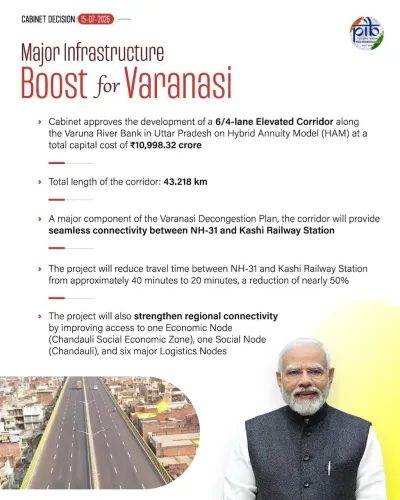
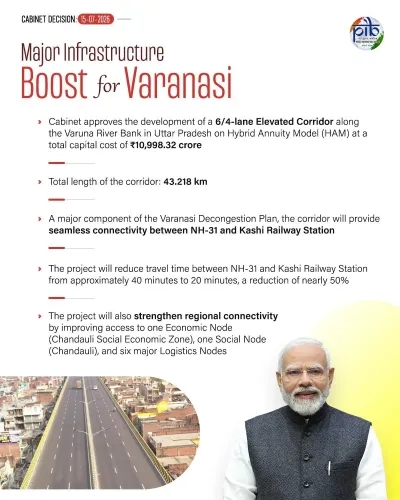
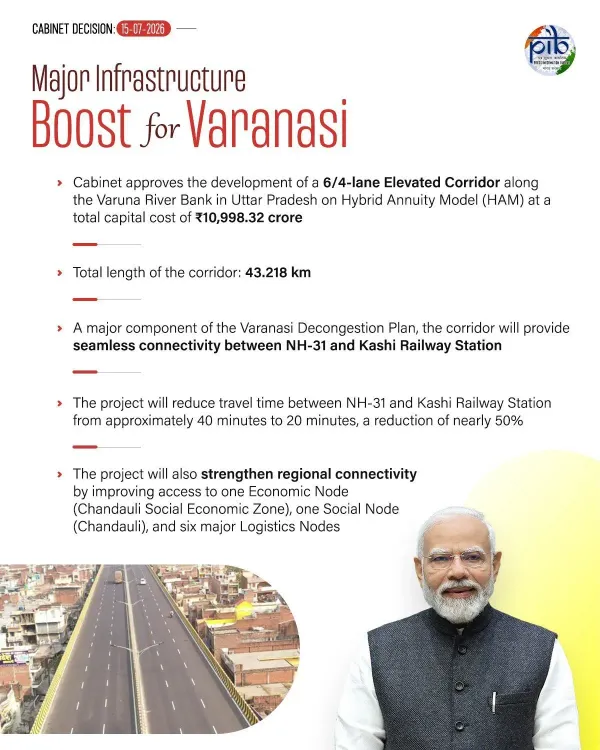
The Union Cabinet has approved a ₹10,998.32 crore, 43.218-km elevated Link/Connector Corridor in Varanasi connecting NH-31 to the Varanasi Ring Road. To be built by NHAI under the Hybrid Annuity Model, the project will halve travel time to Kashi Railway Station and improve access to the city's airports, ghats, and Chandauli region.
Key Takeaways
The Union Cabinet approved a ₹10,998.32 crore elevated corridor project for Varanasi on 15 July 2026 .
The 43.218-km Link/Connector Corridor will connect NH-31 with the Varanasi Ring Road along the River Varuna .
NHAI will develop the project under the Hybrid Annuity Model (HAM) .
The corridor is designed for speeds of 80–100 km/h and features a 6/4-lane elevated carriageway with flyovers, ramps, and service roads.
Travel time between NH-31 and Kashi Railway Station will be reduced from 40 minutes to 20 minutes .
Key nodes covered include Varanasi Airport , Varanasi Junction , Deen Dayal Upadhyaya Junction , Ramnagar Port , and the city's ghats.
Union Road Transport and Highways Minister Nitin Gadkari announced on Wednesday, 15 July 2026 that the Union Cabinet, chaired by Prime Minister Narendra Modi, has approved a ₹10,998.32 crore elevated corridor project to decongest Varanasi and strengthen its multimodal connectivity.
Context
The approved project is a 43.218-km Link/Connector Corridor that will connect NH-31 with the Varanasi Ring Road along the River Varuna. The corridor will be developed by the National Highways Authority of India (NHAI) under the Hybrid Annuity Model (HAM), a risk-sharing public-private partnership framework that has become the dominant delivery mechanism for large highway projects in India.
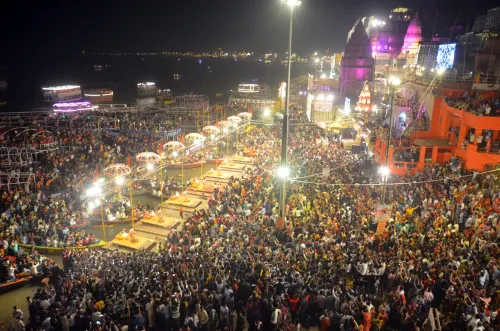
Gadkari described the project as a 'transformative infrastructure boost' for the ancient city, which has long struggled with severe traffic congestion owing to its dense urban fabric, heavy pilgrim footfall, and the convergence of multiple arterial roads near its iconic ghats.
Policy Backdrop
The corridor aligns directly with two flagship central programmes: the Bharatmala Pariyojana, announced in 2015 to develop over 34,000 km of national highways through corridor-based planning, and the PM Gati Shakti National Master Plan, launched in 2021 to integrate road, rail, port, and airport infrastructure under a single planning framework.
The Hybrid Annuity Model, introduced around 2016, was designed to revive highway construction after earlier Build-Operate-Transfer models ran into financial stress. Under HAM, the government pays 40 per cent of the project cost during construction, with the remainder recovered through annuity payments over the concession period, reducing developer risk.
Varanasi has previously been selected under the Smart Cities Mission and the HRIDAY (Heritage City Development and Augmentation Yojana) scheme, reflecting sustained central government focus on upgrading the city's infrastructure without compromising its heritage character.
Stakeholders and Impact
The corridor is designed for speeds of 80–100 km/h and will feature a predominantly elevated 6/4-lane carriageway with flyovers, ramps, loops, and service roads. According to the minister's post, travel time between NH-31 and Kashi Railway Station will be cut from 40 minutes to 20 minutes.
Key destinations linked by the project include Varanasi Airport, Kashi Railway Station, Varanasi Junction, Deen Dayal Upadhyaya Junction, Ramnagar Port, and the city's ghats, as well as the adjoining Chandauli region. The integration of these nodes is expected to improve multimodal transport, ease movement for pilgrims and tourists, and support regional economic activity for traders in Chandauli.
Varanasi receives millions of pilgrims and tourists annually, and congestion near the ghats and railway stations has historically been a persistent bottleneck. An elevated corridor bypassing surface-level traffic is expected to provide measurable relief to daily commuters and logistics operators alike.
What's Next
NHAI will now initiate the tendering process for the corridor, with land acquisition progress being a key variable in determining the construction timeline. Observers will watch for integration with the already-approved Varanasi Ring Road and the proposed multimodal hub at the airport, which together could form a comprehensive connectivity spine for the city and its hinterland.
The project reinforces a broader central government pattern of prioritising elevated corridors and ring roads in pilgrimage cities and tier-2 urban centres, using infrastructure investment as both a congestion-management tool and a driver of tourism-led economic growth.
Point of View
000 crore elevated corridor in Varanasi is consistent with the central government's strategy of channelling large-ticket infrastructure into pilgrimage and heritage cities, where congestion is both a civic problem and a constraint on tourism revenue. Varanasi's political salience — as the constituency of Prime Minister Modi — lends the project additional visibility, though the technical case for decongestion stands independently. The use of the Hybrid Annuity Model signals the government's preference for a financing structure that de-risks private developers while keeping the project on NHAI's books, a pattern that has accelerated highway delivery over the past decade. The real test will be land acquisition speed and seamless integration with the Ring Road and the proposed airport multimodal hub, which together will determine whether the corridor delivers its promised travel-time savings.
NationPress
13 Oct 2026
Frequently Asked Questions
What is the Varanasi corridor project approved by the Cabinet?
The Union Cabinet approved a 43.218-km elevated Link/Connector Corridor in Varanasi on 15 July 2026 , connecting NH-31 with the Varanasi Ring Road along the River Varuna at a cost of ₹10,998.32 crore .
Who will build the Varanasi elevated corridor?
The project will be built by the National Highways Authority of India (NHAI) under the Hybrid Annuity Model (HAM) , a public-private partnership framework where the government funds 40 per cent of costs during construction.
How will the Varanasi corridor reduce travel time?
The corridor is designed for speeds of 80–100 km/h and will cut travel time between NH-31 and Kashi Railway Station from 40 minutes to 20 minutes .
Which areas will the Varanasi corridor connect?
The corridor will improve connectivity to Varanasi Airport , Kashi Railway Station , Varanasi Junction , Deen Dayal Upadhyaya Junction , Ramnagar Port , the city's ghats, and the adjoining Chandauli region.
What is the Hybrid Annuity Model used for the Varanasi project?
The Hybrid Annuity Model (HAM) is a risk-sharing PPP framework introduced around 2016 in which the government pays 40 per cent of project costs during construction and recovers the rest through annuity payments, reducing financial risk for private developers.