Owaisi Urges Students, Especially Girls, to Complete Education
Synopsis
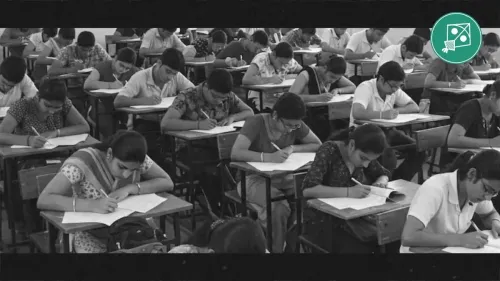
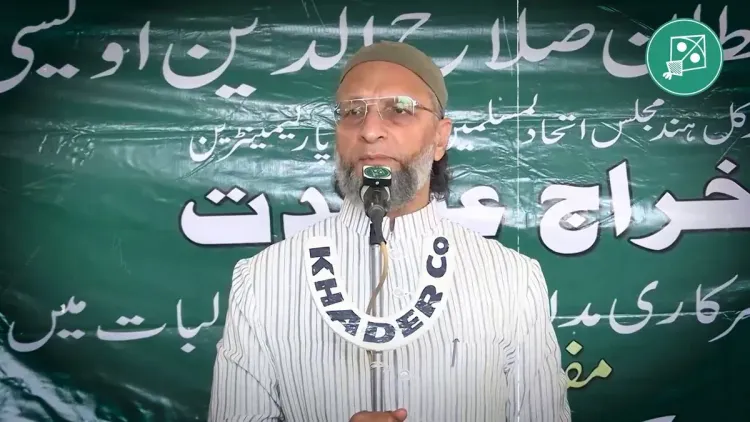
AIMIM president Asaduddin Owaisi on July 15, 2026, posted a heartfelt appeal on X urging all students — especially girls — to complete their education and pursue their dreams, reinforcing his long-standing advocacy for minority community literacy and women's empowerment.
Key Takeaways
AIMIM president Asaduddin Owaisi posted an appeal on July 15, 2026 , urging all students, especially girls, to complete their education.
The message was written in Hindustani and translates to: 'I appeal to all students, especially daughters, to definitely complete their education and fulfil their dreams.' Owaisi is the Lok Sabha MP from Hyderabad and president of AIMIM , a party with a strong base among Muslim communities.
The appeal aligns with the National Education Policy 2020 's focus on reducing dropout rates among girls from disadvantaged groups.
The central government's Beti Bachao Beti Padhao scheme (launched 2015 ) shares the same goal of improving girl-child education outcomes across India.
Owaisi has consistently raised issues of literacy and enrollment gaps for minority communities in Parliament.
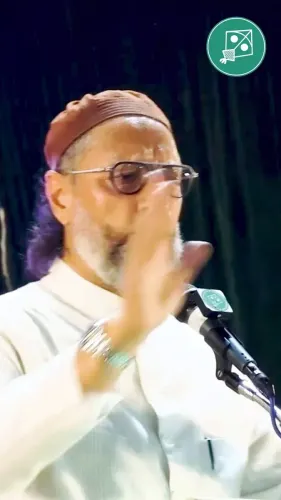
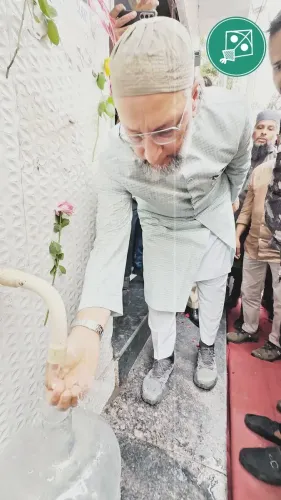
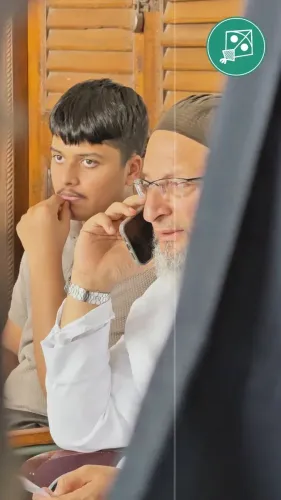
AIMIM president Asaduddin Owaisi on Wednesday, July 15, 2026, appealed to all students — with a special message for girls — to complete their education and pursue their dreams. The Hyderabad MP posted the appeal on X, urging young people not to abandon their studies.
In his post, Owaisi wrote in Hindustani: 'Main tamam students khaas kar betiyo'n se appeal karta hoo'n ki wo apni taleem zaroor mukammal karein aur apne khwaabo'n ko poora karein' — 'I appeal to all students, especially daughters, to definitely complete their education and fulfil their dreams.'
Context
Owaisi has consistently framed the completion of education — particularly for Muslim girls — as a cornerstone of community progress. His appeal uses the word taleem (education) and khwaab (dreams), language that carries resonance in Urdu-speaking communities where first-generation learners, especially girls, often face social and economic pressure to discontinue schooling.
The AIMIM president represents Hyderabad, a constituency with a significant Muslim population, and has repeatedly raised issues of literacy and enrollment gaps for minority communities in Parliament.
Policy Backdrop
The appeal comes against the backdrop of the National Education Policy 2020, which sets targets for universal access to schooling with specific emphasis on girls and socio-economically disadvantaged groups. The policy mandates measures to reduce dropout rates at the secondary level, where girls from marginalised communities face the highest attrition.
The central government's Beti Bachao Beti Padhao scheme, launched in 2015, similarly aims to improve the child sex ratio and promote girl-child education across India. State-level implementation of such schemes has shown uneven results, with several states still reporting significant gaps in secondary and higher secondary enrollment among minority girls.
Stakeholders and Impact
Girl students and Muslim youth are the primary audience of Owaisi's message. Advocacy voices and community educators have long noted that social expectations, early marriage, and economic constraints are among the leading causes of dropout among girls in minority-concentrated districts.
Owaisi's platform as a sitting Lok Sabha MP and the president of the All India Majlis-e-Ittehadul Muslimeen (AIMIM) — a party established in 1958 with a strong base in Hyderabad and select other states — gives such appeals an institutional weight beyond a personal statement. Community organisations working on girls' education have frequently cited political reinforcement as critical to shifting local attitudes toward female schooling.
What's Next
Attention will now turn to whether this appeal is followed by concrete parliamentary action, such as pushing for increased budgetary allocation for minority scholarship schemes or raising dropout statistics in the upcoming session. State-level implementation reports on girls' secondary education programmes are expected to provide the next data point on whether enrollment and retention are improving in minority communities. Owaisi's consistent advocacy on this issue suggests further legislative and public engagement on the subject ahead.
Point of View
Particularly for girls, is non-negotiable. The choice of Hindustani rather than English widens the reach to the very audience most likely to be affected by dropout pressures. Placed against the backdrop of the National Education Policy 2020 and persistent enrollment gaps in minority-concentrated districts, the message carries policy urgency beyond its motivational tone. Whether it translates into parliamentary action on scholarship funding or dropout-prevention schemes will be the real measure of its impact.
NationPress
14 Oct 2026
Frequently Asked Questions
What did Asaduddin Owaisi say about girls' education?
Owaisi appealed to all students, especially girls, to complete their education and fulfil their dreams, posting the message in Hindustani on X on July 15, 2026.
Why does Owaisi focus on Muslim girls' education?
As AIMIM president and Hyderabad MP, Owaisi has consistently highlighted literacy and enrollment gaps among Muslim girls, framing education completion as central to community progress.
What is the Beti Bachao Beti Padhao scheme?
Beti Bachao Beti Padhao is a central government initiative launched in 2015 to improve the child sex ratio and promote education of the girl child across India.
What does the National Education Policy 2020 say about girls' education?
The NEP 2020 sets targets for universal access to schooling with specific emphasis on girls and socio-economically disadvantaged groups, and mandates measures to reduce dropout rates at the secondary level.