CM Dhami Holds Public Hearing in Gopeshwar, Orders Time-Bound Redressal
Synopsis
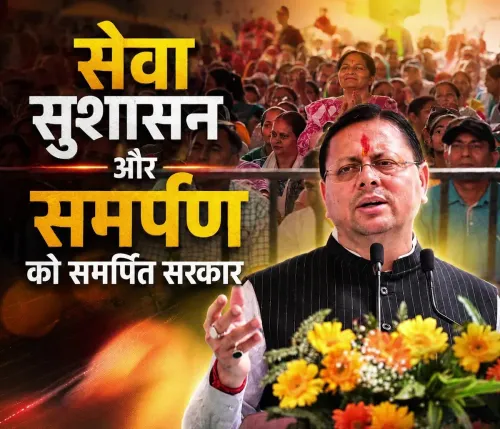
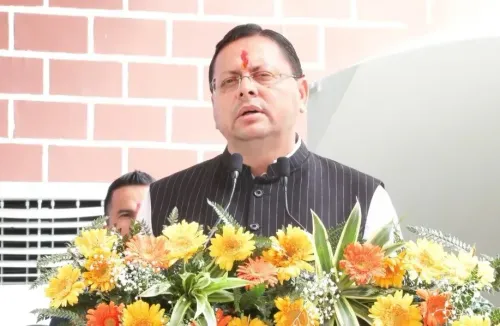
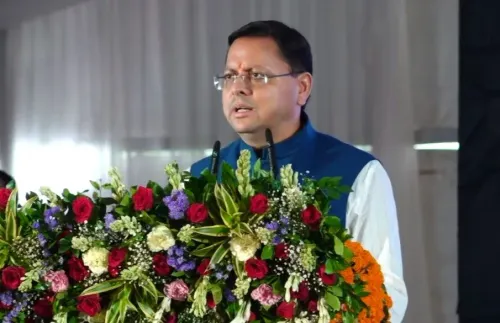
Uttarakhand Chief Minister Pushkar Singh Dhami attended the 'Jan-Jan Ki Sarkar, Jan-Jan Ke Dwar' public hearing in Gopeshwar, Chamoli on 15 July 2026, listening to citizen grievances and ordering officials to deliver swift, time-bound resolutions in the remote Himalayan district.
Key Takeaways
CM Pushkar Singh Dhami held a public grievance session in Gopeshwar, Chamoli on 15 July 2026 under the 'Jan-Jan Ki Sarkar, Jan-Jan Ke Dwar' programme.
The Chief Minister personally heard complaints from ordinary citizens and directed officials to resolve them quickly, effectively, and within a fixed timeframe.
Gopeshwar is the headquarters of Chamoli district , a remote Himalayan area with longstanding public service delivery challenges.
The programme is part of a broader BJP governance model emphasising Sushasan (good governance) and direct administrative accountability in hill states.
Similar public outreach programmes are expected to be organised in other Uttarakhand districts, with follow-up review meetings planned for Chamoli .
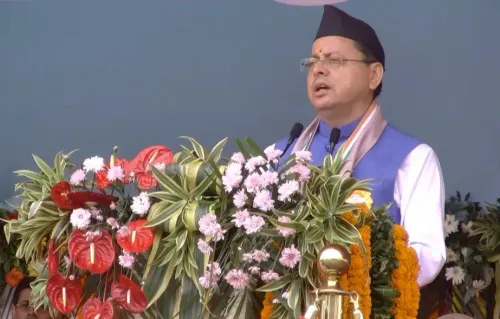
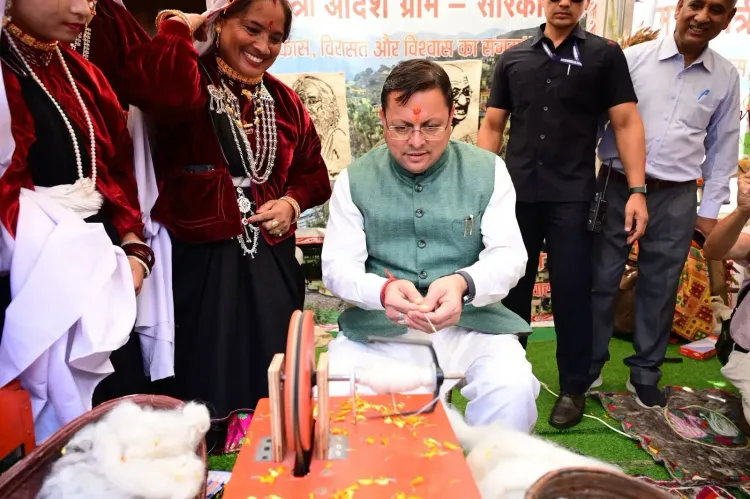
Uttarakhand Chief Minister Pushkar Singh Dhami attended the 'Jan-Jan Ki Sarkar, Jan-Jan Ke Dwar' public outreach programme in Gopeshwar, Chamoli district, on 15 July 2026, listening to grievances from ordinary citizens and directing concerned officials to resolve them swiftly, effectively, and within a fixed timeframe.
Context
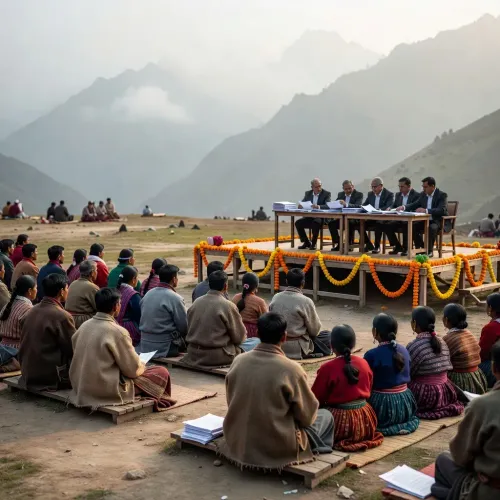
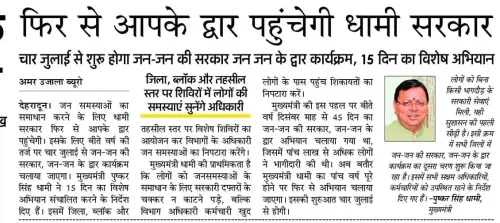
The programme, whose name translates as 'Jan-Jan Ki Sarkar, Jan-Jan Ke Dwar' ('A government for every person, at the doorstep of every person'), is a structured public-hearing initiative under which CM Dhami travels to districts across Uttarakhand to receive citizen complaints directly. Gopeshwar, the headquarters of Chamoli district, is a remote Himalayan town where geographical barriers have historically made access to government services difficult for residents of surrounding villages.
At the event, Dhami heard problems raised by members of the public and issued on-the-spot instructions to the relevant district officials, emphasising that resolutions must be quick, effective, and time-bound — the three criteria the Chief Minister has repeatedly cited in similar outreach events.
Policy Backdrop
Uttarakhand governments have organised Chief Minister-level public hearings and Janata Darbars since at least 2017 as a tool to bridge the gap between the state administration and citizens living in geographically isolated hill districts. The 'Jan-Jan Ki Sarkar, Jan-Jan Ke Dwar' format consolidates that tradition into a branded, recurring programme under the current administration.
The initiative aligns with the BJP's broader emphasis on 'Sushasan' (good governance) and mirrors similar direct-outreach mechanisms adopted by state governments in other Himalayan and north-eastern states, where terrain makes routine administrative access challenging. By placing the Chief Minister physically in a district headquarters, the model is designed to compress the grievance-to-resolution cycle that would otherwise stretch across multiple bureaucratic layers.
Stakeholders and Impact
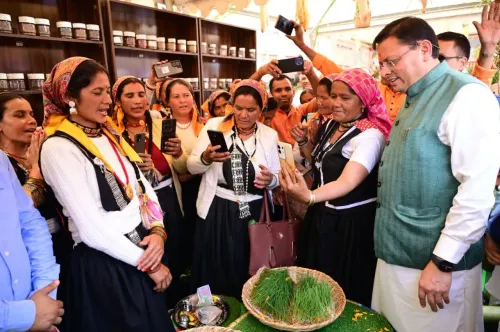
The primary beneficiaries of the Gopeshwar hearing are rural residents of Chamoli district — farmers, daily-wage workers, and families seeking action on land, infrastructure, welfare, and public utility complaints. District administration officials are the key implementing actors, now bound by the Chief Minister's directive to act within a defined timeline.
For the broader Uttarakhand administration, the programme serves as a real-time accountability check: grievances aired directly before the CM create a visible record that officials are expected to act on, reducing the likelihood of complaints being shelved at lower levels of the bureaucracy.
What's Next
Follow-up district-level review meetings are expected to track the status of grievances collected during the Chamoli session. The Dhami government has signalled that similar 'Jan-Jan Ki Sarkar, Jan-Jan Ke Dwar' events will be held across other districts of Uttarakhand, extending the direct-outreach model to constituencies with comparable service-delivery challenges.
The effectiveness of the programme will ultimately be measured by the proportion of grievances resolved within the timeframes set by the Chief Minister — a metric that district administrations across the state will be under pressure to demonstrate.
Point of View
Jan-Jan Ke Dwar' programme represents a deliberate effort by the Dhami administration to personalise governance in a state where rugged terrain has long insulated district bureaucracies from direct accountability. By placing the Chief Minister at the centre of grievance redressal, the model creates political visibility around administrative delivery — a format that BJP-governed hill and north-eastern states have increasingly adopted as a counterweight to the perception of remote, unresponsive governance. The real test, however, lies not in the hearing itself but in the follow-up: whether time-bound directives translate into measurable resolution rates at the district level. If the programme yields verifiable outcomes in Chamoli, it is likely to become a template replicated across all thirteen districts of Uttarakhand ahead of the state's political cycle.
NationPress
14 Oct 2026
Frequently Asked Questions
What is the 'Jan-Jan Ki Sarkar, Jan-Jan Ke Dwar' programme in Uttarakhand?
'Jan-Jan Ki Sarkar, Jan-Jan Ke Dwar' is a public grievance redressal programme under which Uttarakhand Chief Minister Pushkar Singh Dhami travels to districts across the state to personally hear citizen complaints and direct officials to resolve them in a time-bound manner.
Where did CM Dhami hold the public hearing on 15 July 2026?
CM Dhami held the public hearing in Gopeshwar, the headquarters of Chamoli district in Uttarakhand, on 15 July 2026.
What did CM Dhami instruct officials at the Gopeshwar event?
CM Dhami instructed the concerned district officials to resolve the grievances raised by citizens in a quick, effective, and time-bound manner.
Why is Chamoli district significant for governance outreach in Uttarakhand?
Chamoli is a remote Himalayan district where difficult terrain has historically limited residents' access to government services, making direct outreach programmes by senior officials especially important for addressing public complaints.
Will similar public hearings be held in other Uttarakhand districts?
Yes, the Dhami government has indicated that 'Jan-Jan Ki Sarkar, Jan-Jan Ke Dwar' events are planned for other districts of Uttarakhand, with follow-up review meetings also expected in Chamoli to track the status of grievances collected.