CM Dhami Pushes 'Jan-Jan Ki Sarkar' Governance Drive
Synopsis
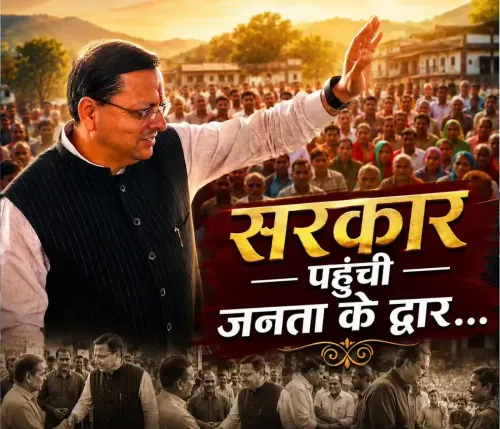
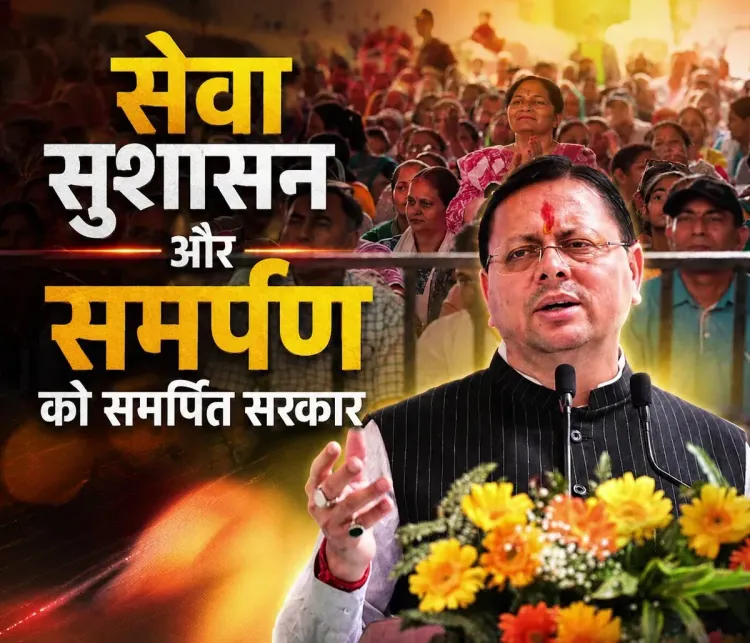
Uttarakhand Chief Minister Pushkar Singh Dhami on 11 July 2026 highlighted the 'Jan-Jan Ki Sarkar, Jan-Jan Ke Dwar' programme, calling it a powerful medium to deliver service, good governance, and public dedication to every citizen in the state.
Key Takeaways
CM Pushkar Singh Dhami publicly reaffirmed the 'Jan-Jan Ki Sarkar, Jan-Jan Ke Dwar' programme on 11 July 2026 via his official X account.
The programme aims to carry the values of service, good governance (sushasan), and public dedication (jan-samarpan) to every citizen's doorstep.
The initiative is consistent with the Dhami government 's governance approach since March 2021 , which has included e-district services and grievance portals.
Uttarakhand 's remote Himalayan and border districts stand to benefit most from improved doorstep service delivery.
The programme mirrors BJP -governed state models in Madhya Pradesh , Rajasthan , and Chhattisgarh that combine physical outreach camps with digital platforms.
District-level rollout results and an Uttarakhand Assembly review are expected to be key benchmarks for the programme's impact.
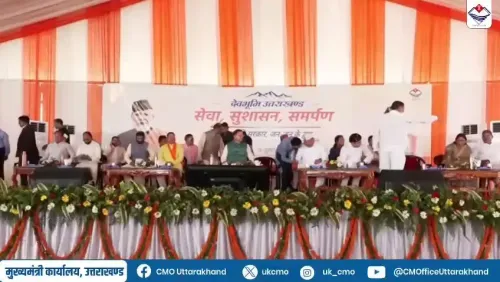
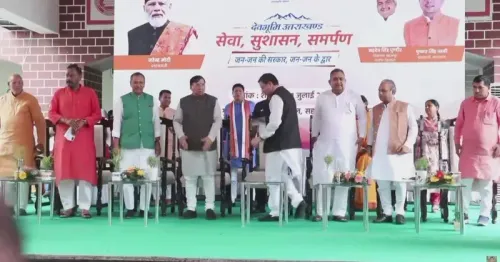
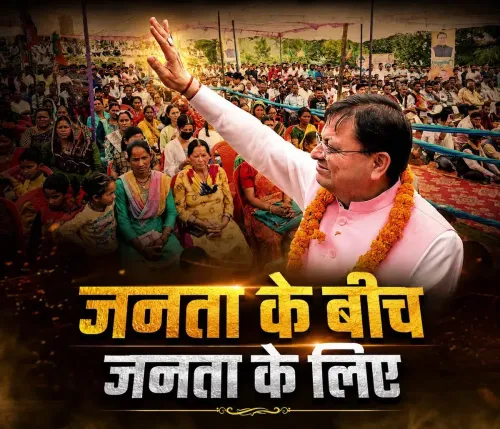
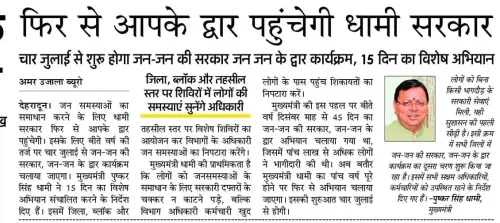
Uttarakhand Chief Minister Pushkar Singh Dhami on Saturday, 11 July 2026, reaffirmed his government's commitment to doorstep service delivery through the 'Jan-Jan Ki Sarkar, Jan-Jan Ke Dwar' programme, describing it as a powerful vehicle for reaching every citizen with the values of service, good governance, and public dedication.
Context
In his post on X, CM Dhami wrote: 'जन-जन की सरकार, जन-जन के द्वार' ['A government for every person, at the doorstep of every person'], calling the programme a 'strong medium' (sashakt madhyam) for carrying the government's resolve of service, good governance (sushasan), and dedication to the public (jan-samarpan) to each and every citizen. The statement underscores the Dhami administration's continued emphasis on making state services accessible to residents across Uttarakhand, including in its remote Himalayan and border districts.
The programme's name encapsulates a dual promise: a government that belongs to the people, and a government that comes to the people's doors. This framing aligns with the broader administrative philosophy the BJP-led state government has championed since CM Dhami first took office in March 2021.
Policy Backdrop
Since assuming office, the Dhami government has consistently positioned sushasan (good governance) as a cornerstone of its administrative identity, promoting e-district services, grievance redressal portals, and citizen outreach camps. The 'Jan-Jan Ke Dwar' initiative fits within this lineage, extending the principle of responsive governance from digital platforms to physical, on-ground delivery.
Across BJP-governed states, doorstep service programmes backed by Hindi slogans have become a recognisable governance template since 2015, combining field camps with digital infrastructure. Comparable models have been deployed in Madhya Pradesh, Rajasthan, and Chhattisgarh. The emphasis on jan-samarpan (dedication to the public) also echoes national-level messaging around schemes such as Antyodaya and Digital India, which seek to bring the last-mile citizen into the fold of government services.
Stakeholders and Impact
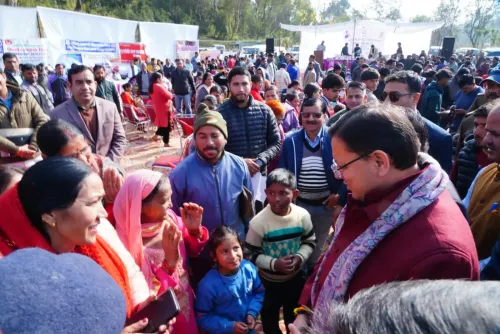
The primary beneficiaries of the programme are Uttarakhand's residents, with particular relevance for rural and semi-urban populations in the state's hilly terrain, where physical access to government offices has historically been a challenge. For citizens in border districts adjoining China and Nepal, improved service delivery has both developmental and strategic significance.
Civil society groups and local governance bodies are key intermediaries in rolling out such programmes. Their capacity to mobilise at the district and block level will determine whether the initiative translates from political messaging into measurable administrative outcomes for ordinary citizens.
What's Next
Attention will now turn to district-level implementation reports and any structured review of the programme's progress, potentially during the next session of the Uttarakhand Legislative Assembly. The government's ability to demonstrate tangible service-delivery metrics — such as grievances resolved, services delivered at doorstep, and citizen satisfaction data — will be critical to sustaining the programme's credibility beyond its launch messaging.
As Uttarakhand prepares for future electoral cycles, governance-delivery programmes of this nature are likely to remain central to the BJP's political narrative in the state, with 'Jan-Jan Ki Sarkar, Jan-Jan Ke Dwar' serving as a visible symbol of that commitment.
Point of View
Jan-Jan Ke Dwar' is less a policy announcement than a political positioning exercise, reinforcing the BJP's 'government at your doorstep' brand ahead of future electoral cycles in Uttarakhand. The programme fits a well-established template across BJP-ruled states where Hindi slogans anchor governance outreach, blending administrative intent with party messaging. The real test will lie in measurable delivery outcomes — grievances resolved, services rendered — rather than the resonance of the slogan itself. For a Himalayan state with significant geographic barriers, closing the last-mile service gap remains both a governance imperative and a political opportunity.
NationPress
10 Oct 2026
Frequently Asked Questions
What is the 'Jan-Jan Ki Sarkar, Jan-Jan Ke Dwar' programme in Uttarakhand?
'Jan-Jan Ki Sarkar, Jan-Jan Ke Dwar' is an Uttarakhand government initiative aimed at delivering public services and governance directly to citizens' doorsteps, with a focus on service, good governance, and public dedication. CM Pushkar Singh Dhami described it as a powerful medium to reach every citizen in the state.
What did CM Pushkar Singh Dhami say about the Jan-Jan Ke Dwar programme?
On 11 July 2026, CM Dhami posted on X calling the programme a 'strong medium' for carrying the government's resolve of service, good governance (sushasan), and public dedication (jan-samarpan) to each and every citizen of Uttarakhand.
How does the Jan-Jan Ke Dwar programme compare to other BJP state schemes?
The programme follows a pattern seen in BJP-governed states like Madhya Pradesh, Rajasthan, and Chhattisgarh since 2015, combining physical outreach camps with digital portals to deliver services at the grassroots level under a catchy Hindi slogan.
Who benefits from the Jan-Jan Ki Sarkar initiative in Uttarakhand?
All Uttarakhand residents are the intended beneficiaries, with particular focus on rural and remote populations in the state's hilly terrain and border districts adjoining China and Nepal, where access to government offices has historically been difficult.
What is CM Pushkar Singh Dhami's governance record in Uttarakhand?
Pushkar Singh Dhami has served as Chief Minister of Uttarakhand since March 2021 and has emphasised administrative reforms including e-district services, grievance redressal portals, and sushasan (good governance) as hallmarks of his administration.