Owaisi Slams Assam UCC: Tribal Exemption Exposes Selective Law
Synopsis
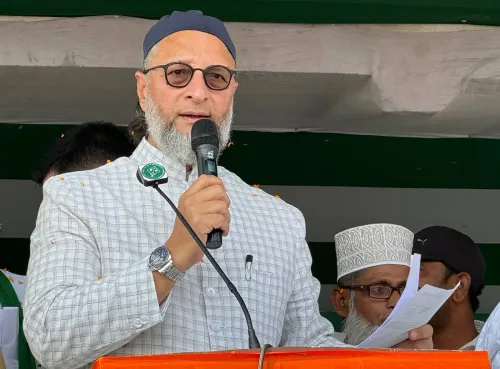
AIMIM president Asaduddin Owaisi on 25 May 2026 attacked the Assam Uniform Civil Code, arguing its tribal exemptions expose a selective application and its will provisions could let daughters be stripped of inheritance — making it neither uniform nor gender-just.
Key Takeaways
Owaisi posted on 25 May 2026 criticising the Assam Uniform Civil Code for exempting tribal communities while applying new rules to others.
He invoked Article 29 to argue all communities deserve cultural protection, not just tribes, and cited Article 44 to note the Constituent Assembly never intended a mandatory UCC.
Under Muslim personal law , no heir can be excluded from inheritance; Owaisi contends the Assam UCC's testamentary will provisions create a loophole that could deny daughters their share.
Assam's approach mirrors Uttarakhand's 2024 UCC , which also included tribal carve-outs under Sixth Schedule and Article 371 protections.
Legal challenges before the Gauhati High Court or Supreme Court are anticipated as the debate over selective uniformity intensifies.
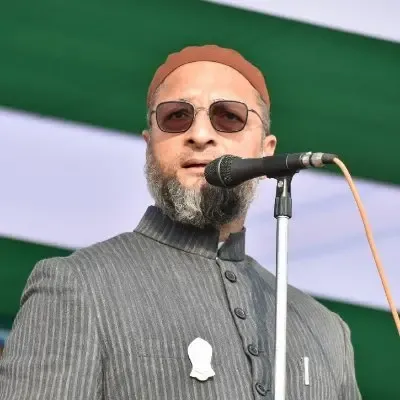
AIMIM president Asaduddin Owaisi on Monday, 25 May 2026, sharply criticised the Assam Uniform Civil Code, arguing it is neither uniform nor gender-just — pointing to its blanket exemption for tribal communities and provisions that he says allow daughters to be disinherited through testamentary wills.
Context
Owaisi's post targets what he calls a fundamental contradiction in the Assam UCC: a law marketed as uniform personal legislation that carves out entire communities. 'The Assam Uniform Civil Code is not uniform at all. It completely exempts tribal communities from UCC's coverage,' he wrote, adding that while every community holds the right to protect its culture under Article 29 of the Constitution, the selective protection of only tribal autonomy raises serious questions of equal treatment.
The AIMIM leader also invoked the intent of India's framers: 'The constituent assembly did not envision a mandatory UCC.' This is a reference to Article 44, which places a Uniform Civil Code under the Directive Principles of State Policy — aspirational guidance, not a compulsory mandate.
Policy Backdrop
Article 44 of the Constitution of India (1950) directs the state to 'endeavour to secure' a UCC, but the Constituent Assembly debates of 1948 recorded significant opposition to making such a code compulsory, precisely because of India's religious and customary diversity. The provision was deliberately placed outside the enforceable Fundamental Rights chapter.
Uttarakhand enacted India's first state-level UCC in 2024, which also included limited carve-outs for tribal and customary-law communities. Assam's proposal follows a similar pattern seen in BJP-governed states, where Scheduled Tribe exemptions — often grounded in the Sixth Schedule and Article 371 protections — coexist with new rules applied to other religious communities.
Critics, including opposition leaders and minority representatives, argue this approach produces a 'selective uniformity' that disproportionately impacts Muslim personal law while leaving tribal customary practices untouched — an inconsistency Owaisi has now placed at the centre of the debate.
Inheritance and Gender Justice
Owaisi raised a pointed objection about inheritance rights for women. 'In Islam, no one can exclude an heir from inheritance. No one can write a will to give their whole property to one son or deny their daughter inheritance,' he stated, contrasting this with what he described as a loophole in the Assam UCC: 'This UCC allows anyone to write a will and deny their daughters their fair share.'
His argument reframes the gender-justice narrative that UCC proponents typically advance. Rather than a step forward for women, he contends the Assam law could actually weaken daughters' inheritance protections that currently exist under Muslim personal law. The claim underscores a broader tension: whether a codified UCC improves or erodes specific protections for women depending on which community's existing rules are used as the baseline.
Stakeholders and Impact
Muslim communities across Assam — a state with one of India's largest Muslim populations — are the most directly affected by the proposed code, given that tribal communities are explicitly exempt. Women heirs from non-tribal communities stand at the centre of the inheritance debate Owaisi has raised.
Tribal communities, protected under the Sixth Schedule in Assam, retain their customary laws on marriage, divorce and property. Opposition parties and civil society groups in the Northeast have flagged that this dual-track structure contradicts the stated rationale of uniform application.
What's Next
Legal challenges before the Gauhati High Court or the Supreme Court of India are widely anticipated, with petitioners likely to contest both the selective exemptions and the inheritance provisions. Other northeastern states with substantial tribal populations are watching Assam's legislative path closely before deciding whether to advance their own UCC proposals.
Owaisi's intervention signals that the UCC debate will remain a live political and constitutional fault line well into the legislative calendar, with minority representatives, tribal rights advocates and women's groups staking out competing positions on what 'uniformity' should actually mean in a diverse democracy.
Point of View
Reframing the UCC debate away from the standard minority-rights objection and toward an internal consistency argument — if uniformity is the goal, tribal exemptions undermine the entire premise. His inheritance argument is particularly sharp: by highlighting that the new code could weaken daughters' rights relative to Muslim personal law, he attempts to neutralise the gender-justice rationale that BJP governments have used to build public support for UCC. The selective-uniformity pattern visible across Uttarakhand and now Assam suggests that state-level UCC rollouts are calibrated to avoid Sixth Schedule and Article 371 friction, which may invite constitutional scrutiny on equal-protection grounds. The broader arc is a deepening contest over whether India's personal-law reform is driven by genuine gender equity or by majoritarian legal consolidation dressed in the language of uniformity.
NationPress
9 Oct 2026
Frequently Asked Questions
What is the Assam Uniform Civil Code and why is it controversial?
The Assam Uniform Civil Code is a proposed state law that would replace religion-specific personal laws on marriage, divorce and inheritance with a single code — but it exempts tribal communities, which critics say makes it selectively applied rather than truly uniform.
Why did Owaisi say the Assam UCC is not gender-just?
Owaisi argued that under Muslim personal law daughters cannot be excluded from inheritance, whereas the Assam UCC's will provisions could allow a person to write a will giving all property to one son and denying daughters their share, weakening rather than strengthening women's rights.
What does Article 44 of the Indian Constitution say about UCC?
Article 44 is a Directive Principle that asks the state to 'endeavour to secure' a Uniform Civil Code; it is not enforceable as a Fundamental Right and the Constituent Assembly deliberately made it aspirational rather than mandatory.
Why are tribal communities exempted from the Assam UCC?
Tribal communities in Assam are protected under the Sixth Schedule of the Constitution and Article 371 provisions, which safeguard customary laws; state-level UCC proposals in BJP-governed states have consistently included such carve-outs to avoid constitutional conflict.
Which was India's first state to pass a Uniform Civil Code?
Uttarakhand became the first Indian state to enact a UCC in 2024; like the Assam proposal, it included limited exemptions for tribal and customary-law communities.