Assam UCC Bill: Owaisi calls it 'backdoor Hindu law' imposition on Muslims
Synopsis
Owaisi’s attack on the Assam UCC Bill cuts to its central contradiction: a law called ‘uniform’ that exempts tribal communities while binding Muslims. His inheritance argument — that the bill lets families disinherit daughters, which Islamic law forbids — reframes the debate from religion vs. secularism to women’s rights vs. religious autonomy, complicating the BJP’s own gender-justice framing of the legislation.
Key Takeaways
AIMIM chief Asaduddin Owaisi criticised the Assam UCC Bill on 25 May , calling it a ‘backdoor imposition of Hindu law on Muslims.’ Owaisi highlighted that tribal communities are exempted from the UCC while Muslims and others must comply, calling the law ‘not uniform at all.’ He argued the bill’s inheritance provisions conflict with Islamic law , which prohibits excluding heirs or denying daughters their share.
The BJP -led Assam government maintains the bill ensures equality and legal uniformity across communities.
Assam follows Uttarakhand as one of the first states to advance a UCC framework, setting a potential precedent for other states.
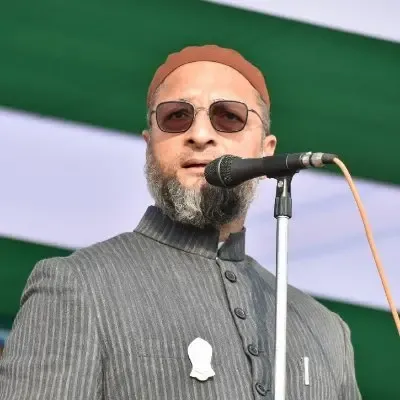
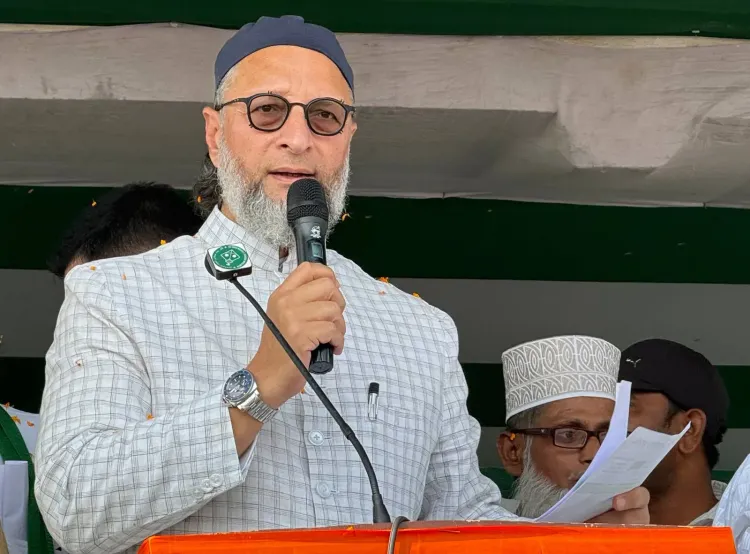
AIMIM chief Asaduddin Owaisi on Monday, 25 May launched a sharp attack on the Assam Uniform Civil Code (UCC) Bill tabled in the state Assembly, alleging the legislation was discriminatory and amounted to a “backdoor imposition of Hindu law on Muslims.” Owaisi, the Hyderabad MP and leader of the All India Majlis-e-Ittehadul Muslimeen (AIMIM), posted his criticism directly on X, drawing immediate attention to the bill’s rollout in Guwahati.
Why Owaisi Calls It ‘Not Uniform’
The AIMIM chief’s central argument is one of selective application. He pointed out that tribal communities in Assam have been explicitly exempted from the UCC’s provisions, while Muslims and other non-tribal groups would be required to comply. “The Assam Uniform Civil Code is not uniform at all. It completely exempts tribal communities from UCC’s coverage. Every community has the right to protect its culture under Article 29, but why is only the tribals’ autonomy being protected?” he said.
This exemption, Owaisi argued, exposes a structural inconsistency at the heart of the bill — one that critics say undermines the very premise of uniformity that the legislation claims to uphold.
Concerns Over Inheritance and Islamic Law
Owaisi raised specific objections over inheritance provisions, contending that the proposed code conflicts with Islamic principles governing succession and property rights. “In Islam, no one can exclude an heir from inheritance. No one can write a will to give their whole property to one son or deny their daughter inheritance. This UCC allows anyone to write a will and deny their daughters their fair share. This is far from a gender-just law,” he said.
The AIMIM leader went further, alleging that in matters of succession, inheritance, and divorce, Hindu legal principles were being selectively imposed. “This is a backdoor imposition of Hindu law on Muslims. In matters of succession, inheritance, and divorce, Hindu principles are being imposed. Only Hindu culture is being protected, while Muslims have to comply with these so-called ‘uniform’ rules,” he added.
Constitutional and Historical Arguments
Beyond the specific provisions, Owaisi argued that the bill lacks both public support and constitutional intent. He maintained that the framers of India’s Constitution had never envisioned a mandatory UCC. “The Constituent Assembly did not envision a mandatory UCC,” he stated, invoking the Directive Principles debate that has long shaped this contentious issue.
This argument echoes a long-standing position among UCC critics — that Article 44 of the Constitution, which mentions a uniform civil code, was placed under Directive Principles rather than Fundamental Rights precisely to signal aspiration, not obligation.
Government’s Position and Political Fallout
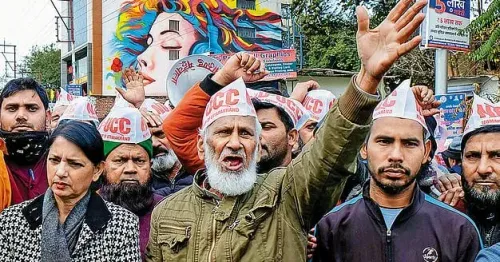
The Bharatiya Janata Party (BJP)-led Assam government tabled the UCC Bill on the same day, asserting that the legislation aims to ensure equality and legal uniformity across communities in the state. The tabling triggered sharp reactions from opposition parties and minority organisations, with Owaisi’s post amplifying the criticism nationally.
Assam becomes one of the first states after Uttarakhand to advance a UCC framework, making its legislative journey closely watched by both supporters and opponents of the policy. How the bill navigates the Assembly — and any subsequent legal challenge — will set a significant precedent for other BJP-governed states considering similar legislation.
Point of View
And the tribal exemption alone could give the Supreme Court grounds to remand it.
NationPress
23 Sept 2026
Frequently Asked Questions
What is the Assam Uniform Civil Code Bill?
The Assam UCC Bill is a proposed legislation tabled in the Assam Assembly on 25 May 2025 by the BJP-led state government, aimed at establishing a uniform set of civil laws governing marriage, inheritance, succession, and divorce across communities in the state. It makes Assam one of the first states after Uttarakhand to advance such a framework.
Why is Owaisi opposing the Assam UCC Bill?
Owaisi argues the bill is not truly uniform because it exempts tribal communities while requiring Muslims and others to comply. He also contends that its inheritance provisions conflict with Islamic law and effectively impose Hindu legal principles on Muslim personal matters.
Which communities are exempt from the Assam UCC?
According to Owaisi’s critique, tribal communities in Assam have been kept outside the UCC’s ambit. The Assam government has not publicly detailed the full scope of exemptions as of the bill’s tabling.
How does the Assam UCC affect inheritance rights under Islamic law?
Owaisi argues that the bill allows individuals to write wills that could exclude heirs or deny daughters their inheritance — provisions he says directly contradict Islamic succession principles, which prohibit such exclusions.
What precedent does the Assam UCC set for other states?
Assam follows Uttarakhand as one of the first states to table a UCC Bill, and its legislative and legal journey is being closely watched. If it passes and withstands judicial challenge, it could encourage other BJP-governed states to introduce similar legislation.