Assam UCC Bill: TMC's Sherman Ali Ahmed walks out, cites 'malicious intent'
Synopsis
The lone Trinamool Congress MLA in the Assam Assembly walked out of UCC Bill proceedings, calling it 'malicious' — but his objections go deeper than politics. His challenge to the tribal exemption exposes a core contradiction in a law that claims to be 'uniform' while carving out entire communities from its scope.
Key Takeaways
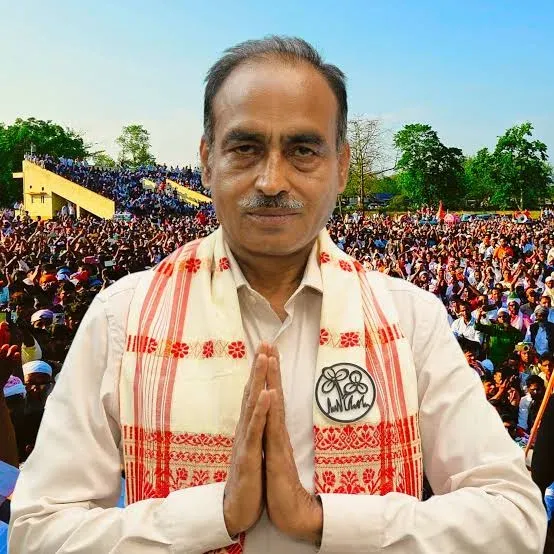
Sherman Ali Ahmed , the lone Trinamool Congress MLA in the Assam Assembly , walked out on 27 May 2025 during the UCC Bill debate.
Ahmed accused the BJP-led NDA government of introducing the Bill with 'malicious intention.' He objected to the exclusion of Scheduled Tribes in Assam from the Bill's ambit, calling it a contradiction of the 'uniform' principle.
The Bill proposes banning polygamy , with penalties of up to 7 years' imprisonment for bigamy-related offences.
Failure to register a live-in relationship under the proposed law could attract up to 3 months' imprisonment .
Ahmed said he was initially willing to support the UCC but insisted that wider consultations were needed first.
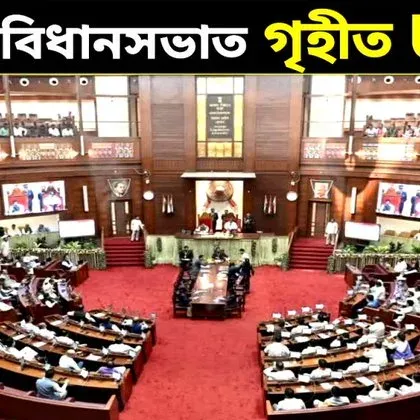
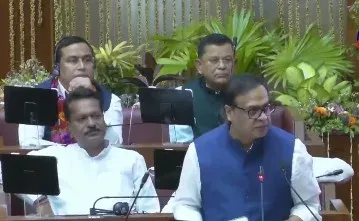
Trinamool Congress legislator Sherman Ali Ahmed, the lone TMC member in the Assam Assembly, staged a walk-out on Wednesday, 27 May during the debate on the proposed Uniform Civil Code (UCC) Bill, accusing the BJP-led NDA government of introducing the legislation with what he called a 'malicious intention.' The dramatic exit came midway through the ongoing Assembly session, drawing attention to deepening opposition to the Bill on both constitutional and religious grounds.
What Ahmed Said on the Floor
Ahmed acknowledged agreeing with select provisions of the draft legislation — specifically the fixing of a minimum age for marriage and the introduction of legal regulations for live-in relationships. However, he objected sharply to other clauses, arguing they violated constitutional safeguards and religious principles.
'The government has brought this Bill with malicious intention, and as a mark of protest, I am walking out of the House,' Ahmed declared before leaving the chamber.
Key Objections: Tribal Exclusion and Fundamental Rights
One of Ahmed's central objections concerned the exclusion of Scheduled Tribes residing in Assam from the proposed law's ambit. He argued that such carve-outs fundamentally undermined the concept of a 'uniform' code. 'If the law is truly uniform, then why are tribals being excluded?' he asked during his address.
He further contended that the government could not enact a law violating Fundamental Rights by seeking shelter under the Directive Principles of State Policy, and that no electoral mandate could override constitutional provisions.
Religious Provisions Under Scrutiny
Ahmed also raised concerns over clauses he said conflicted with Islamic teachings on marriage, asserting that principles in the Quran were often 'misinterpreted' in public discourse. 'The Quran and what is written in it are paramount and should not be violated,' he said. He maintained that while he was initially willing to support the UCC in principle, wider consultations were necessary before any such legislation could be implemented.
What the Assam UCC Bill Proposes
The Assam government tabled the UCC Bill on Monday, 26 May, proposing a common civil framework governing marriage, divorce, inheritance, succession, and live-in relationships, irrespective of religion. The Bill seeks to ban polygamy and make registration of live-in relationships mandatory.
Under the draft legislation, offences related to bigamy or polygamy could attract punishment of up to seven years' imprisonment, while failure to register a live-in relationship may invite a jail term of up to three months. This comes amid a broader national conversation on UCC implementation, with Uttarakhand having already enacted its own version of the code.
What Comes Next
The Bill is expected to face continued debate in the Assembly session, with opposition members likely to press for amendments addressing the tribal exemption and religious-liberty concerns. Whether the ruling NDA bloc has the numbers and political will to pass it in its current form remains to be seen.
Point of View
But his tribal-exclusion argument is substantive and unlikely to go away. A code that exempts Scheduled Tribes — a politically sensitive and constitutionally protected group — while imposing uniform rules on religious minorities creates a structural asymmetry that courts may eventually scrutinise. The BJP's push for UCC in Assam also carries electoral calculus: the state has a significant Muslim population and tribal constituencies that do not overlap neatly. Passing a bill that is 'uniform in name only' risks inviting both legal challenge and political blowback, particularly if the opposition consolidates around the exemption question rather than the religious one.
NationPress
19 Sept 2026
Frequently Asked Questions
Why did TMC MLA Sherman Ali Ahmed walk out of the Assam Assembly?
Sherman Ali Ahmed walked out during the debate on the Assam UCC Bill on 27 May 2025, accusing the BJP-led NDA government of introducing the legislation with 'malicious intention.' He objected to clauses he said violated Fundamental Rights and religious principles, and raised concerns about the exclusion of Scheduled Tribes from the Bill's scope.
What does the Assam UCC Bill propose?
The Assam Uniform Civil Code Bill proposes a common legal framework for marriage, divorce, inheritance, succession, and live-in relationships, applicable irrespective of religion. It seeks to ban polygamy and make registration of live-in relationships mandatory, with penalties of up to seven years' imprisonment for bigamy-related offences.
Why is the tribal exclusion in the Assam UCC Bill controversial?
Ahmed and other critics argue that exempting Scheduled Tribes from the UCC undermines the very concept of a 'uniform' civil code. If the law does not apply equally to all communities, they contend, it cannot be called uniform — a contradiction that could also face constitutional scrutiny.
What is the punishment for polygamy under the proposed Assam UCC Bill?
Under the draft Bill, offences related to bigamy or polygamy could attract imprisonment of up to seven years. Failure to register a live-in relationship may invite a jail term of up to three months.
Is the Assam UCC Bill the first such legislation in India?
No. Uttarakhand became the first state to enact a Uniform Civil Code, setting a legislative precedent. Assam's Bill is part of a broader push by BJP-governed states to implement UCC frameworks ahead of any potential national legislation.